
Table of Contents
Introduction
For vehicle owners tackling noise and vibration issues, choosing the right acoustic treatment can depend heavily on installation preferences, material behavior, and targeted noise types. This comparison examines two source-documented options—ATAC Spray-On Ceramic Coating and NVX SDRF20 Tri-Layer Sound Damping Material—to clarify the differences in their construction, application, and noise reduction focus.
How This Comparison Was Built
This comparison draws exclusively from official product documentation and corroborated findings. All statements here reflect only information verified from source-uploaded material for ATAC Spray-On Ceramic Coating and NVX SDRF20 Tri-Layer Sound Damping Material.
Key Decision Factors Identified From the Source Content
Based on the verified material, several key factors may influence selection:
- Type of noise targeted: structure-borne vs. airborne
- Application method and accessibility to surfaces
- Material format: sprayable coating vs. self-adhesive sheets
- Thermal resistance rating
ATAC Spray-On Ceramic Coating for Interior Vehicle Noise and Heat Reduction
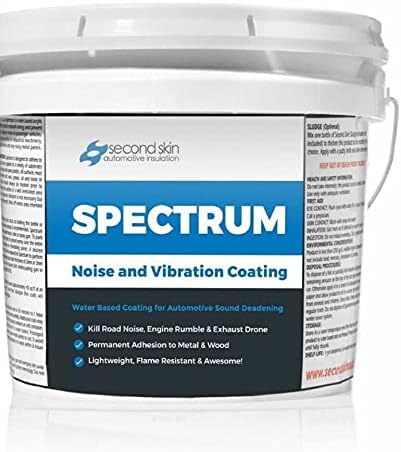
ATAC Spray-On Ceramic Coating is a water-based viscoelastic solution designed to minimize structural vibration in automotive environments. Applied using a brush, roller, or spray, it adheres to metal surfaces and is particularly useful in contoured or irregular areas like wheel wells and firewalls. While it does not block airborne noise, it serves as an effective foundation when layered with other acoustic treatments. The product is rated up to 400°F and cures within 24–36 hours.
NVX SDRF20 Tri-Layer Sound Damping Material for Vehicle Noise Reduction and Sound Deadening Applications
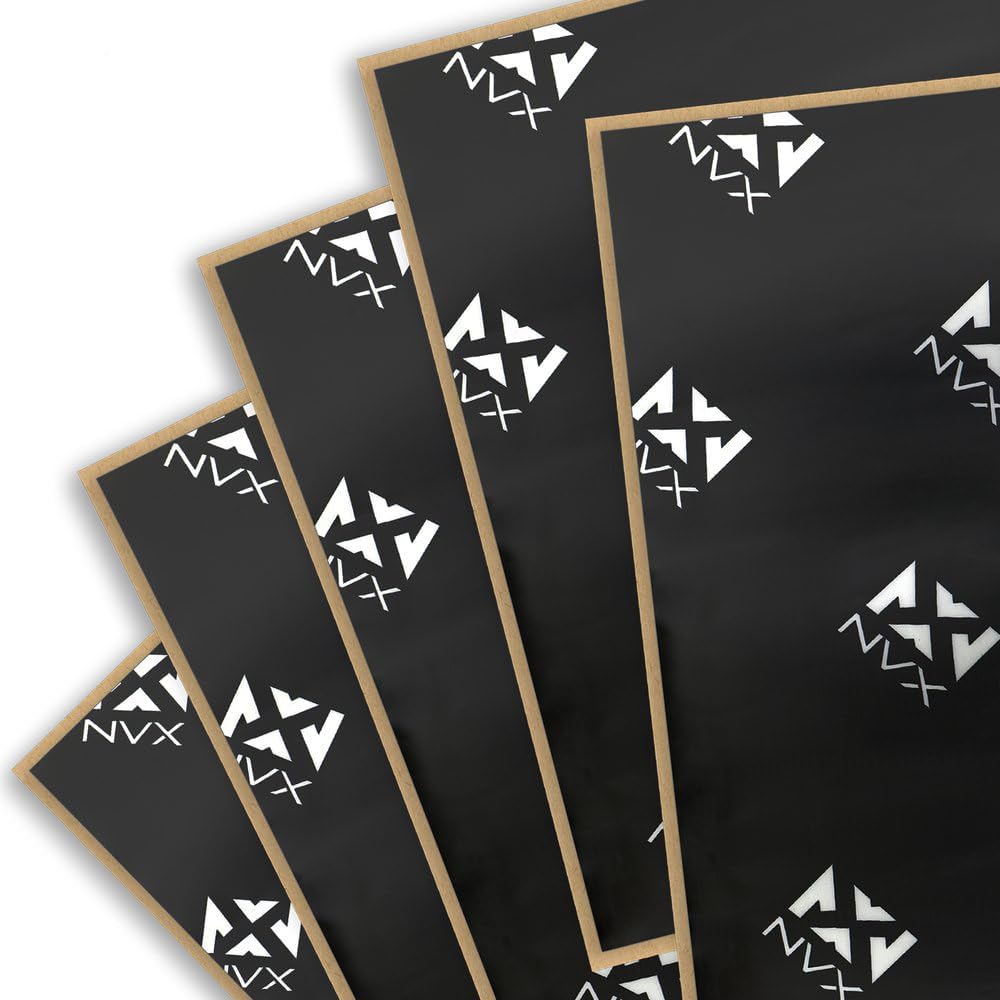
The NVX SDRF20 Tri-Layer Material consists of butyl rubber, aluminum foil, and foam layers, packaged in pre-cut, self-adhesive sheets. Its primary goal is to reduce both structure-borne and airborne sound by adding mass to vehicle panels. It is rated for use between -40°F to 300°F and is applied directly with no additional adhesives. The tri-layer format also adds thermal insulation and simplifies installation by combining sound-damping and barrier properties in one layer.
Head-to-Head Comparison: What the Evidence Shows
ATAC is ideal for applications where access to complex or recessed areas is important, thanks to its sprayable format. It is formulated specifically for structure-borne noise, with no claims for airborne sound attenuation. In contrast, NVX SDRF20 combines mass and insulation to address both vibration and airborne sound. While it may not conform to tight corners as easily, its single-layer installation simplifies large-panel coverage.
At-a-Glance Comparison Table
| Attribute | ATAC Spray-On Coating | NVX SDRF20 Tri-Layer Mat |
|---|---|---|
| Noise Type Addressed | Structure-borne only | Structure-borne and airborne |
| Application Method | Spray, brush, or roller | Self-adhesive sheets |
| Heat Resistance | Up to 400°F | Up to 300°F |
| Material Form | Viscoelastic coating | Butyl + foil + foam sheets |
| Installation Surface | Contoured/irregular surfaces | Flat or moderately contoured panels |
Which One May Be the Better Fit for Different Situations
For projects involving tight or non-uniform vehicle spaces, or for use near high-heat components, the ATAC Spray-On Coating may offer an advantage due to its thermal rating and flexible application format. However, if both vibration and airborne noise need to be addressed with minimal layering, the NVX SDRF20’s integrated construction may be more appropriate. Users seeking faster installation across flat panels may find it a time-efficient solution.
Frequently Asked Questions
Does ATAC provide any airborne noise blocking?
No. ATAC is not formulated to block airborne sound. It functions as a vibration-damping layer that may be paired with additional barriers like mass-loaded vinyl.
Can NVX SDRF20 be installed in tight, irregular spaces?
While NVX SDRF20 is flexible, complex curves or sharp bends may require trimming or scoring, and the material may not fully conform to very tight surfaces as easily as a sprayable option.
Do these products require additional adhesives or equipment?
ATAC may require a compressor if sprayed and can be applied with brushes or rollers. NVX SDRF20 includes self-adhesive backing and does not need extra adhesives.
Closing Guidance
When comparing ATAC Spray-On Ceramic Coating and NVX SDRF20 Tri-Layer Sound Damping Material, it’s important to align the installation setting and noise type with each product’s specific strengths. To explore use scenarios, full specifications, and application visuals, read the full product pages linked above. For product access, visit ATAC on Amazon and NVX SDRF20 on Amazon.