
Table of Contents
1. Introduction
This comparison looks at Hexagonal Acoustic Panels 12 Pack by UNECHO ACOUSTICS for High Density Sound Absorption in Studios, Offices, and Home Theaters and Dailycooper 12 Pack Self-Adhesive Acoustic Panels with Y-Lined Design and Flame Retardant Polyester Fiber using only the details that are explicitly stated in the available source content. The goal is to help you compare what is specified for each product and identify where one listing provides more (or less) stated detail than the other.
2. How This Comparison Was Built
The comparison is assembled by aligning product statements that appear in the provided product source content, then sorting them into three buckets: information that is corroborated by close-to-source content, information that is stated but not externally corroborated within the provided materials, and areas where the sources differ in what they state or how they describe the same type of attribute (for example, different measurement units).
3. Key Decision Factors Identified From the Source Content
- Panel size and thickness as stated for each product.
- Material statements (polyester / polyester fiber).
- Installation method (self-adhesive backing is stated for both).
- Design identifiers (hexagonal vs Y-lined).
- Safety/compliance-type wording (a flame-related statement is present for Dailycooper and not stated for UNECHO in the provided sources).
- Listing-provided measurement detail such as density units and any stated coverage.
4. Hexagonal Acoustic Panels 12 Pack by UNECHO ACOUSTICS for High Density Sound Absorption in Studios, Offices, and Home Theaters Overview
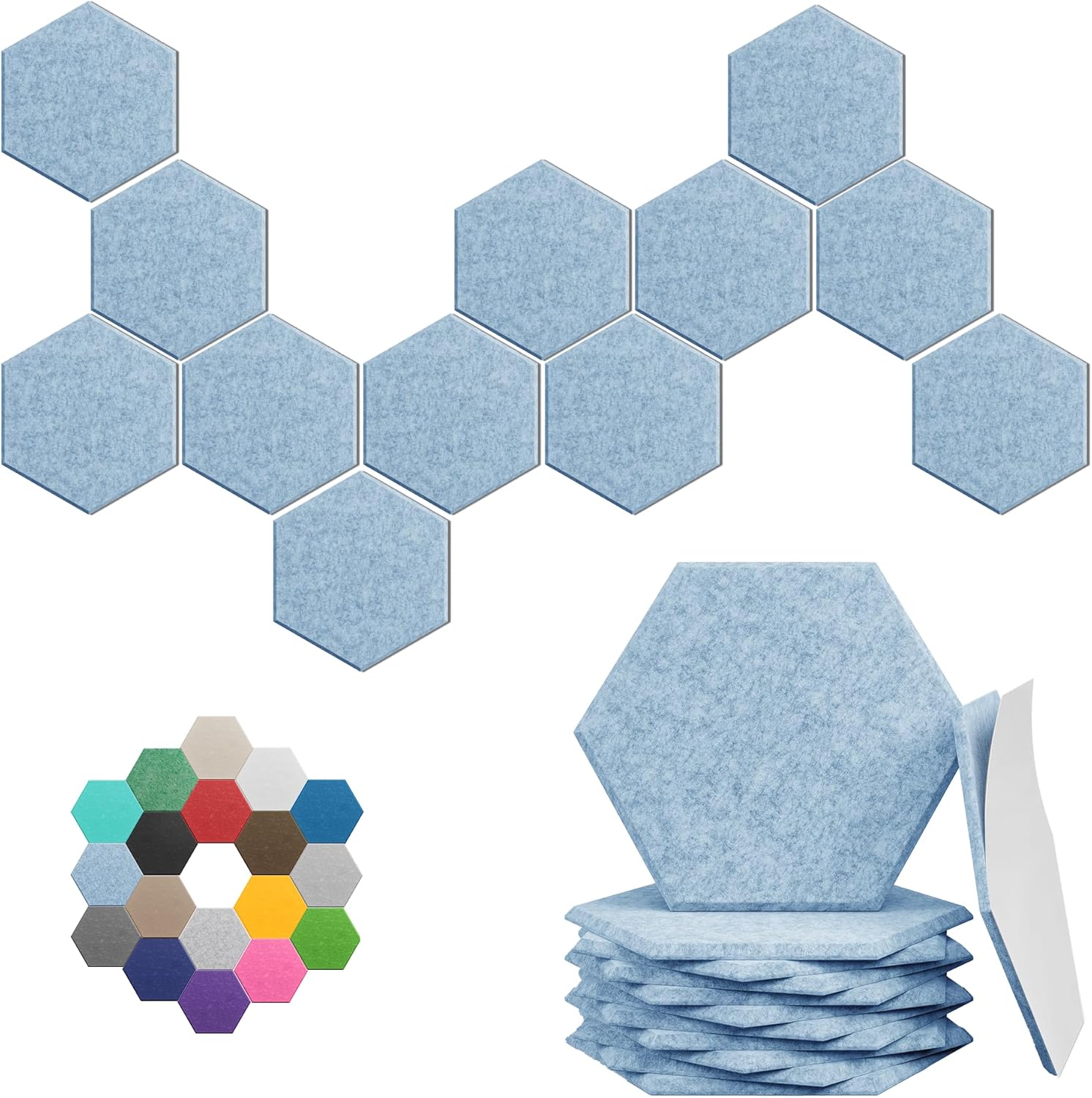
In the provided source content, this UNECHO ACOUSTICS product is presented as a 12-pack of hexagonal acoustic panels with a self-adhesive backing, and it is described using polyester-fiber material wording. The source content also states approximate panel dimensions and includes a density figure expressed in lb/m³. For the full standalone review context and additional listing details as presented there, you can explore the product listing details via this UNECHO ACOUSTICS hexagonal acoustic panels page and compare against the review’s breakdown before deciding.
If you want to cross-check the exact statements captured in the listing, you can also explore the same UNECHO product details via this UNECHO ACOUSTICS acoustic panels link as part of your evaluation. For readers who prefer to verify packaging-level attributes directly, the UNECHO listing is the place where the source language originates.
5. Dailycooper 12 Pack Self-Adhesive Acoustic Panels with Y-Lined Design and Flame Retardant Polyester Fiber Overview
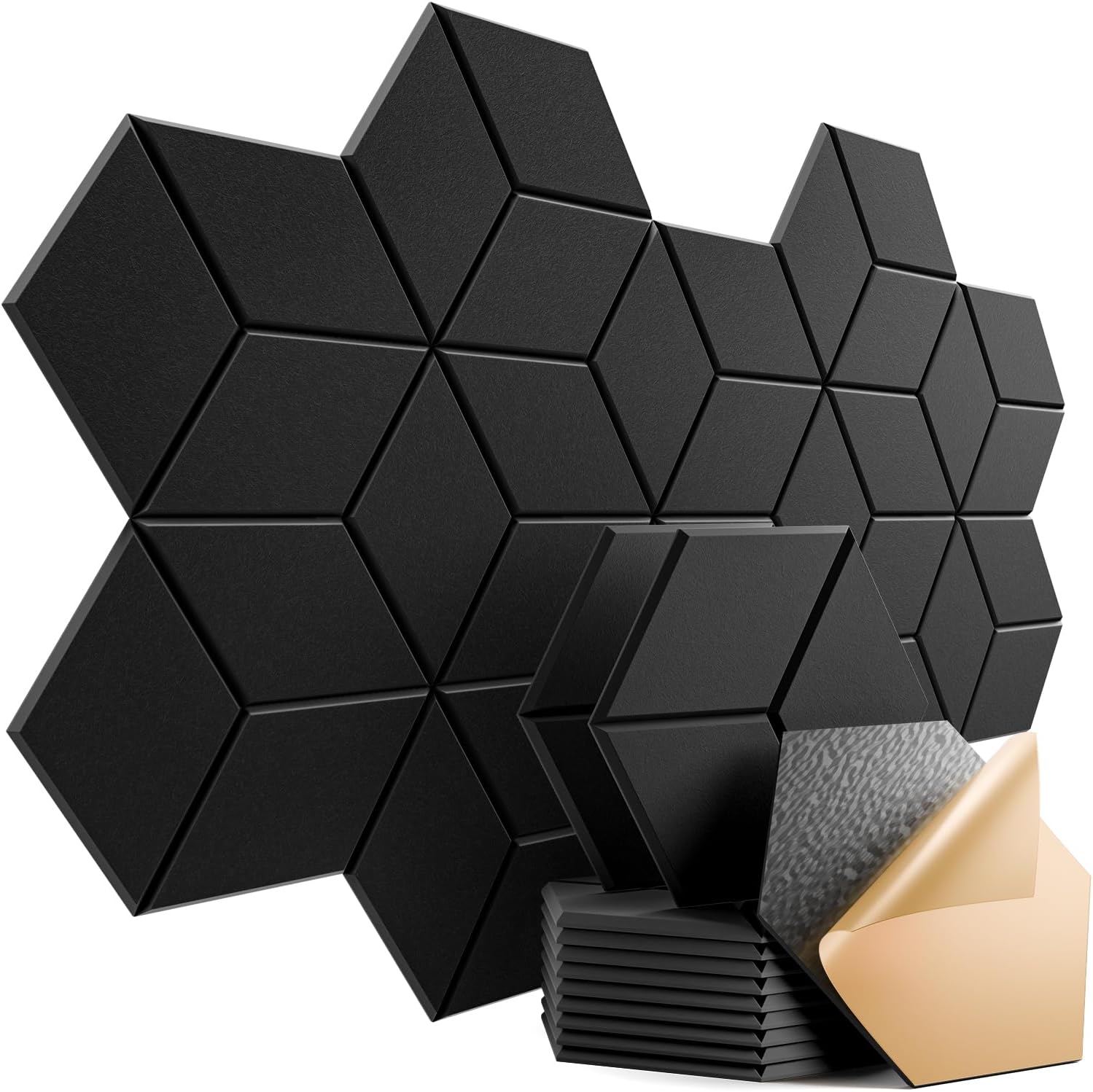
In the provided source content, the Dailycooper product is presented as a 12-pack of self-adhesive acoustic panels with a Y-lined design. The listing capture includes panel dimensions (12" × 10" × 0.4"), material wording (polyester / 100% polyester fiber), a density value expressed in lb/ft³, and flame-related wording described as “flame retardant” or “flame resistant.” It also includes a stated total coverage value (approximately 7.5 square feet). To review the product statements directly as part of your decision process, you can reference this Dailycooper acoustic panels page.
If you are comparing the source language side by side, the Dailycooper listing details contain the specific density and coverage statements included in the provided materials. For additional confirmation of how the product is described in the captured listing, this Dailycooper self-adhesive panel link is the same product context used for this comparison.
6. Head-to-Head Comparison: What the Evidence Shows
Both products are described in the provided sources as 12-pack acoustic panel sets with self-adhesive backing and polyester-fiber material wording. Where they diverge most clearly in the stated attributes is the design identifier (hexagonal for UNECHO vs Y-lined for Dailycooper) and the presence of flame-related wording (stated for Dailycooper and not stated for UNECHO in the provided source content).
On measurements, both sources state 12" × 10" × 0.4" panel dimensions (UNECHO is presented as approximate in the baseline content, while Dailycooper is stated directly in the listing capture). Density is stated for both but reported in different units: UNECHO uses lb/m³ and Dailycooper uses lb/ft³, which means they are not directly comparable as written without a unit conversion that is not provided in the sources.
Dailycooper’s source content also includes a stated total coverage figure (approximately 7.5 square feet), while UNECHO’s provided source content does not state a coverage figure. If you want to verify the specific measurement and attribute statements as presented for each product, you can reference the UNECHO product page and the Dailycooper product page for the same listing context captured in the provided materials.
7. At-a-Glance Comparison Table
| Attribute (as stated in sources) | UNECHO ACOUSTICS Hexagonal Panels | Dailycooper Y-Lined Panels |
|---|---|---|
| Pack count | 12 (stated in baseline content) | 12 (stated in listing capture) |
| Panel dimensions | ~12" × 10" × 0.4" (stated as approximate) | 12" × 10" × 0.4" (stated) |
| Material wording | 100% polyester fiber (stated) | polyester / 100% polyester fiber (stated) |
| Installation method | Self-adhesive backing (stated) | Self-adhesive backing (stated) |
| Design identifier | Hexagonal (stated) | Y-lined design (stated) |
| Density statement | Up to 420 lb/m³ (stated) | 9.4 lb/ft³ (stated) |
| Flame-related wording | Not stated in provided sources | Flame retardant / flame resistant (stated) |
| Coverage statement | Not stated in provided sources | Approximately 7.5 square feet total (stated) |
8. Which One May Be the Better Fit for Different Situations
If your decision depends on a flame-related statement being explicitly present in the product description, the provided Dailycooper source content includes flame-related wording, while the provided UNECHO source content does not state a flame-related attribute. In that case, it may be more suitable to verify the Dailycooper listing language directly on the Dailycooper product page and compare it against any requirements you have.
If the surface style or shape identifier is central to your selection, UNECHO is described as hexagonal in the provided content, while Dailycooper is described with a Y-lined design. For readers prioritizing that distinction, reviewing the product presentation on the UNECHO listing and the Dailycooper listing may be the most direct way to confirm which design description aligns with your intended layout.
If you want a stated coverage figure to anchor your planning, Dailycooper includes an approximate total coverage statement in the provided materials, while UNECHO does not provide a coverage figure in the provided source content. In that case, you may prefer to keep the comparison anchored to what is explicitly stated on the Dailycooper page and treat coverage for UNECHO as a sourcing gap unless the listing provides it elsewhere.
9. Frequently Asked Questions
Do both products state they are self-adhesive?
Yes. The provided source content for both products includes self-adhesive backing language.
Are the panel sizes stated as the same?
Both sources include 12" × 10" × 0.4" dimensions. In the provided UNECHO content, the dimensions are presented as approximate, while Dailycooper’s listing capture states them directly.
Do both listings provide a density value?
Yes, but they are stated using different units: UNECHO uses lb/m³ and Dailycooper uses lb/ft³. The sources do not provide a unit conversion, so the values are not directly comparable as written.
Is a flame-related attribute stated for both?
No. The provided Dailycooper source content includes flame-related wording, while the provided UNECHO source content does not state a flame-related attribute.
Where can I see each product’s full standalone review?
You can refer to the UNECHO review page and the Dailycooper review page linked earlier in this comparison for the longer-form breakdowns that sit outside this evidence-aligned comparison body.
10. Closing Guidance
This comparison is limited to what is explicitly stated in the provided source content and highlights where the two products share similar stated attributes and where the listings differ in detail. If you want to go deeper without turning this page into a full review replacement, use the standalone review pages for added context, then verify key listing statements directly on the UNECHO product listing and the Dailycooper product listing before making a final choice.