
Table of Contents
Introduction
Room divider panels offer a flexible way to create privacy and spatial separation in open environments without requiring permanent structural changes. This comparison examines the HOMSCREENER Acoustic Room Divider and the DECOLAB Freestanding Privacy Panel, focusing strictly on verified specifications, materials, and use cases drawn from official source documentation. Each product targets indoor settings but differs in build, functionality, and modular potential.
How This Comparison Was Built
This side-by-side comparison is based solely on confirmed specifications and product characteristics from each brand’s official materials and verified content. Claims not supported by source documents have been excluded or noted as such. Readers seeking detailed overviews can refer to the original product breakdowns: read the full HOMSCREENER review and see the full DECOLAB overview.
Key Decision Factors Identified From the Source Content
Verified content reveals several key areas of structural and functional difference between the two dividers:
- Panel configuration and mobility design
- Surface materials and acoustic claims
- Modular expandability and layout flexibility
- Certifications and indoor application suitability
HOMSCREENER Acoustic Room Divider Privacy Panel with Wheels Overview
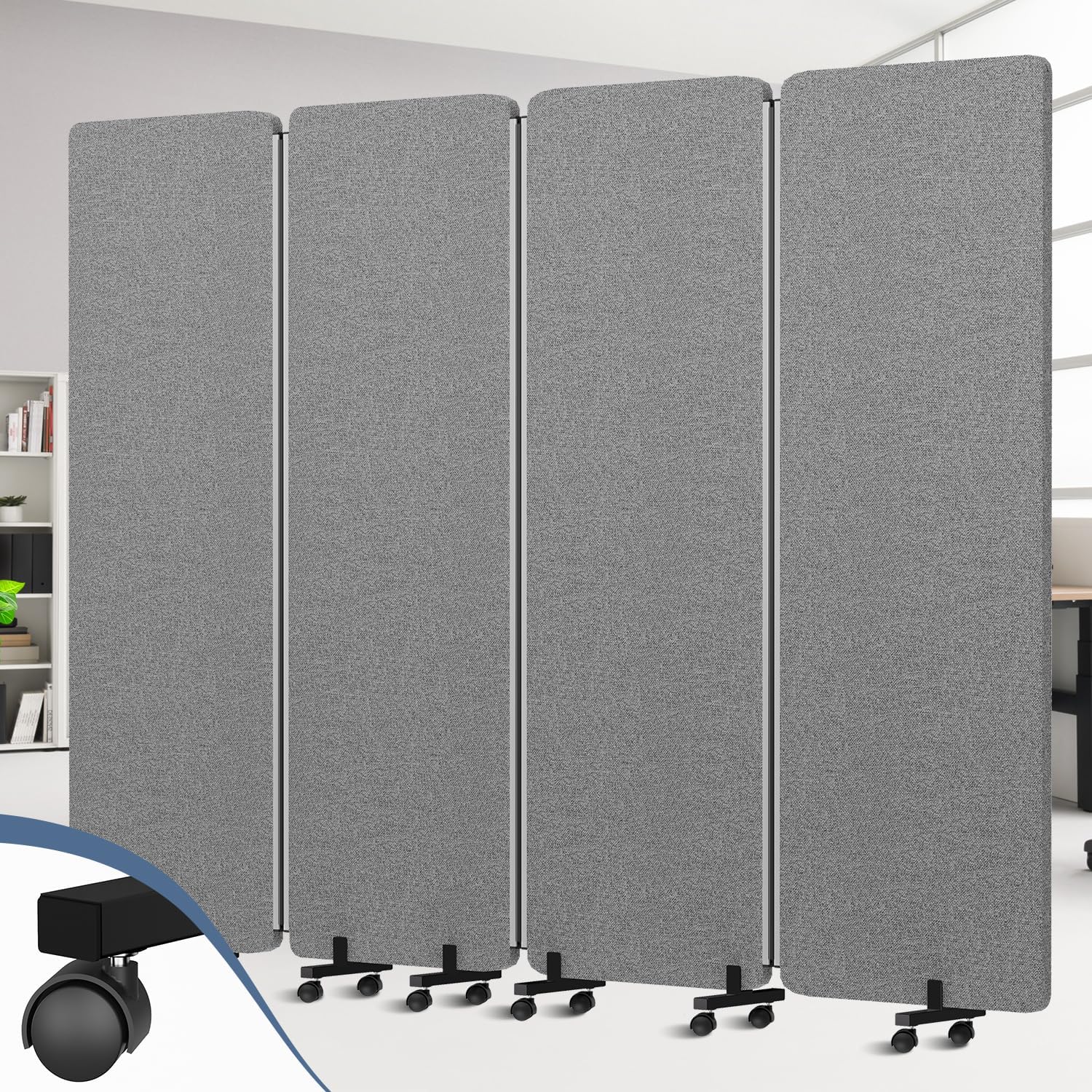
The HOMSCREENER Acoustic Room Divider is designed as a mobile, four-panel partition for indoor environments like offices and shared workspaces. It features a 360-degree aluminum frame connection, self-locking caster wheels, and a dual-layer PET fabric surface claimed to absorb up to 85% of ambient sound. The panels fold compactly for storage, and the freestanding design does not require wall mounting. For full product details, explore the full review here or view it on Amazon.
Inside the DECOLAB Room Divider Panel Overview
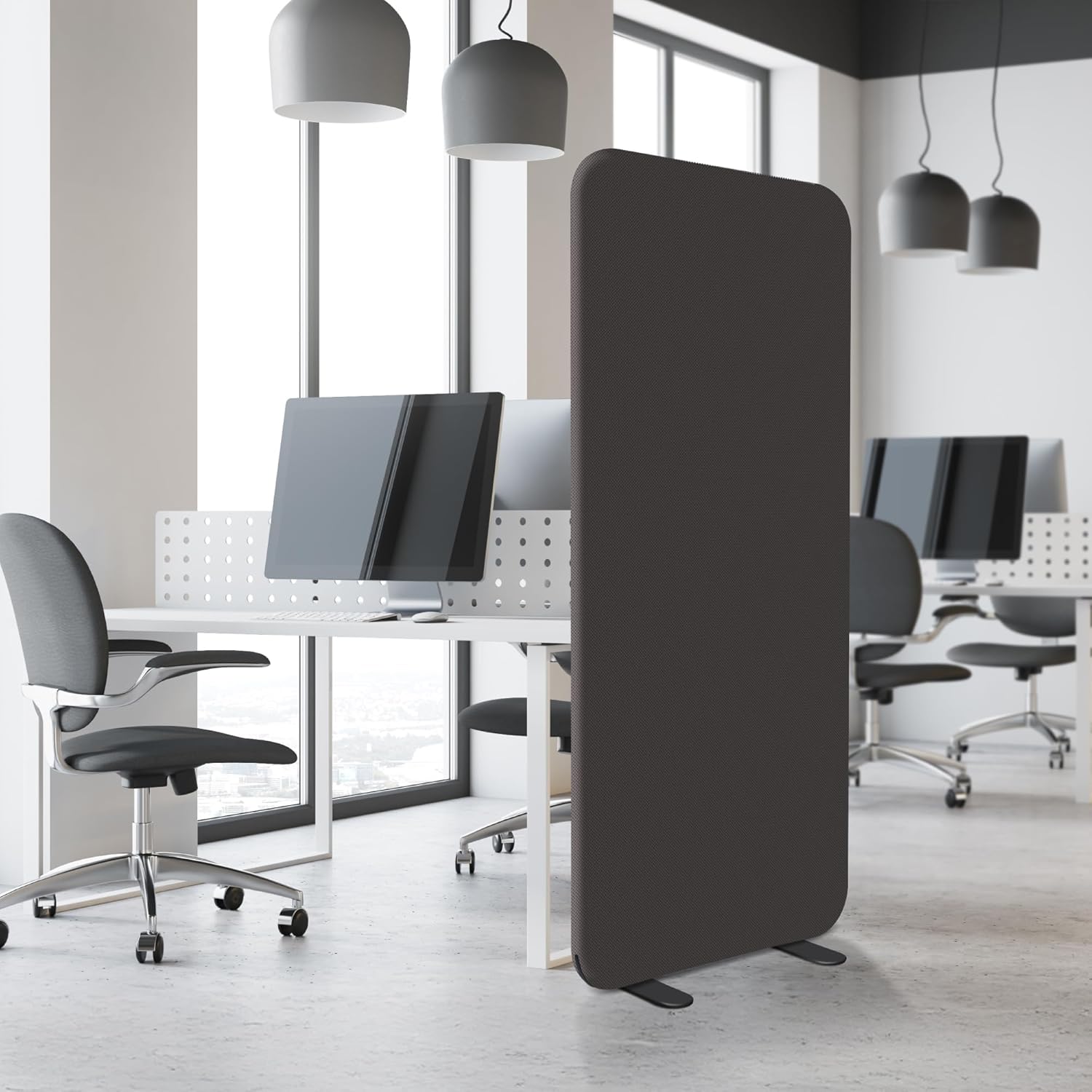
The DECOLAB Room Divider Panel is a single freestanding unit intended for classrooms, offices, studios, and residential interiors. It features a scratch-resistant, flame-retardant polyester fabric surface and a lightweight steel frame weighing under 15 pounds. Its modular design allows optional expansion with neodymium magnets (sold separately), and the surface is compatible with pins and magnets. DECOLAB does not claim sound isolation, focusing instead on visual separation and functional utility. For deeper insight, see the detailed breakdown or view it on Amazon.
Head-to-Head Comparison: What the Evidence Shows
HOMSCREENER and DECOLAB differ notably in structure and intended modular use. HOMSCREENER offers a fixed four-panel layout with built-in mobility via caster wheels, while DECOLAB is a lightweight, single-panel solution that can be expanded using separately sold magnets. Only HOMSCREENER makes an acoustic absorption claim, which is not third-party verified, whereas DECOLAB explicitly states it is not designed for sound isolation. Both products support pinning items to the surface, but only DECOLAB includes magnetic compatibility and a stated flame retardancy certification (CAL TB 117-2013).
At-a-Glance Comparison Table
| Feature | HOMSCREENER | DECOLAB |
|---|---|---|
| Panel Configuration | 4 connected panels | Single panel |
| Mobility | Self-locking wheels | Lightweight manual repositioning |
| Material | Dual-layer PET fabric | Thick knit polyester |
| Sound Absorption | Claimed 85% (manufacturer-stated) | Not designed for acoustic isolation |
| Fire Retardancy | Not certified in source | CAL TB 117-2013 certified |
| Expandable | No | Yes, with magnets (not included) |
| Magnetic Surface | No | Yes |
| Pinnable Surface | Yes | Yes |
Which One May Be the Better Fit for Different Situations
For users needing a pre-configured, movable barrier that folds for storage, the HOMSCREENER’s four-panel system may offer an integrated solution. In contrast, DECOLAB may be more suitable when lightweight handling, modular expansion, or fire safety certification is a priority. Those needing sound isolation should note that only HOMSCREENER makes that claim, though it is not independently verified.
Frequently Asked Questions
Do either of these dividers require wall installation?
No. Both HOMSCREENER and DECOLAB are freestanding and do not require any permanent installation.
Can I expand the DECOLAB divider?
Yes. DECOLAB supports modular expansion using optional neodymium magnets, sold separately.
Are the soundproofing claims certified?
HOMSCREENER states its fabric absorbs 85% of ambient sound, but no third-party certification is referenced. DECOLAB does not claim any acoustic performance.
Closing Guidance
While both dividers serve the goal of visual partitioning, the choice depends on how much mobility, modularity, and acoustic isolation your setting requires. For full product specifications and expanded context, visit the original reviews for HOMSCREENER or DECOLAB. To view the products directly, see HOMSCREENER on Amazon and DECOLAB on Amazon.