
Table of Contents
Introduction
Creating defined and distraction-free spaces within shared environments is an increasing priority in home, educational, and office settings. This comparison examines two source-documented solutions for visual and functional separation: the Practical Products Portable Acoustic Divider and the Decolab Room Divider Panel. Each product offers unique structural features intended to meet distinct workspace challenges.
How This Comparison Was Built
This side-by-side evaluation is based strictly on verified manufacturer-sourced documentation and corroborated details from official product listings. No assumptions, interpretations, or extrapolations have been made beyond what is explicitly stated in the original source materials or previously verified in this analysis.
Key Decision Factors Identified From the Source Content
Across both products, several core decision factors emerged from the documentation:
- Material type and stated acoustic performance
- Assembly and portability options
- Intended use environments (e.g., desk vs freestanding)
- Visual privacy support
- Expandable or modular layout compatibility
Inside the Practical Products Portable Acoustic Divider for Home Office, Classroom, and Desk Space Use
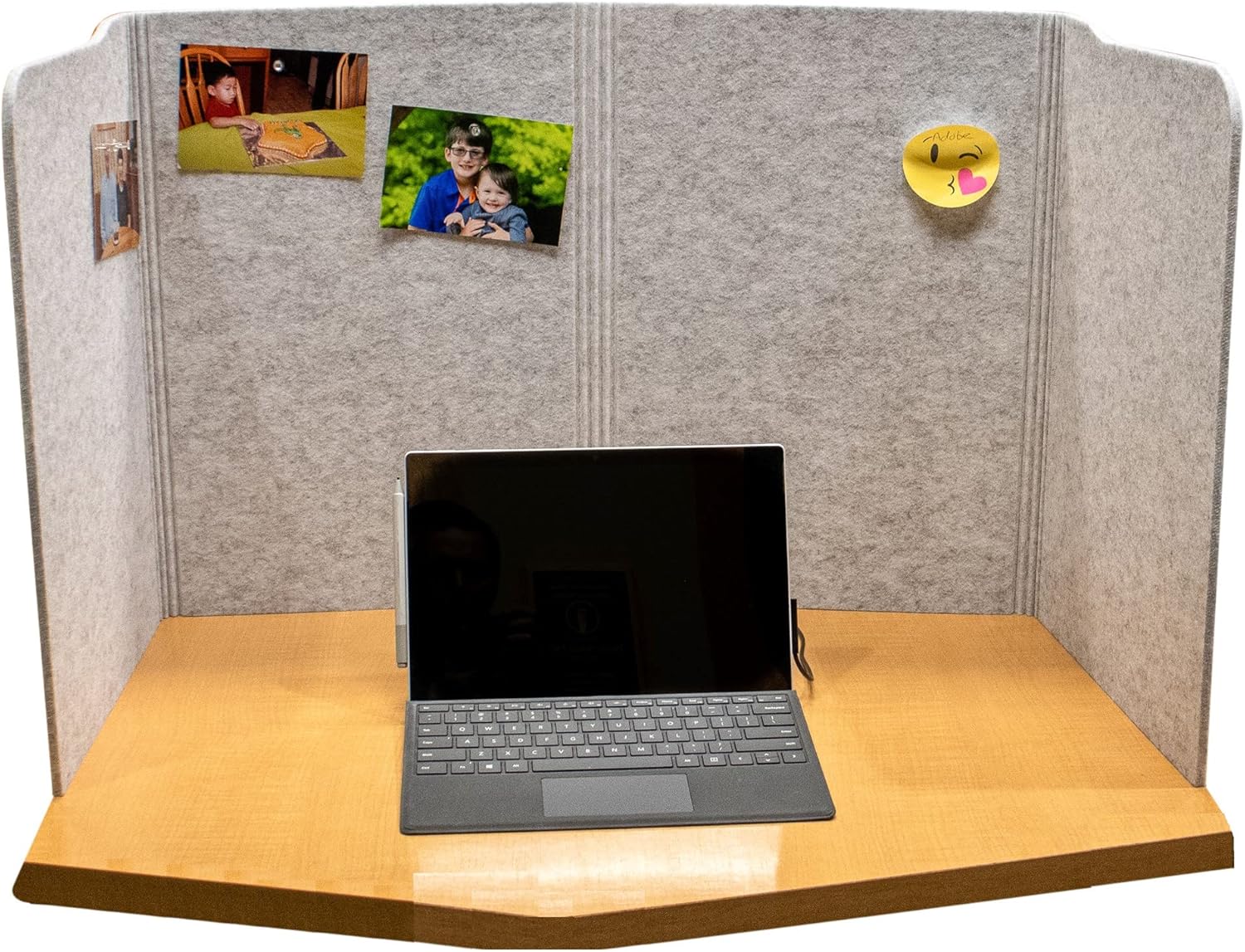
The Practical Products Acoustic Divider is a compact, tri-fold desktop partition constructed from 100% PET felt. It is designed to support both visual shielding and limited sound absorption in shared or transitional workspaces. Weighing approximately one pound, it folds flat for transport and storage, and requires no tools for setup. Its acoustic claims focus on moderating reverberations rather than full noise blocking. This makes it suitable for home desks, classrooms, and co-working setups where portability and modest distraction reduction are important. Explore the divider here.
Inside the DECOLAB Room Divider Panel: A Freestanding Privacy Partition for Offices, Classrooms, and Homes
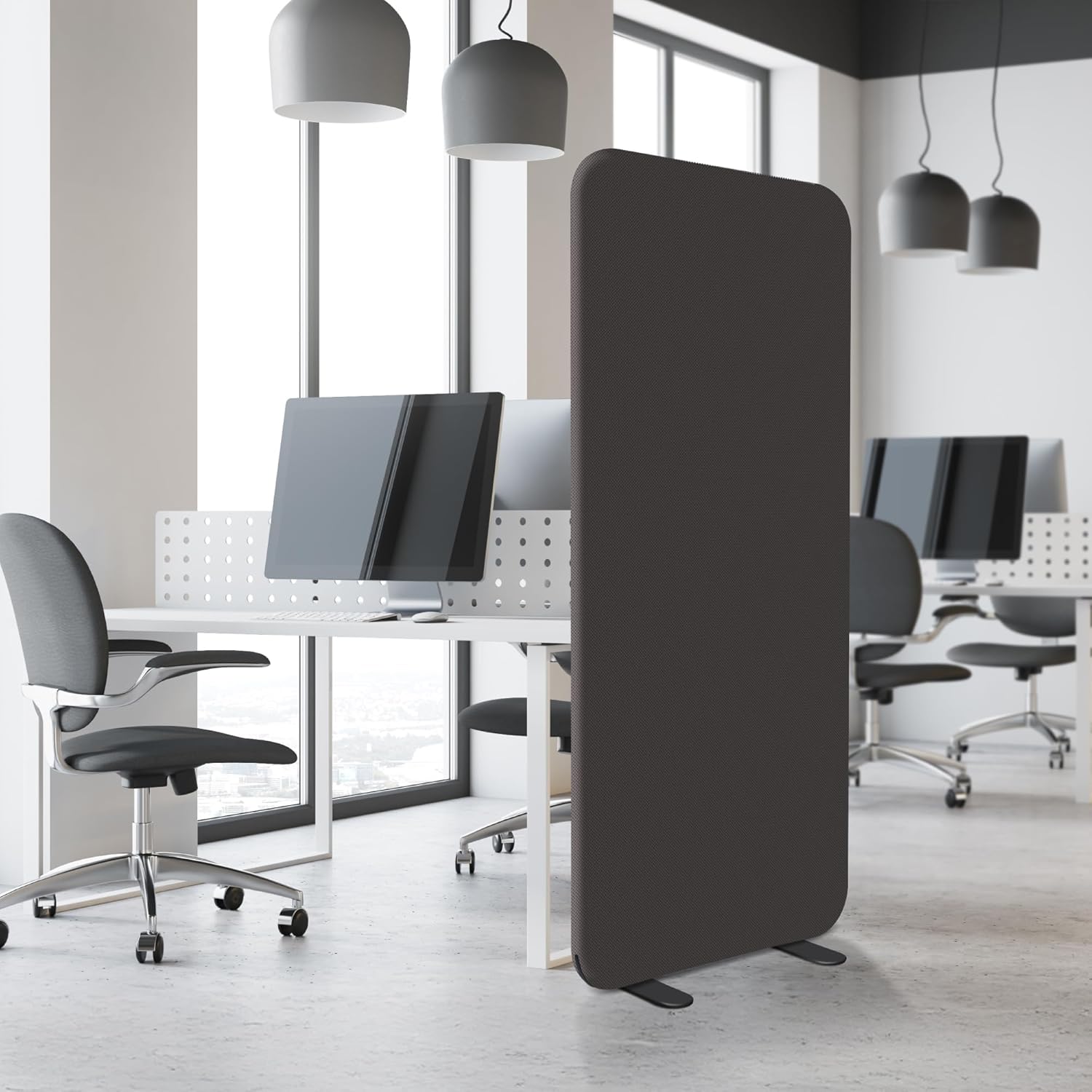
The Decolab Room Divider Panel is a tall, freestanding privacy screen built on a steel frame with a thick knit polyester surface. Its stated features include scratch resistance, flame retardancy (CAL TB 117-2013), and compatibility with push pins and magnets. Though it is not intended for acoustic isolation, the panel softens light and visually separates interior areas. Users can combine multiple panels via optional magnets for flexible layout changes. Weighing under 15 pounds, it is designed for easy repositioning across home, office, and classroom environments. See the product details here.
Head-to-Head Comparison: What the Evidence Shows
Material differences and design intentions lead to several distinct contrasts between these two divider types:
- Acoustic Use: Practical Products claims PET felt provides sound absorption, while Decolab explicitly states it is not designed for acoustic control.
- Deployment Surface: Practical Products sits on desks and tables; Decolab is a floor-based freestanding solution.
- Assembly: Practical Products requires no tools; Decolab includes a simple tool kit for setup.
- Expandability: Only Decolab supports modular panel linking using neodymium magnets (sold separately).
- Additional Utility: Decolab supports pins and magnetic notes; Practical Products does not list these features.
At-a-Glance Comparison Table
| Feature | Practical Products Divider | Decolab Room Divider Panel |
|---|---|---|
| Installation Surface | Desk/Tabletop | Floor/Freestanding |
| Material | 100% PET Felt | Thick Knit Polyester + Steel Frame |
| Acoustic Statement | Moderate sound absorption claimed | No acoustic isolation claimed |
| Weight | ~1 lb | Under 15 lbs |
| Portability | Foldable and compact | Lightweight, repositionable |
| Modular Linking | Not supported | Optional via magnets |
| Pinnable or Magnetic Surface | Not stated | Yes |
Which One May Be the Better Fit for Different Situations
For users seeking a space-saving solution that sits directly on a desk, the Practical Products Divider may be better suited to hybrid work or study environments requiring portable visual and modest acoustic separation. On the other hand, the Decolab Panel may offer more adaptability in open layouts where visual privacy and layout reconfiguration are priorities. Its surface-level utility features also support analog collaboration in shared spaces.
Frequently Asked Questions
Does either divider offer full soundproofing?
No. The Practical Products divider offers moderate sound absorption, while the Decolab panel explicitly states that it does not provide significant acoustic isolation.
Can these be used in educational environments?
Yes. Both products are designed for use in classrooms and shared learning areas. Practical Products emphasizes student desk use, while Decolab offers visual privacy and modular expansion for room sectioning.
Are the panels compatible with accessories or custom attachments?
The Decolab panel includes magnetic edging and is pinnable. No such functionality is listed for the Practical Products divider.
Closing Guidance
While both dividers serve the goal of improving workspace separation, their designs reflect different priorities. The Practical Products Portable Acoustic Divider is best considered for lightweight, desk-based scenarios with minimal setup. The Decolab Room Divider Panel supports broader spatial reconfigurations and utility use in open or semi-permanent layouts. For full product insights, we recommend visiting the respective detailed reviews: Practical Products Divider Review and Decolab Panel Review.