
Table of Contents
Introduction
When addressing unwanted road noise and vibration in vehicles, butyl-based sound deadening mats are a common go-to solution. This article compares two automotive-focused options based on source-confirmed specifications: the SGM Black 80 mil Butyl Sound Deadening Mat and the WEUPE 50 mil Butyl Sound Deadening Mat. Both are positioned as DIY-friendly options for in-vehicle acoustic control, but they differ in material thickness, coverage area, and thermal insulation properties.
How This Comparison Was Built
This comparison draws solely from official source documentation and verified product descriptions. It references the uploaded PDF files for each product and corroborated comparative findings. All statements are anchored in explicitly stated information, avoiding inference, assumption, or external generalizations.
Key Decision Factors Identified From the Source Content
Across both product profiles, several decision criteria emerged clearly:
- Material composition and layering
- Thickness and coverage per package
- Thermal resistance capabilities
- Installation handling and use-case guidance
SGM Black 80 mil Butyl Automotive Sound Deadening Mat for Noise Insulation and Vibration Dampening
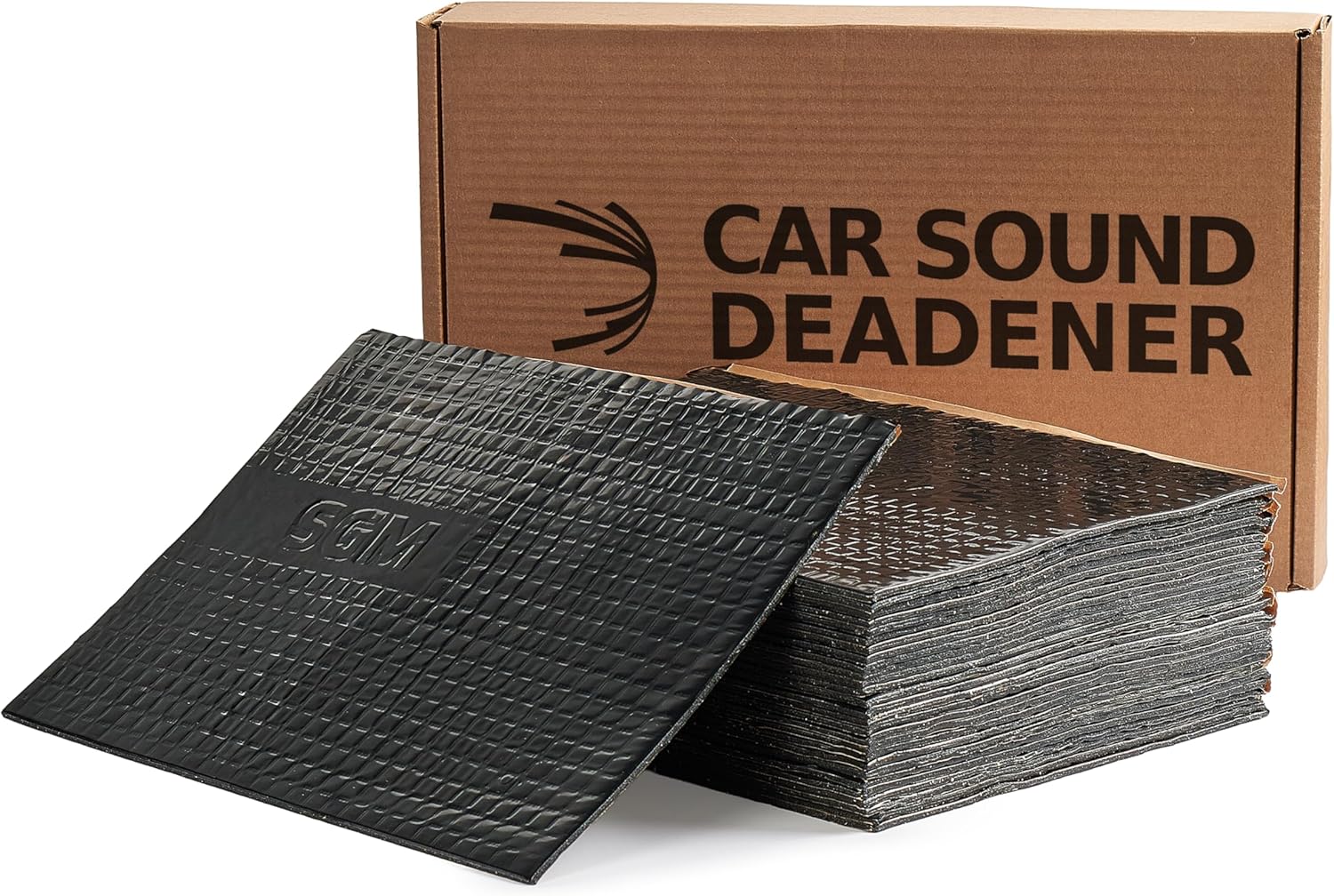
The SGM Black 80 mil mat combines a butyl mastic base with a foil-backed layer intended for both acoustic and thermal performance. It is designed for broad vehicle surface coverage and packaged in 34 sheets totaling 36 square feet. The stated thickness of 80 mil (2 mm) positions it as a heavy-duty option for full cabin or multi-zone installations. While specific decibel data is not provided, the product is described as effective for noise and vibration control in doors, floors, firewalls, roofs, and more. For detailed insights, read the full review or view the SGM mat on Amazon.
WEUPE 50 mil Butyl Sound Deadening Mat for Cars- Noise Insulation for Doors, Floors, Trunks, and Ceilings
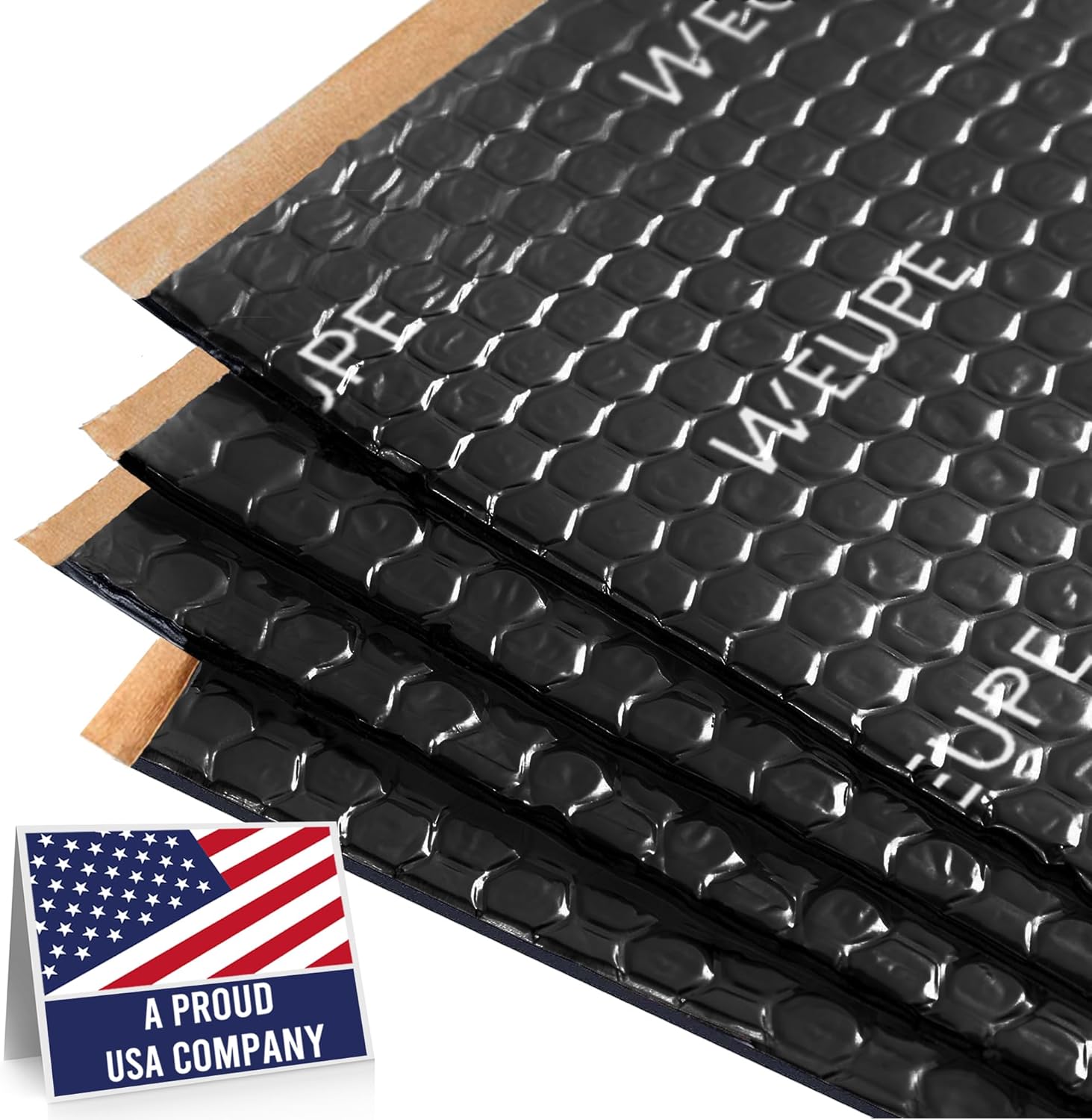
The WEUPE 50 mil mat is made of flexible butyl rubber and supplied in five sheets with a combined coverage of 5 square feet. Its construction is geared toward targeted panel treatment in doors, trunks, ceilings, and speaker areas. Unlike SGM, WEUPE does not list thermal insulation as a property, and no operating temperature range is specified. The self-adhesive backing and small sheet size are emphasized for easy installation in curved or obstructed zones. For more information, see the detailed breakdown or explore the WEUPE mat on Amazon.
Head-to-Head Comparison: What the Evidence Shows
Both products are positioned for automotive sound dampening, but they differ significantly in scale and stated properties. The SGM mat provides a larger total coverage area and includes a foil layer that contributes to both acoustic and thermal resistance. It also specifies an effective temperature range from -49°F to 212°F. In contrast, WEUPE focuses solely on vibration and sound insulation for specific car panels and does not claim thermal functionality or temperature performance. Sheet size and packaging make WEUPE more suitable for incremental or localized installations, while SGM is structured for broader application.
At-a-Glance Comparison Table
| Feature | SGM 80 mil | WEUPE 50 mil |
|---|---|---|
| Material Type | Butyl with aluminum foil | Butyl rubber (no foil) |
| Thickness | 80 mil (2 mm) | 50 mil (1.27 mm) |
| Coverage per Package | 36 sq. ft. | 5 sq. ft. |
| Thermal Insulation | Yes | No |
| Temperature Range | -49°F to 212°F | Not specified |
| Target Use Areas | Full cabin (floors, doors, hoods, etc.) | Selective panels (doors, trunk, ceilings) |
Which One May Be the Better Fit for Different Situations
The SGM mat may be more suitable for users seeking full-coverage soundproofing with thermal benefits, particularly in vehicles subjected to wide temperature swings. It is structured for those who want broad acoustic and heat control across multiple interior zones. Conversely, the WEUPE mat may be a better fit for users targeting specific areas in smaller vehicles or those managing localized noise and vibration issues. Its manageable sheet size and minimal preparation make it viable for simpler, more focused installations.
Frequently Asked Questions
Do either of these products come with lab-tested sound reduction ratings?
No. Neither product lists STC values or decibel reduction measurements in the available documentation.
Are these mats suitable for non-automotive applications?
SGM is noted to have been used in speaker enclosures and metal cabinets. WEUPE’s source content only references automotive usage.
Do I need any tools for installation?
Both products suggest using a roller to ensure contact during installation. No specialized equipment is required beyond standard DIY tools.
Closing Guidance
This side-by-side comparison highlights core differences between two automotive sound deadening solutions with differing scale, layering, and intended application scope. For full details, readers are encouraged to read the SGM review or explore the WEUPE breakdown before selecting the most appropriate product for their needs. To evaluate further, the SGM mat and WEUPE mat are both available for review and purchase on Amazon.