
Table of Contents
Introduction
When addressing automotive interior noise or heat control, materials designed for thermal and acoustic insulation can make a measurable difference. This comparison reviews two source-verified products: Dynamat’s fiberglass-based insulating fiber and Siless’s PU foam sound deadening material. Each offers a different construction and suitability profile based on source-supported attributes. This article provides a structured overview to help readers evaluate these options based on their intended installation context and documented material specifications.
How This Comparison Was Built
This comparison draws exclusively from verified source documents and corroborated findings. Both Dynamat DynaCore and Siless Ultrasoft 190 were analyzed using their respective manufacturer or distributor materials. No external reviews, assumptions, or inferred claims were used in the preparation of this comparison. All findings reflect directly cited properties, behaviors, and constraints from the original source content.
Key Decision Factors Identified From the Source Content
Based on the documentation for both products, the following decision-critical attributes emerged:
- Thermal resistance thresholds
- Acoustic behavior type (airborne absorption vs. vibration decoupling)
- Material thickness and installable clearances
- Moisture and UV exposure resilience
- Intended application zones and physical conformity
Dynamat DynaCore 1 Inch Thermo-Acoustic Insulating Fiber for Automotive and Marine Use
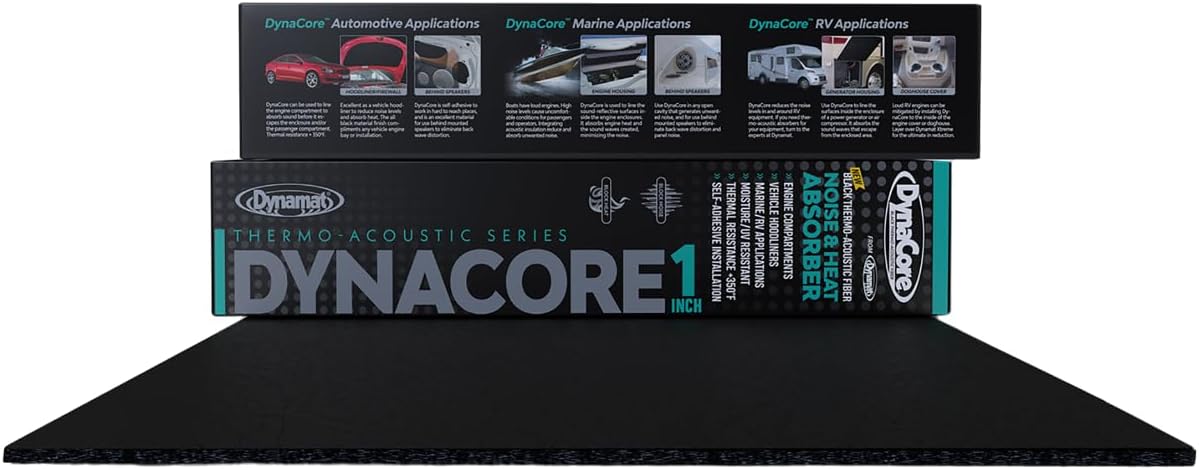
The Dynamat DynaCore product is a fiberglass-based insulating sheet designed to manage both thermal exposure and airborne sound. With a one-inch thickness and coverage of 12 square feet per sheet, it suits larger vehicle panels and curved installations like firewalls or cabin flooring. Its heat tolerance reaches up to 350°F, and it’s documented as moisture- and UV-resistant. The product includes self-adhesive backing for simplified application. See the full product review for more details. To explore product availability and specifications, visit the official product listing.
Siless Ultrasoft 190 5 mm PU Foam Car Sound Deadening Material for Interior Noise Reduction
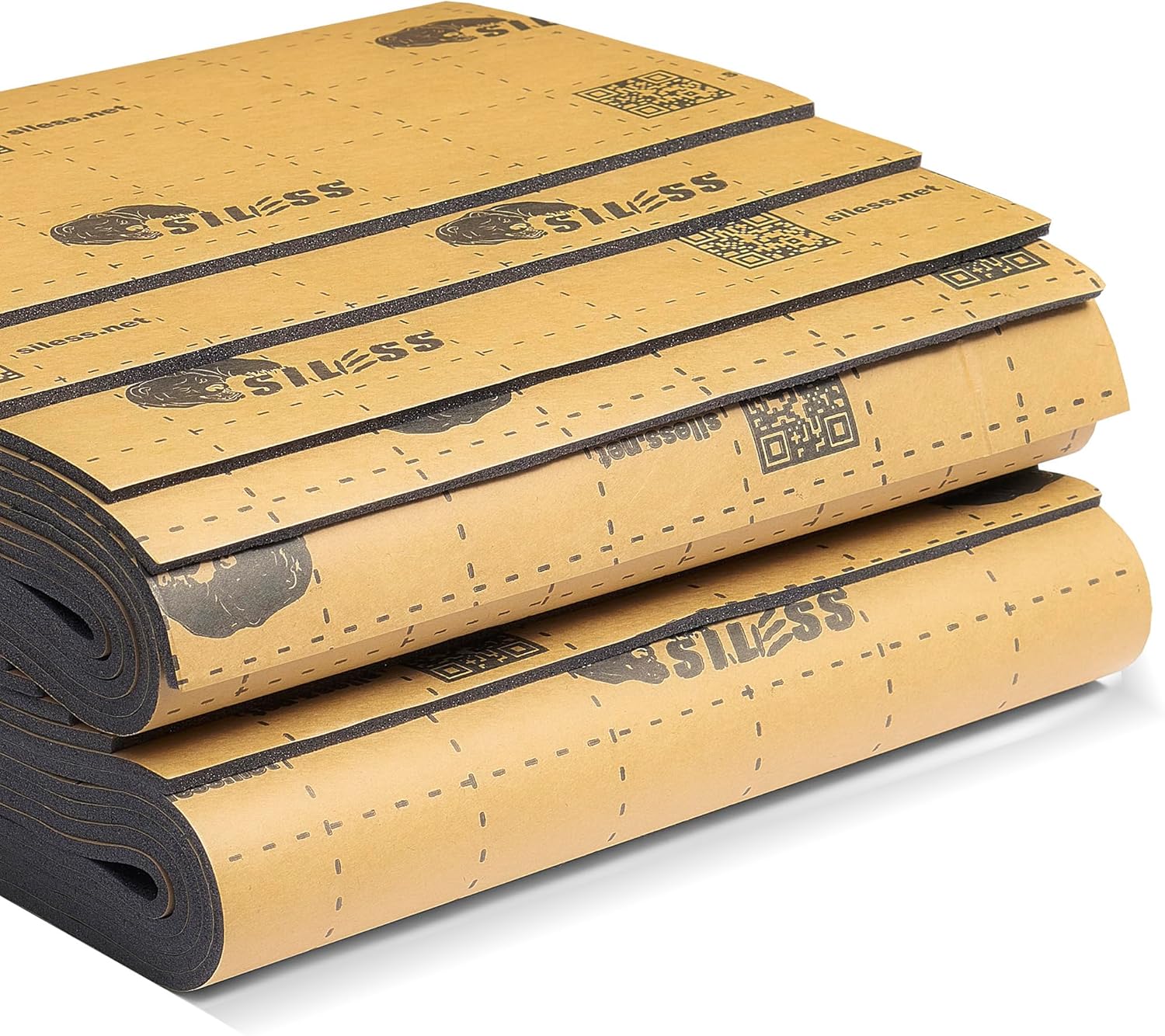
Siless Ultrasoft 190 is a 5mm-thick polyurethane foam sheet optimized for interior noise reduction in automotive environments. It is formulated for high-frequency vibration damping and decoupling, rather than blocking low-frequency noise. The foam supports cut-and-stick installation and is packaged in 10-sheet sets covering 36.5 square feet. With thermal tolerance up to 215°F, the product performs reliably in hot zones such as roofs or near engine compartments. Full environmental sealing capabilities like UV or moisture resistance are not stated in the source. To view the complete overview, visit the detailed review page. A full product listing is available on Amazon.
Head-to-Head Comparison: What the Evidence Shows
Structurally, the most prominent difference lies in each product’s material composition and thickness. DynaCore is substantially thicker at one inch and targets airborne noise absorption along with heat insulation. Ultrasoft 190, by contrast, is a thinner PU foam engineered to decouple panels and dampen high-frequency vibration. The fiberglass core of DynaCore is rated for higher thermal environments (up to 350°F), while Ultrasoft 190 is rated up to 215°F. Only DynaCore includes stated resistance to UV and moisture exposure. While both include peel-and-stick adhesive backing and conform to irregular surfaces, Ultrasoft’s low profile may offer better fitment behind trim or under carpeting in space-constrained zones.
At-a-Glance Comparison Table
| Feature | Dynamat DynaCore | Siless Ultrasoft 190 |
|---|---|---|
| Material Type | Fiberglass insulation | Polyurethane foam |
| Thickness | 1 inch (25.4 mm) | 5 mm |
| Thermal Resistance | Up to 350°F | Up to 215°F |
| Acoustic Behavior | Airborne sound absorption | Vibration decoupling and high-frequency damping |
| Moisture/UV Resistance | Yes | Not specified |
| Installation Method | Peel-and-stick adhesive | Peel-and-stick adhesive |
| Application Zones | Interiors, firewalls, marine | Trunks, flooring, door panels |
| Coverage | 12 sq. ft per sheet | 36.5 sq. ft total (10 sheets) |
Which One May Be the Better Fit for Different Situations
Where space allows for thicker material and dual-purpose insulation is needed, the fiberglass structure of Dynamat DynaCore may be more suitable. Its higher thermal tolerance and stated resistance to environmental conditions make it well-aligned for firewall and engine-adjacent zones. For areas with clearance constraints or where vibration decoupling is the priority, the low-profile Siless Ultrasoft 190 may integrate more effectively, especially under carpets or behind trim panels. The two materials also differ in their core acoustic behavior, with DynaCore absorbing airborne noise and Ultrasoft primarily disrupting contact-based vibration paths.
Frequently Asked Questions
Can these materials be used together? Yes, the source materials state that each can be layered with other products. Siless Ultrasoft 190, in particular, is often paired with denser materials for full-spectrum acoustic treatment.
Is either product fire-rated? No flammability or fire-resistance certifications were mentioned in either product’s official documentation.
Can they be used in marine environments? Only Dynamat DynaCore explicitly supports marine use and includes UV/moisture resistance in its description.
Closing Guidance
Both Dynamat DynaCore and Siless Ultrasoft 190 are purpose-built sound and heat management materials, but they are not interchangeable in form or function. DynaCore offers greater thickness and thermal range, whereas Ultrasoft 190 enables fitment in compact spaces and targets vibration isolation. For more detailed product insights, visit the full DynaCore review and Ultrasoft 190 breakdown. Product listings are available at Amazon for Dynamat DynaCore and Amazon for Siless Ultrasoft 190.