
Table of Contents
Introduction
When comparing acoustic treatment options for home studios and enclosed spaces, two notable choices emerge: the Mybecca Acoustic Foam Panels and the Amantech 12 Pack Hexagon Acoustic Foam Panels. Both are intended to manage echo and improve acoustic clarity, yet their construction, configuration, and installation approaches reflect distinct design choices.
How This Comparison Was Built
This comparison draws exclusively from source documents provided by each brand and corroborated findings. All insights are extracted directly from the original product content and do not include assumptions or third-party opinions. The analysis highlights differences in construction material, acoustic performance metrics, installation methods, and structural attributes.
Key Decision Factors Identified From the Source Content
Source-backed differences focus on material type (polyurethane foam vs. polyester fiber), stated acoustic absorption coefficients, shape and modularity, and the inclusion or absence of adhesive backing. Each of these elements may influence use-case suitability and installation preferences depending on the environment.
Mybecca Acoustic Foam Panels Overview
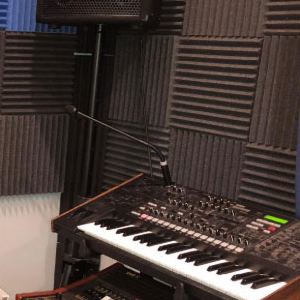
The Mybecca Acoustic Foam Panels offer a variety of shapes, including wedges, bass traps, egg crates, and hexagonal tiles. These panels are made from polyurethane foam and are described as low-cost options that address basic acoustic needs such as slap echo and treble sharpness. While the NRC is stated as 1.32 for bass traps, no testing methodology is disclosed. The panels do not include adhesive backing, and users are advised to install them with clips or industrial adhesive. For more shape-specific options, users can explore the Amazon product page for Mybecca’s listings.
Amantech 12 Pack Hexagon Acoustic Foam Panels for Home and Studio Soundproofing Overview
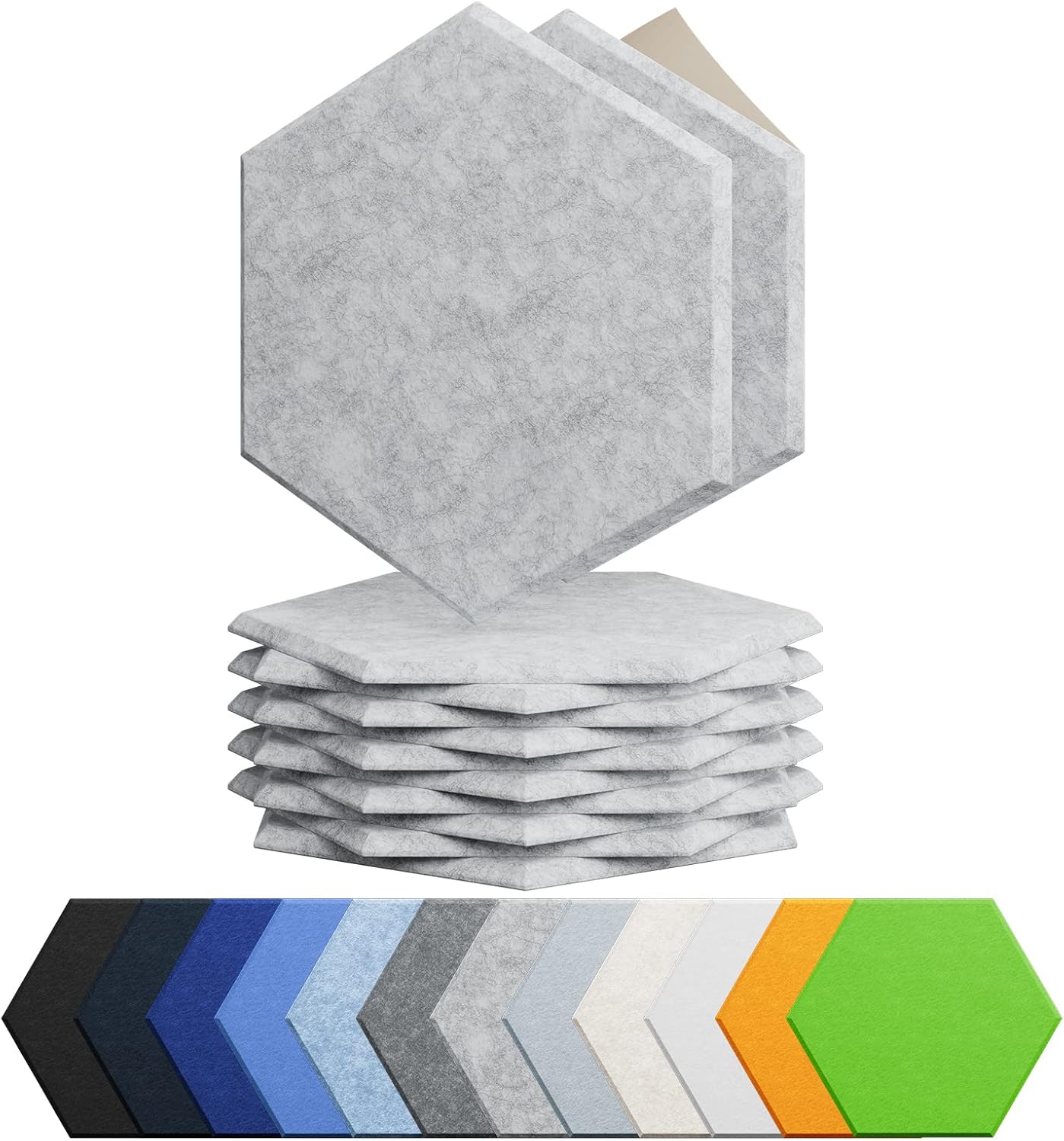
The Amantech Hexagon Panels are constructed entirely of high-density polyester fiber using hot pressing technology. These panels are shaped as hexagons, supporting customizable layouts. Each unit includes a peel-and-stick adhesive backing and is cuttable with a utility knife for design flexibility. The product claims a sound absorption coefficient of 0.95 within standard noise frequency ranges, though third-party validation is not cited. These panels aim to serve in non-invasive sound treatment across environments like studios, offices, and podcast rooms. For specifications and layouts, refer to the official product page.
Head-to-Head Comparison: What the Evidence Shows
Based on available source materials, Mybecca panels stand out for variety in form (e.g., wedges, bass traps, corner fill blocks), while Amantech emphasizes modular flexibility with a consistent hexagonal geometry. Mybecca’s foam type is unspecified beyond being polyurethane, whereas Amantech specifies a non-toxic polyester fiber composition. Mybecca products do not include built-in mounting adhesives, whereas Amantech panels come with self-adhesive backing. Mybecca claims a higher NRC for bass traps (1.32) than Amantech’s stated 0.95 coefficient, though neither claim is accompanied by standard testing references. Installation on Amantech is simpler by design, while Mybecca requires manual attachment methods.
At-a-Glance Comparison Table
| Feature | Mybecca Acoustic Foam Panels | Amantech Hexagon Acoustic Panels |
|---|---|---|
| Material | Polyurethane foam | 100% polyester fiber |
| Panel Shape | Wedge, egg crate, bass trap, hexagonal | Hexagonal |
| Stated Absorption Coefficient | 1.32 NRC (Bass Traps) | 0.95 (no third-party validation) |
| Installation Method | Clips or adhesive (not included) | Peel-and-stick backing included |
| Design Flexibility | Various form factors | Cuttable, modular layout |
| Use Case Mentioned | Studios, corners, walls | Studios, offices, podcast rooms |
Which One May Be the Better Fit for Different Situations
For users prioritizing variety in form and willing to manage installation separately, Mybecca panels may meet functional and budgetary needs in rooms requiring basic echo treatment. Conversely, the Amantech panels may suit users seeking aesthetic modular layouts with simplified installation and moderate acoustic absorption, especially in spaces where peel-and-stick application is preferred. Each product aligns with different setup and handling expectations based on user preferences and technical constraints.
Frequently Asked Questions
Do either of these panels offer certified NRC or acoustic testing data?
Neither panel set provides third-party validated acoustic testing documentation. Mybecca cites an NRC of 1.32 for bass traps, and Amantech states a 0.95 coefficient, but both lack certification references.
Can these panels be used interchangeably across all room types?
Mybecca panels are offered in multiple shapes for flexible placement but require separate mounting methods. Amantech panels are intended for general-purpose wall treatments and come with adhesive backing, offering more ease in non-permanent setups.
Are these products suitable for professional-grade recording environments?
Both products target basic room treatment and do not claim full isolation performance or studio-grade certification. Their suitability for professional use is not stated in source content.
Closing Guidance
Both the Mybecca Acoustic Foam Panels and the Amantech Hexagon Acoustic Panels deliver sound absorption solutions with clearly stated differences in form, material, and installation. For users evaluating based on shape variety or modular convenience, source materials present two distinct directions. Those interested in deeper insight should explore the Mybecca listing or the Amantech product page to examine layout options, panel configurations, and verified use cases.