
Table of Contents
Introduction
When selecting a floor underlayment to address both sound and moisture concerns, it’s essential to compare options with source-supported clarity. This article presents an evidence-based comparison between QuietWalk Underlayment for Laminate and Hardwood Floors and a broader category of Sound Attenuation Floor Underlayments spotlighted in “7 Revolutionary Solutions for Unmatched Quiet.”
How This Comparison Was Built
This comparison is based exclusively on manufacturer documentation and validated source materials. The comparison draws from the full product description of QuietWalk Underlayment and the curated set of product summaries presented in Sound Attenuation Floor Underlayment. No assumptions or unverified claims have been introduced.
Key Decision Factors Identified From the Source Content
Based on the available source data, key comparative dimensions include:
- Material composition and environmental positioning
- Sound reduction capabilities (including IIC rating where specified)
- Moisture protection design
- Installation method and flooring compatibility
QuietWalk Underlayment for Laminate and Hardwood Floors Overview
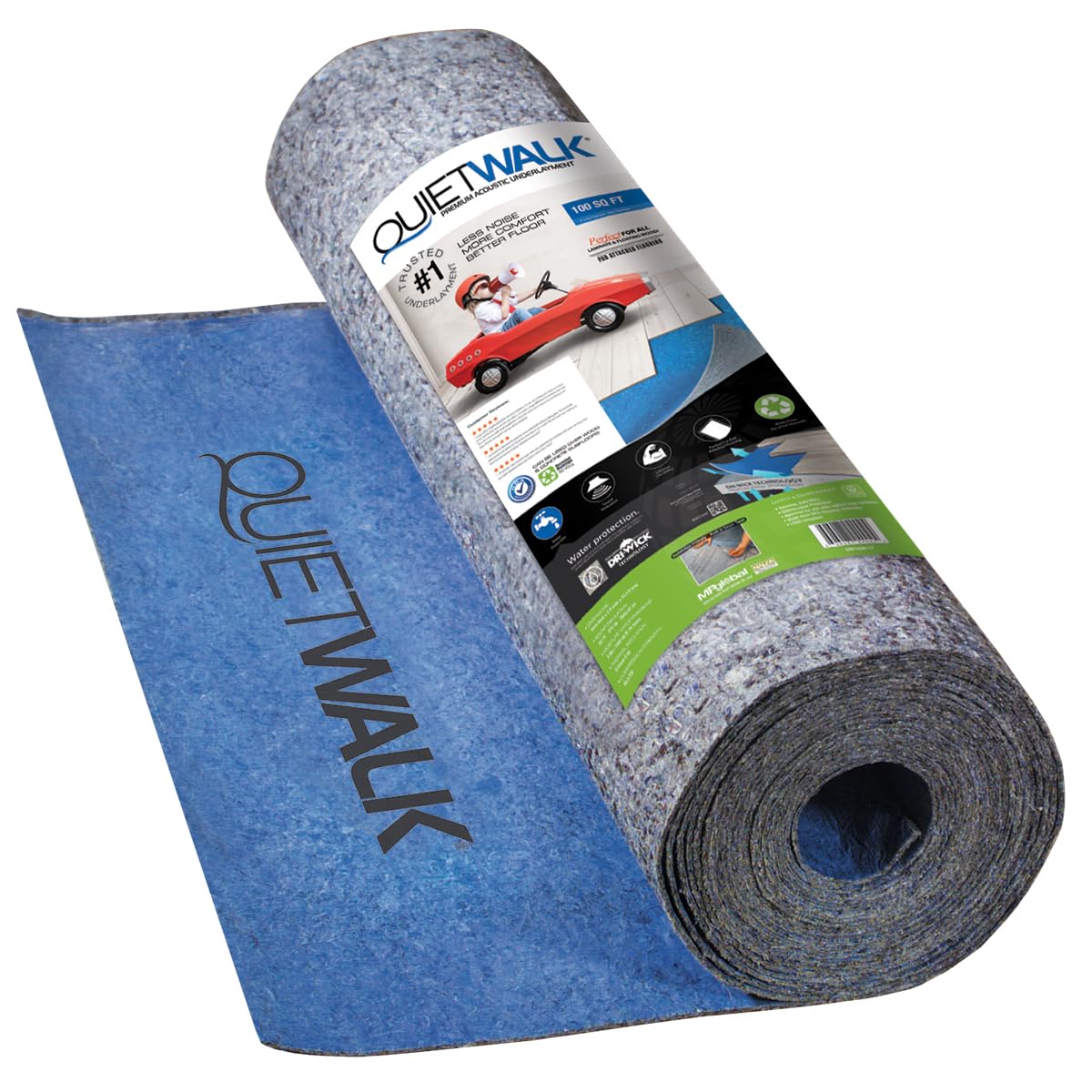
QuietWalk Underlayment is constructed from densely compressed recycled fibers and is designed for floating installations beneath laminate and engineered hardwood flooring. It features a built-in vapor barrier to protect against moisture, and its breathable construction allows water vapor to escape, helping to prevent trapped moisture issues. The product is compatible with radiant heated floors and pre-attached pad systems, making it a flexible choice across a range of subfloors【42†source】.
For more installation and use details, see the full QuietWalk Underlayment review. Additional product views are available on Amazon.
Sound Attenuation Floor Underlayment Overview

The Sound Attenuation Floor Underlayment content highlights a curated selection of seven acoustic underlayments, each offering distinct combinations of materials, sound insulation levels, and moisture resistance. These include recycled rubber, gypsum fiber, foam with vapor barriers, and composite boards. While QuietWalk is included among these, other products like Duracoustic S.T.O.P.™ and Levelrock® SAM-N12™ are also covered with differentiated specifications such as IIC ratings and recommended use cases【43†source】.
To explore these seven product profiles in detail, refer to the full sound attenuation underlayment guide.
Head-to-Head Comparison: What the Evidence Shows
Side-by-side differences drawn from source-supported content include:
- Material: QuietWalk uses recycled fiber; others in the sound attenuation group use materials such as recycled rubber, gypsum fiber, or foam composites.
- Sound Reduction: QuietWalk has an IIC rating of 50–55. Competing products like Duracoustic S.T.O.P.™ reach 55–60, while Levelrock® SAM-N12™ also achieves 50–55【43†source】.
- Moisture Protection: QuietWalk includes an integrated vapor barrier. Some alternatives, such as Levelrock® SAM-N12™, do not offer moisture protection, while others like QuietBoard do【43†source】.
- Compatibility: QuietWalk supports laminate and engineered wood with pre-attached pads and radiant heat. Comparative products vary by flooring type—some focus on thin profiles or multi-use applications【42†source】【43†source】.
At-a-Glance Comparison Table
| Feature | QuietWalk Underlayment | Sound Attenuation Products (General) |
|---|---|---|
| Material | Recycled Fiber | Varies (Rubber, Foam, Gypsum) |
| Sound Rating (IIC) | 50–55 | 50–60 (Product-Dependent) |
| Moisture Barrier | Yes | Product-Dependent |
| Radiant Heat Compatible | Yes | Not universally stated |
| Installation Type | Floating | Varies |
Which One May Be the Better Fit for Different Situations
QuietWalk may be a suitable option for floating laminate or hardwood floors where radiant heating and moisture protection are priorities. Its compatibility with pre-attached pad floors also provides a use case fit for remodels【42†source】.
In contrast, if the project demands thinner profile underlayment or higher IIC ratings, or if using flooring types not supported by QuietWalk, other underlayments from the sound attenuation lineup may be more applicable. However, these decisions should be made based on each product’s verified specifications rather than inferred benefits【43†source】.
Frequently Asked Questions
Is QuietWalk suitable for tile or carpet installations?
The source documentation does not indicate suitability for tile or carpet applications. It is designed for laminate and engineered wood floors only【42†source】.
Do all sound attenuation underlayments include vapor barriers?
No. Some options, such as Levelrock® SAM-N12™, are noted to lack moisture protection, while others like QuietBoard include it【43†source】.
Can these underlayments be glued or nailed down?
QuietWalk is limited to floating floor installations and is not recommended for glue-down or nail-down methods【42†source】. Other products vary in installation compatibility.
Closing Guidance
This comparison highlights source-supported differences between QuietWalk Underlayment and other sound attenuation floor underlayment solutions. Readers seeking a fiber-based, moisture-protective underlayment for laminate or engineered wood may explore QuietWalk further via the full product review or on Amazon. For broader solution sets and use-specific acoustic products, the comprehensive guide offers additional verified options.