Table of Contents
Choosing Acoustic Underlay for Laminate Flooring
The best underlay for a laminate floor depends on more than a product’s thickness or the word “acoustic” on its packaging. Buyers need to consider the type of noise they want to reduce, the subfloor beneath the laminate, moisture conditions, available floor height, installation requirements, and compatibility with the flooring system.
Acoustic underlay is generally most useful for reducing impact noise caused by footsteps, moving chairs, dropped objects, and other contact with the floor. It may also make a floating laminate floor sound less hollow inside the room. It should not, however, be treated as a complete solution for voices, music, television noise, or other airborne sound traveling between rooms or floors.
Quick Picks by Buyer Need
- For upstairs rooms: Look for a dense, resilient underlay intended to reduce impact noise within a floating laminate assembly.
- For concrete subfloors: Prioritize moisture protection, sealed seams, and explicit compatibility with both the subfloor and laminate.
- For limited floor height: Choose a low-profile underlay that meets the laminate manufacturer’s requirements without interfering with doors or transitions.
- For underfloor heating: Use only an underlay approved for the heating system and flooring, with suitable thermal resistance.
- For a natural-material option: Consider cork where moisture conditions and installation requirements allow it.
- For simpler DIY installation: An underlay with an integrated moisture layer and joining tape may reduce installation steps.
Acoustic Underlay Options at a Glance
| Underlay Type | Best Suited To | Important Buying Factor | Main Limitation |
|---|---|---|---|
| Dense rubber | Upstairs rooms and impact-noise concerns | Laminate approval, resilience, and documented floor-system performance | Can add weight, cost, and floor height |
| Dense foam with moisture layer | Concrete subfloors and general residential use | Foam density, seam design, and moisture requirements | Lightweight foam may compress more readily |
| Recycled-fiber underlay | Floating laminate installations needing cushioning and moisture management | Flooring compatibility, moisture design, and installation method | Not suitable for every floor type or fixing method |
| Cork | Buyers seeking a firm natural-material option | Thickness, moisture exposure, and subfloor preparation | May require a separate moisture layer |
| Felt | Bedrooms, home offices, and moderate residential use | Density, compression resistance, and laminate approval | Some felt products are intended for other flooring types |
| Low-profile underlay | Restricted door and transition clearances | Performance relative to thickness | Thinner construction may provide less acoustic benefit |
| Heating-compatible underlay | Laminate installed over underfloor heating | Thermal resistance and system approval | Highly insulating products may reduce heat transfer |
Best Overall Type: Dense, Laminate-Compatible Acoustic Underlay
For many buyers, the most useful all-round option is a dense underlay that is explicitly approved for floating laminate flooring. Density and resilience can help limit the transmission of contact noise while supporting the locking system, but material alone does not determine the result. The finished floor, subfloor, ceiling below, room construction, and installation quality all affect performance.
Before choosing a product, confirm its permitted thickness, approved flooring types, subfloor requirements, moisture instructions, and whether it can be used beneath laminate with an attached pad. Using an underlay that is too soft or too thick may place unwanted stress on click-lock joints.
Best for Upstairs Impact Noise: Dense Rubber Underlay
Dense rubber underlay is worth considering when footsteps, chair movement, and dropped objects are the main concern. Its resilient construction can help separate the finished floor from the structure beneath it and reduce some impact energy passing through the assembly.
Rubber is not automatically the best option in every room. Buyers should check whether the product is approved for floating laminate, whether it requires adhesive, how much height it adds, and whether the flooring warranty permits it. A product intended for tile, carpet, gym flooring, or glue-down systems should not be assumed suitable beneath laminate.
Best for Concrete Subfloors: Foam Underlay With Moisture Protection
Concrete can release moisture into the flooring assembly, so buyers often need an underlay with an integrated moisture layer or a separate approved membrane. A foam underlay with sealed seams can offer a convenient combination of cushioning, moisture management, and moderate impact-noise reduction.
The presence of a film or foil layer does not guarantee that the product satisfies every installation requirement. Check whether seams must be taped, overlapped, or sealed, and confirm whether the laminate manufacturer requires an additional membrane. The concrete should also be sufficiently dry, clean, flat, and ready for flooring before installation begins.
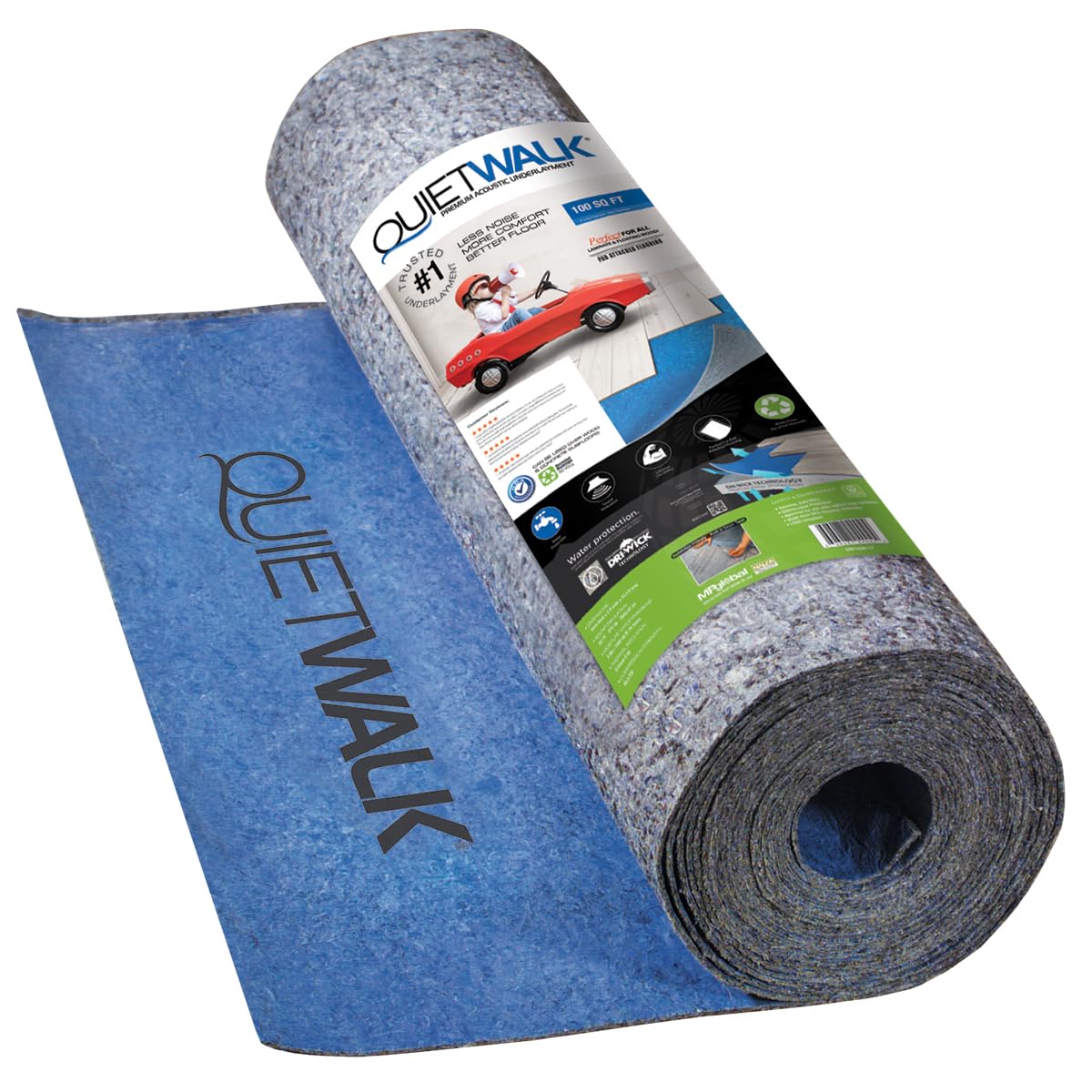
Best Recycled-Fiber Option: QuietWalk Underlayment
QuietWalk is a recycled-fiber underlay designed for floating laminate and compatible wood-floor installations. Its category is relevant to buyers who want cushioning, acoustic support, and moisture-management features in one layer.
The product may suit projects where a fiber-based underlay is permitted by the flooring manufacturer, but buyers should still confirm the exact version, flooring type, subfloor, heating system, and attached-pad rules before purchasing. Installation requirements can differ between product variants and flooring systems.
For a closer look at its construction, intended uses, and installation considerations, read the QuietWalk Underlayment review. Current product details can also be checked on Amazon.
Best Natural-Material Option: Cork Underlay
Cork provides a firm alternative to lightweight foam and may appeal to buyers who prefer a natural-material underlay. It can add modest cushioning and help reduce the hollow sound sometimes associated with floating floors.
Moisture is an important limitation. Cork may require a separate vapor-control layer over concrete or in other moisture-prone conditions. Buyers should confirm that the chosen cork product is approved beneath floating laminate and that its thickness falls within the flooring manufacturer’s limits.
Best for Moderate Residential Use: Felt Underlay
Felt underlay may be suitable for bedrooms, home offices, and other spaces where moderate impact-noise control and a softer walking feel are priorities. It can provide a useful contrast to rubber, foam, and cork because its fiber structure behaves differently under load.
Not every felt product is intended for laminate. Some are designed for rugs, carpet, roofing, or other applications. Only use a felt underlay that clearly identifies floating laminate as an approved flooring type and provides appropriate guidance on thickness, moisture, and subfloor preparation.
Best Low-Profile Option
A low-profile acoustic underlay is useful when door clearance, appliances, stairs, thresholds, or adjoining floors restrict the amount of added height. The goal is to find the thinnest suitable option that still provides adequate support and a meaningful acoustic benefit.
Thickness should not be evaluated in isolation. A thin, dense product may perform differently from a thicker lightweight foam. Buyers should compare construction, resilience, compatibility, and installation requirements rather than assuming that the thickest option will be the quietest.
Best for Underfloor Heating
Underlay used above an underfloor-heating system must allow heat to pass through the completed floor assembly without exceeding the limits set by the heating or flooring manufacturer. An underlay that is highly insulating may slow heat transfer and reduce system efficiency.
Check the combined thermal resistance of the laminate and underlay, not merely the underlay by itself. Confirm the permitted operating temperature, installation sequence, moisture requirements, and whether the product is approved for the specific electric or hydronic system.
Best DIY-Friendly Option
Underlay with an integrated moisture layer, overlap flap, or joining tape can simplify installation and reduce the number of separate materials required. These features are especially useful for DIY buyers working over concrete or other subfloors where moisture management is necessary.
Installation convenience should be considered separately from acoustic performance. Built-in tape does not correct an uneven subfloor, and an integrated barrier does not replace moisture testing or the flooring manufacturer’s instructions.
QuietWalk Compared With Other Sound-Attenuation Underlays
QuietWalk represents one type of acoustic underlay rather than a universal solution. Other underlays use rubber, foam, cork, felt, mineral-based boards, or layered constructions. These materials differ in resilience, moisture behavior, floor height, installation method, and suitability for floating laminate.
The most useful comparison is therefore not simply one brand against every alternative. Buyers should first identify their floor system and primary constraint, then compare products that are genuinely suitable for that installation. The sound attenuation floor underlayment guide provides a broader look at underlay categories and use cases.
Rubber vs Foam vs Cork vs Felt
Rubber
Rubber is dense and resilient, making it a logical category to examine for impact-noise control. It may cost more, weigh more, and require more effort to cut than lightweight alternatives.
Foam
Foam is widely available, easy to handle, and often supplied with a moisture layer. Performance and durability vary considerably, so density and compression behavior matter as much as thickness.
Cork
Cork is firm and dimensionally different from soft foam. It can be useful where a natural-material option is preferred, but moisture exposure and installation requirements need careful attention.
Felt and Recycled Fiber
Felt and recycled-fiber products can provide cushioning and acoustic support beneath approved floating floors. Buyers should verify moisture design, compression resistance, and compatibility with attached-pad laminate.
What Acoustic Underlay Can and Cannot Do
Acoustic underlay can help reduce some impact noise by adding resilience between the laminate and subfloor. It may also reduce the clicking or hollow sound heard within the room and make the floor feel more comfortable underfoot.
Underlay alone does not create complete sound isolation. Voices, television, music, and other airborne sounds can travel through walls, ceilings, gaps, ducts, doors, and adjoining structures. Significant room-to-room noise problems may require changes to the wider floor-ceiling assembly rather than a different underlay alone.
How to Choose the Right Underlay
Confirm Laminate Compatibility
Start with the laminate manufacturer’s instructions. Check the maximum permitted underlay thickness, required compressive support, attached-pad rules, approved installation methods, and warranty conditions.
Identify the Subfloor
Concrete, plywood, oriented strand board, and existing hard floors can have different moisture and preparation requirements. Do not assume that one underlay can be installed over every surface.
Match the Product to the Noise
Choose acoustic underlay primarily for footsteps, furniture movement, and other contact noise. Do not rely on it as the sole treatment for airborne noise.
Check Moisture Requirements
Determine whether the product has an integrated moisture layer and whether that layer is sufficient for the installation. Confirm how seams should be joined and whether the perimeter must be sealed.
Consider Floor Height
Measure doors, appliances, stairs, baseboards, and transitions before selecting a thick product. Added height can create installation problems that outweigh a small acoustic advantage.
Review Heating Compatibility
For heated floors, check thermal resistance and maximum-temperature guidance for the complete laminate-and-underlay assembly.
Compare Coverage and Installation
Check roll or sheet coverage, cutting requirements, seam design, waste allowance, and whether additional tape or membrane is needed. A lower-priced roll may not be the best value if it covers less area or requires extra materials.
Subfloor and Installation Cautions
- Make sure the subfloor is clean, dry, flat, and structurally suitable.
- Do not install multiple layers unless the flooring manufacturer expressly permits it.
- Do not use excessive thickness beneath a click-lock floor.
- Follow the required direction, overlap, seam, and perimeter instructions.
- Do not assume an acoustic underlay can correct squeaks, movement, moisture damage, or an uneven subfloor.
- Check whether attached-pad laminate permits an additional underlay.
- Allow for the finished floor height at doors, stairs, appliances, and adjoining surfaces.
Frequently Asked Questions
Is thicker underlay always better for reducing noise?
No. Thickness is only one factor. Material density, resilience, compression behavior, floor construction, and installation quality can all affect the result. An excessively thick or soft product may also create problems for laminate locking joints.
Will acoustic underlay block voices from the room below?
It may provide limited improvement in some floor assemblies, but underlay is mainly used for impact and contact noise. Voices are airborne sound and may require broader treatment of the floor-ceiling system and surrounding transmission paths.
Do I need a moisture barrier over concrete?
Many laminate installations over concrete require moisture protection, but the exact requirement depends on the flooring, underlay, slab condition, and manufacturer instructions. An integrated barrier may be sufficient in some systems, while others require a separate membrane.
Can cork be installed under laminate?
Yes, when the cork product and laminate manufacturer permit the combination. Check the approved thickness, moisture requirements, installation method, and subfloor preparation instructions.
Can I double the underlay for better sound reduction?
Do not stack underlay layers unless the flooring manufacturer specifically approves it. Excessive cushioning can allow too much movement and may damage the locking system or affect the warranty.
Can acoustic underlay be used with underfloor heating?
Some products can, but compatibility must be confirmed for the underlay, laminate, and heating system together. Pay particular attention to total thermal resistance and maximum operating temperature.
Is QuietWalk suitable for every laminate floor?
No underlay should be assumed universally compatible. Confirm the exact QuietWalk version, laminate construction, attached-pad rules, subfloor, moisture conditions, and heating requirements before installation.
Final Recommendation
Choose acoustic underlay according to the installation rather than relying on a single headline claim. For an upstairs room, prioritize a laminate-approved product intended for impact-noise reduction. Over concrete, give equal weight to moisture protection and seam design. For heated floors, verify thermal compatibility. Where floor height is restricted, choose a suitable low-profile option rather than forcing a thicker layer into the assembly.
QuietWalk may be a practical recycled-fiber option for compatible floating laminate installations, while rubber, foam, cork, and felt products can suit different priorities. The strongest choice is the product that meets the flooring manufacturer’s requirements, fits the subfloor and room conditions, and addresses the buyer’s actual noise problem without overstating what underlay can achieve.