Introduction
When choosing a soundproofing material for residential, commercial, or automotive use, two options frequently appear in project planning: the Soundsulate 1 lb Mass Loaded Vinyl (MLV) and the AcoustiBlok MLV product line. Both are mass-loaded barriers designed to reduce airborne noise transmission, but differ in material composition, structural properties, and stated acoustic ratings. This comparison draws exclusively from verified product documentation and corroborated findings to help clarify how each solution aligns with specific noise control scenarios.
How This Comparison Was Built
This evaluation is based on close-to-source documentation provided by the manufacturers and official suppliers. We used only verified technical specifications, material compositions, and performance ratings, avoiding third-party interpretation or unverified reviews. Our goal is to present source-supported distinctions and limitations without implying preferences or outcomes.
Key Decision Factors Identified From the Source Content
From the available product materials and corroborated data, the following factors emerged as the most relevant for side-by-side evaluation:
- Material composition and flexibility
- Product thickness relative to weight
- Sound Transmission Class (STC) ratings
- Intended use cases across building and automotive settings
- Installation requirements and compatibility with other materials
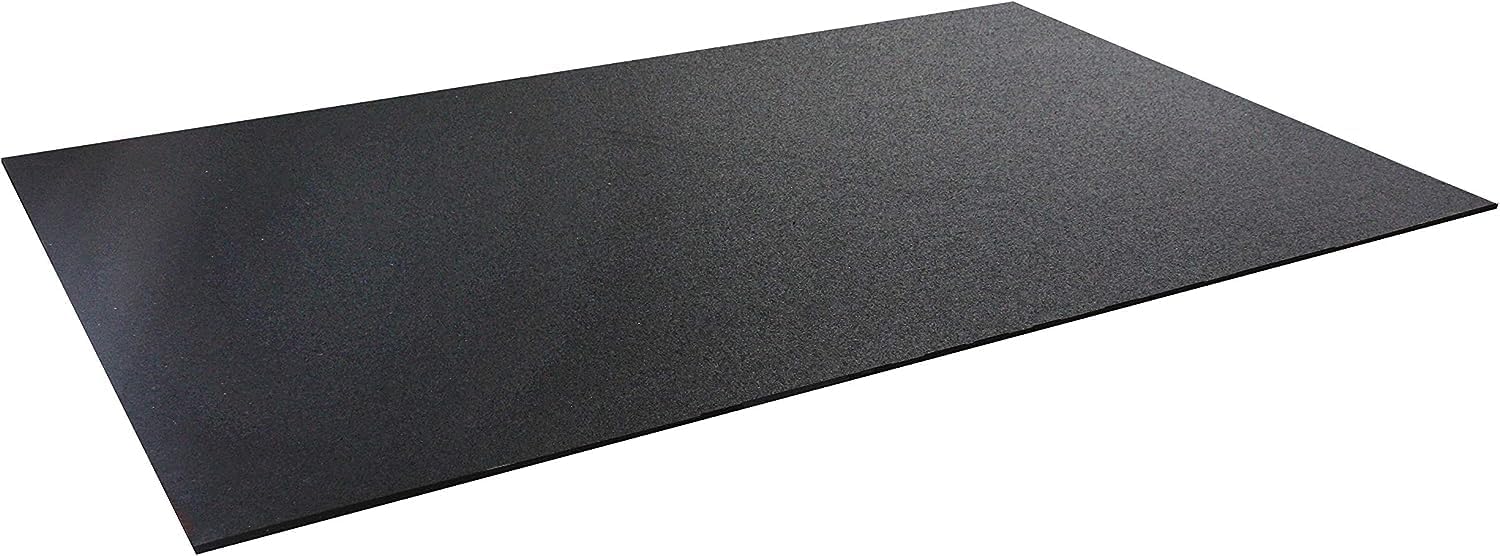
Soundsulate Next Generation 1 lb Mass Loaded Vinyl Soundproofing Roll for Walls Ceilings and Automotive
The
Soundsulate mass loaded vinyl is a flexible PVC-based barrier with a 1 lb/ft² density and a thickness of approximately 0.12 inches (1/8″). It is marketed for use in walls, ceilings, floors, and automotive interiors. According to the manufacturer, it has an STC rating of 27 when properly installed. The material is non-toxic, tear-resistant, and designed to be compatible with adhesive and mechanical fasteners. It is often used in combination with other insulation layers and is noted for its stability in enclosed environments. Full product details and configurations are available on
Amazon.
AcoustiBlok MLV Soundproofing Material
The
AcoustiBlok MLV is a proprietary mineral-filled polymer material offered in two weight variants: 1 lb/ft² and 2 lb/ft². The 1 lb version is notably thinner at approximately 0.0625 inches (1/16″), while the 2 lb version is closer in thickness to Soundsulate at about 0.125 inches. Verified STC ratings are 26 for the 1 lb version and 32 for the 2 lb version. The product is promoted for structural and automotive applications and is also designed for use behind drywall, in ceilings, and under flooring. Available sizes and product configurations can be explored via
Amazon listings.
Head-to-Head Comparison: What the Evidence Shows
Material composition is one of the clearest differentiators between these two options. Soundsulate uses polyvinyl chloride (PVC), while AcoustiBlok employs a proprietary mineral-filled polymer. Although both products are rated at 1 lb/ft² for their base models, the thickness of Soundsulate is approximately double that of AcoustiBlok’s 1 lb variant, indicating a different density and potentially different handling characteristics.
STC ratings also diverge slightly. Soundsulate lists an STC of 27, while AcoustiBlok’s 1 lb version is rated at 26. The 2 lb AcoustiBlok version, however, reaches STC 32, reflecting higher mass and material density. No direct performance comparison is implied, but the difference in available thickness and weight options may influence product selection based on space constraints and layering needs.
At-a-Glance Comparison Table
| Attribute |
Soundsulate 1 lb MLV |
AcoustiBlok MLV |
| Material Type |
PVC-based |
Mineral-filled polymer |
| Weight per Sq Ft |
1 lb |
1 lb and 2 lb options |
| Thickness |
~0.12 in (1/8″) |
0.0625 in (1 lb) or 0.125 in (2 lb) |
| STC Rating |
27 |
26 (1 lb), 32 (2 lb) |
| Applications |
Walls, ceilings, vehicles, enclosures |
Walls, ceilings, vehicles, enclosures |
| Installation |
Cut with tools, use adhesives or fasteners |
Cut with tools, use adhesives or fasteners |
Which One May Be the Better Fit for Different Situations
If installation space allows for slightly more material thickness, the PVC-based Soundsulate barrier may align with projects that value ease of cutting and adaptability. It is noted for odor-neutral performance and a neutral emission profile, making it potentially useful in enclosed areas like automotive interiors.
Where a thinner profile is required, particularly in wall systems with minimal space, the 1 lb version of AcoustiBlok offers a comparable weight with a slimmer thickness. For scenarios requiring higher mass, such as more demanding sound isolation layers, the 2 lb AcoustiBlok variant offers additional STC performance based on source ratings. These distinctions may help guide selection depending on thickness tolerances and target use cases.
Frequently Asked Questions
Are both products suitable for automotive use?
Yes. Both are described in source materials as appropriate for vehicle interiors, including under flooring and within panels.
Do these materials reduce impact noise?
No. Both products are designed to reduce airborne sound transmission, not structure-borne or impact noise.
Can either product be used behind drywall?
Yes. Both are identified as compatible with wall assemblies where they serve as an internal sound barrier layer.
Is the Soundsulate material non-toxic?
According to the source document, the formulation is non-toxic and low-emission, although no test data was cited.
Closing Guidance
Both Soundsulate and AcoustiBlok offer soundproofing solutions anchored in mass and flexibility. The selection between them may come down to material preference, available space, and installation priorities. For full specifications, context, and application guidance, readers are encouraged to explore the dedicated product overviews:
read the full Soundsulate review or
see the AcoustiBlok review for further details.