
Table of Contents
Introduction
When selecting a sound deadening solution for a vehicle, differences in material structure, installation format, and usage flexibility can have a direct impact on the installation process and acoustic treatment strategy. This comparison examines two aluminum-butyl options—Stinger Audio Silencer and Noico Sound Deadener—based exclusively on source-verified product documentation and internal findings. The goal is to present a factual, side-by-side look without speculation or marketing interpretation.
How This Comparison Was Built
This article draws exclusively from two verified source reviews: Stinger Audio Silencer Car Sound Deadening Material Aluminum Butyl Mat Overview and Noico Sound Deadener – Is It Worth Investing In?. All feature comparisons, similarities, and differences have been corroborated by content from brand-owned documentation or distributor-style materials. No third-party or interpretive sources were used.
Key Decision Factors Identified From the Source Content
Based on verified details, the following elements emerged as key distinguishing points:
- Material composition and thickness
- Form factor (sheets vs unspecified)
- Installation support tools and techniques
- Flexibility and handling during application
- Thermal and moisture resistance properties
Stinger Audio Silencer Car Sound Deadening Material Aluminum Butyl Mat Overview
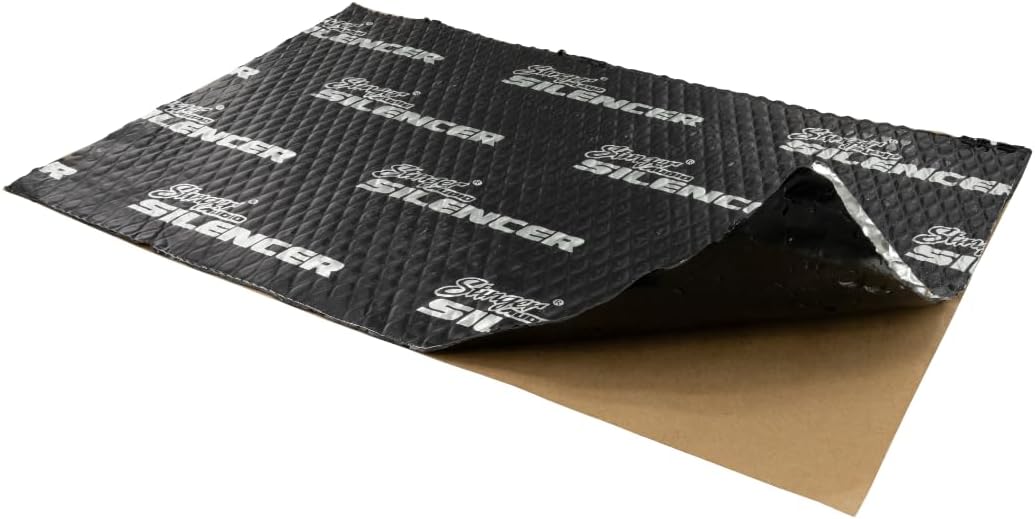
The Stinger Audio Silencer uses a modular aluminum-butyl sheet construction specifically aimed at structure-borne and airborne noise reduction inside vehicles. Packaged as 27 individual 12″ × 16″ sheets covering 36 square feet, its format supports precise, segment-based installation across varied automotive panels. The product features a pressure-sensitive adhesive and does not require external fasteners or adhesives. For deeper details on coverage layout and handling behavior, see the full review here. Product details and ordering are available through this affiliate link.
Noico Sound Deadener – Is It Worth Investing In?

Noico is a butyl-based sound deadener described as dense yet flexible and adaptable across automotive interior surfaces. While specific packaging format (e.g., roll or sheet) is not stated in the source, the material is referenced as being versatile enough for uneven surfaces like dashboards, door panels, and trunks. It also highlights heat and water resistance as functional traits for durability and adhesive stability. For a full breakdown of user-guided installation and product characteristics, read the detailed product overview. Purchasing information is available through this affiliate link.
Head-to-Head Comparison: What the Evidence Shows
Both Stinger and Noico use aluminum-backed butyl material with a stated thickness of approximately 80 mils (~2mm). Each product supports peel-and-stick installation and advises using a roller for adhesion consistency, though rollers are not included in either case. A key distinction lies in Stinger’s 27-sheet modular format, which allows targeted installation with reduced waste—this was not specified for Noico.
Thermal resistance is described for both, with Noico emphasizing heat-blocking performance in hot environments and Stinger pointing to aluminum layering as beneficial for shape retention. Noico adds water resistance to its traits, particularly for use in humid climates. Both products are cuttable and offer flexibility during installation, but only Noico makes an explicit claim about being dense yet light and suitable for curved or uneven surfaces without structural failure.
At-a-Glance Comparison Table
| Attribute | Stinger Audio Silencer | Noico Sound Deadener |
|---|---|---|
| Material | Butyl with aluminum foil | Butyl-based |
| Thickness | 80 mils (~2mm) | 80 mils (~2mm) |
| Format | 27 sheets (12″ × 16″) | Not specified |
| Installation | Peel-and-stick, roller advised | Peel-and-stick, roller advised |
| Thermal Resistance | Aluminum layer aids stability | Heat-resistant by design |
| Moisture Resistance | Not specified | Explicitly water-resistant |
| Surface Flexibility | Cuttable and form-retentive | Flexible for curved surfaces |
Which One May Be the Better Fit for Different Situations
Stinger’s modular sheet layout may be better suited for users seeking segment-by-segment coverage, particularly in vehicles with varied interior panel shapes or constrained workspaces. Noico, while less defined in format, may offer broader handling tolerance in high-temperature or humid environments due to its stated heat and water resistance. Those prioritizing moisture control or flexibility for complex surfaces may find Noico’s composition better aligned with their needs, though Stinger’s thermal design and shape-retaining aluminum layer serve similar roles from a material handling perspective.
Frequently Asked Questions
Do both products require additional tools for installation?
Neither product requires external adhesives or fasteners, but both suggest the use of a roller tool to improve bonding and eliminate air pockets. The roller is not included with either product.
Is the thickness the same for both materials?
Yes, both are listed at 80 mils (approximately 2mm), although one Noico source incorrectly noted “80 mm,” which appears to be a typographical error.
Which product offers better coverage control?
Only Stinger specifies its coverage method: 27 pre-cut sheets for 36 sq. ft. This modular approach can reduce waste and support more precise coverage. Noico does not provide equivalent format details.
Closing Guidance
This comparison provides a structural overview of two aluminum-butyl sound deadening options, each with verified benefits in thermal resilience, acoustic dampening, and user-applied installation. To determine which is the better fit for your project, we recommend starting with the in-depth product reviews: explore the full Stinger Audio Silencer breakdown and see the Noico product details. For direct access to product listings, refer to Stinger’s listing here and Noico’s listing here.