Introduction
When choosing between sound deadening mats for automotive applications, both the Storystore and AggSound 394 mil (10mm) insulation products present viable options. This comparison provides a factual, source-supported breakdown of their material differences, installation methods, and use case considerations to support informed evaluation.
How This Comparison Was Built
This article compares the Storystore 394 mil 10mm Heat Sound Deadening Insulation Mat and the AggSound 394mil 10mm Automotive Sound Deadening Mat using only officially published product materials and corroborated findings. Each claim has been verified against brand-owned product descriptions to ensure alignment with source-locked specifications.
Key Decision Factors Identified From the Source Content
The source materials revealed meaningful distinctions in material composition, handling characteristics, and structural features. While both mats share thickness and general application zones, they diverge in core materials, packaging format, and installation detail that may impact product fit depending on specific vehicle needs.
Storystore 394 mil 10mm Heat Sound Deadening Insulation Mat Overview
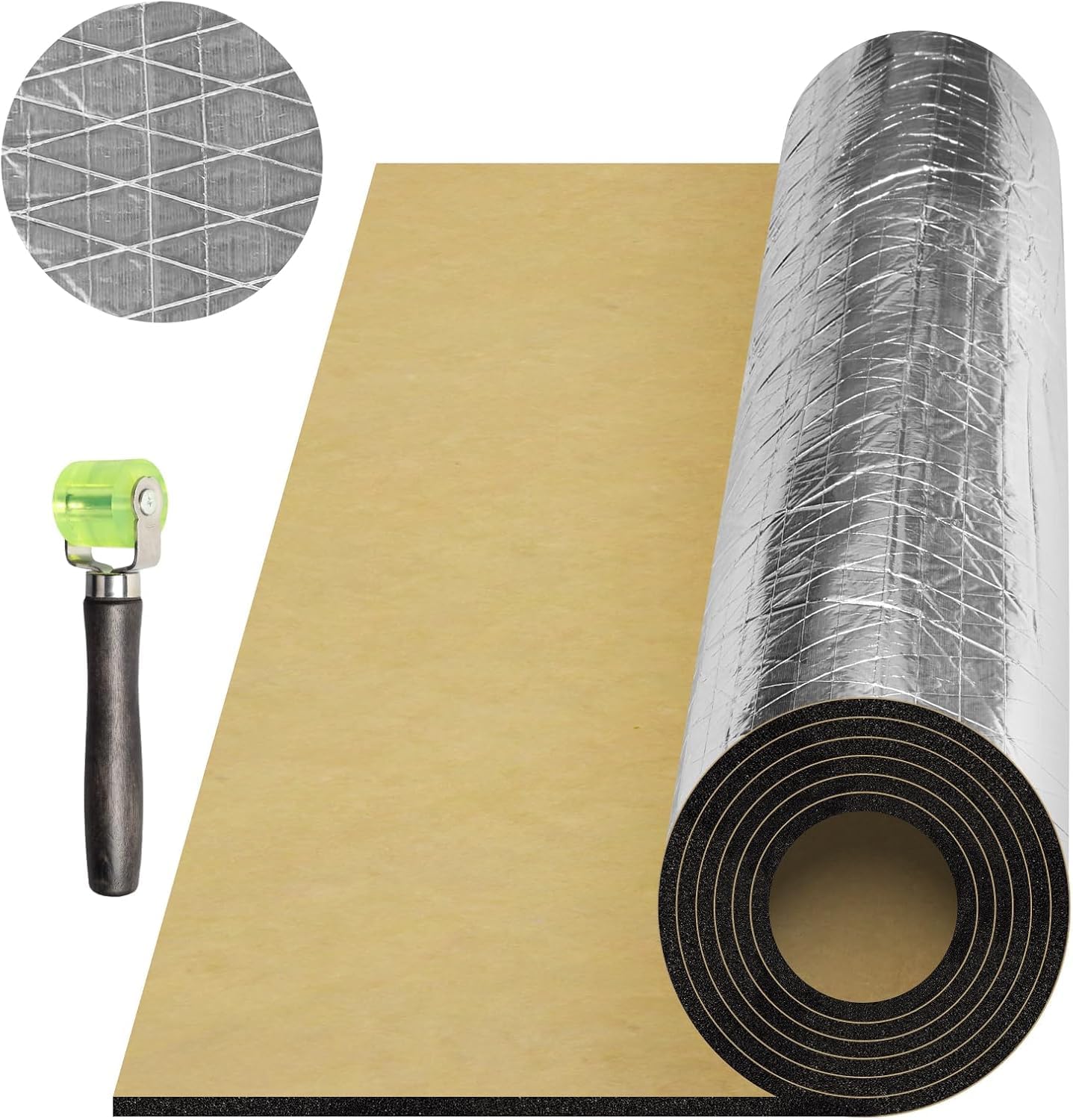
The Storystore mat is positioned as a general-purpose solution for automotive thermal and sound insulation projects. Its fiberglass-based closed-cell foam core is designed to provide structural support while the aluminum foil surface reflects radiant heat. With a single-sheet layout and a built-in adhesive backing, the product targets large-surface automotive coverage. However, the product documentation does not provide standardized acoustic or thermal ratings, and mentions of folded packaging may signal additional handling considerations during installation. For more detailed evaluation, readers can
read the full review or explore product specifics on
Amazon.
AggSound 394mil 10mm Automotive Sound Deadening Mat for Vehicle Noise Reduction Applications Overview
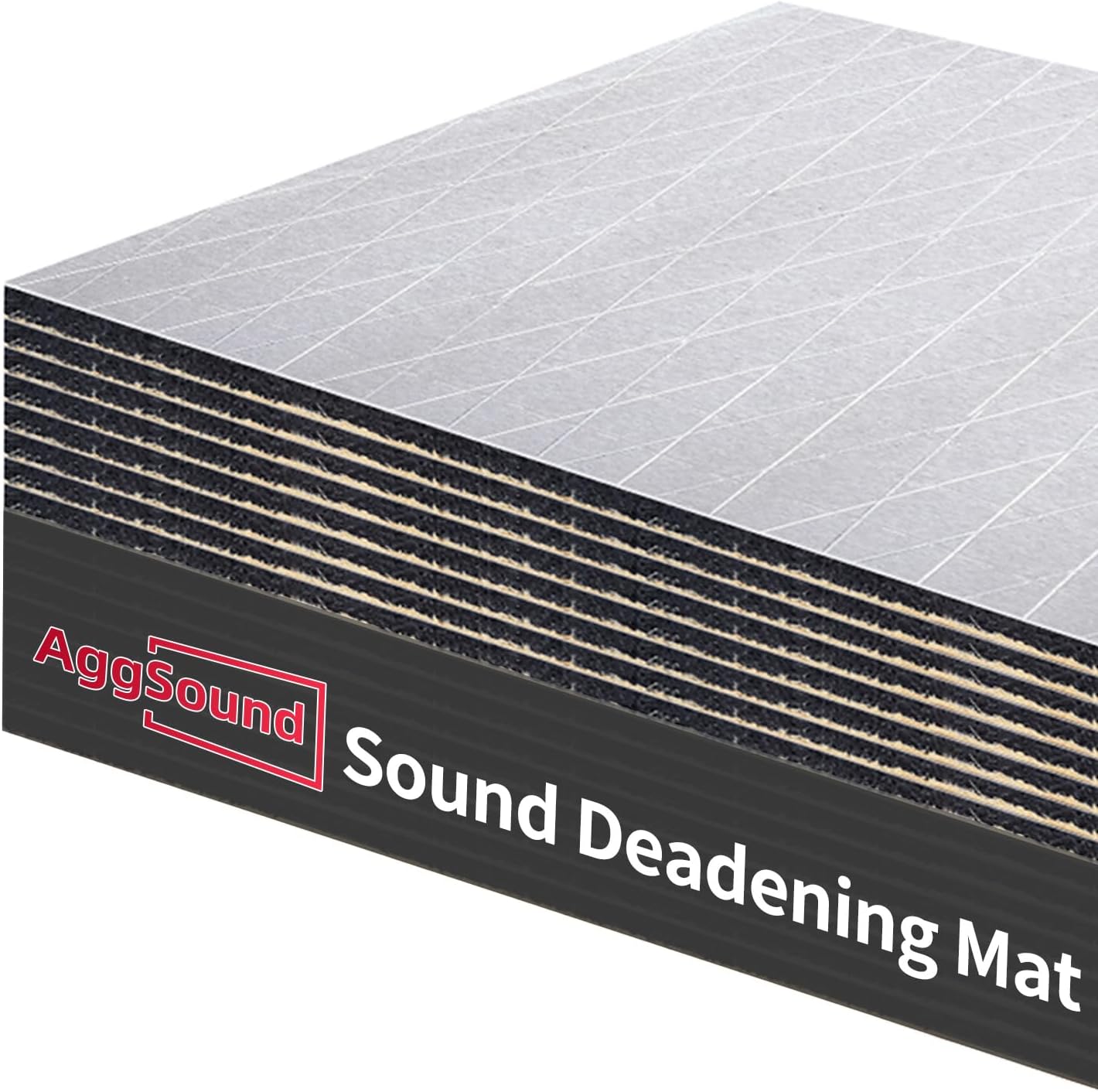
AggSound offers a three-layer insulation mat featuring a dense closed-cell foam core, aluminum foil surface, and pre-applied adhesive. It emphasizes compression resistance and durability, with application compatibility across doors, floors, trunks, and engine-adjacent areas. The product documentation calls out its suitability for non-horizontal surfaces and use in utility vehicles, while also noting that thickness may present fitment limitations in tighter panel spaces. To learn more about AggSound, see the
detailed breakdown or explore the
product listing.
Head-to-Head Comparison: What the Evidence Shows
Both mats are 394 mil (10mm) thick and utilize a foil-laminated foam structure for thermal and sound insulation. However, the Storystore mat incorporates a fiberglass core while AggSound does not. AggSound specifically highlights compression resistance, a three-layer build, and compatibility with tighter mechanical tolerances—although it also warns that the thickness may interfere with compact panel assemblies. Storystore’s documentation does not mention this constraint. Additionally, AggSound notes improved performance with reinforced adhesion on curved or non-horizontal surfaces, while Storystore frames installation as a simpler, single-step adhesive process. Storystore also ships folded, which may require crease adjustment during application, a factor not cited in AggSound’s handling notes.
At-a-Glance Comparison Table
| Feature |
Storystore |
AggSound |
| Core Composition |
Fiberglass + Closed-Cell Foam |
Closed-Cell Foam Only |
| Layer Construction |
Foil + Foam + Adhesive |
Foil + Foam + Adhesive (Three-Layer) |
| Compression Resistance |
Not specified |
Highlighted |
| Surface Application Compatibility |
Doors, Floors, Firewalls, etc. |
Doors, Floors, Trunks, Engine Areas |
| Packaging |
Folded (may introduce creases) |
Not mentioned |
| Clearance Warning |
Not mentioned |
May not suit tight panel assemblies |
| Standardized Ratings |
Not provided |
Not provided |
Which One May Be the Better Fit for Different Situations
The choice between these two mats may depend on space constraints and installation context. AggSound may be more suitable when compression resistance and structured panel integrity are priorities, particularly in utility vehicles or where multi-layer durability is valued. Storystore may be appropriate for general-purpose installations where ease of handling and fiberglass reinforcement are beneficial. Users working within compact assemblies should consider AggSound’s explicit clearance guidance, which is not addressed in the Storystore documentation.
Frequently Asked Questions
Do either of these products have certified thermal or acoustic ratings?
No. Neither Storystore nor AggSound lists standardized performance values for sound attenuation or heat insulation.
Can these mats be used in curved or non-horizontal areas?
Yes. Both mats can be applied to contoured surfaces. AggSound notes improved results when additional adhesive support is used in these conditions.
Are there any packaging or handling differences?
Yes. Storystore is shipped folded, which may introduce creases. AggSound’s packaging method is not described in the source content.
Closing Guidance
Both the Storystore and AggSound sound deadening mats offer source-supported options for automotive heat and noise insulation projects. Differences in core construction, material layering, and clearance considerations provide distinct paths for fit evaluation. For full context, material specifics, and installation factors, we recommend reviewing the full product articles for
Storystore and
AggSound, or exploring their detailed product listings on
Amazon and
Amazon.