
Table of Contents
Introduction
Choosing between a thick thermo-acoustic fiber and a thinner closed cell foam mat can significantly affect how you approach sound and heat control inside a vehicle or boat. The Dynamat DynaCore 1 Inch and the SoundSkins SSK Wavy 8mm are positioned differently in terms of thickness, material type, and stated performance focus. This comparison highlights the differences that matter most for automotive and marine insulation projects.
Key Decision Factors Identified From the Review Content
The review content emphasizes material composition, thickness, thermal resistance, noise and vibration approach, environmental durability, and installation format as the primary distinctions between these two products.
Dynamat DynaCore 1 Inch Thermo-Acoustic Insulating Fiber for Automotive and Marine Use Overview
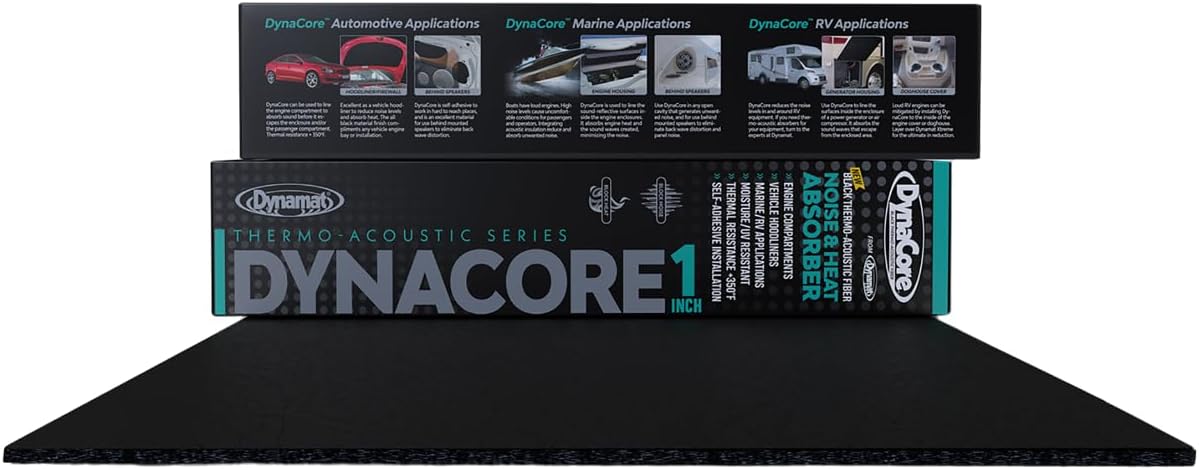
The Dynamat DynaCore 1 Inch is a fiberglass-based insulating fiber designed for automotive, marine, and RV applications. It features a one-inch total thickness and a rugged fiber-core structure intended to combine sound absorption and thermal insulation.
Each sheet measures 32 inches by 54 inches and covers 12 square feet. The material is engineered to withstand heat exposure up to 350 degrees Fahrenheit and is specified as UV-resistant and moisture-resistant. A peel-and-stick adhesive backing is integrated for installation on surfaces such as doors, floors, engine compartments, firewalls, trunks, and headliners.
In the review content, this product is positioned as a sound-absorbing layer that reduces airborne noise rather than serving as a standalone vibration damper. It is described as suitable for use alongside vibration control materials when needed.
SoundSkins SSK Wavy 8mm Foam Mat for Sound Deadening and Vibration Control Overview
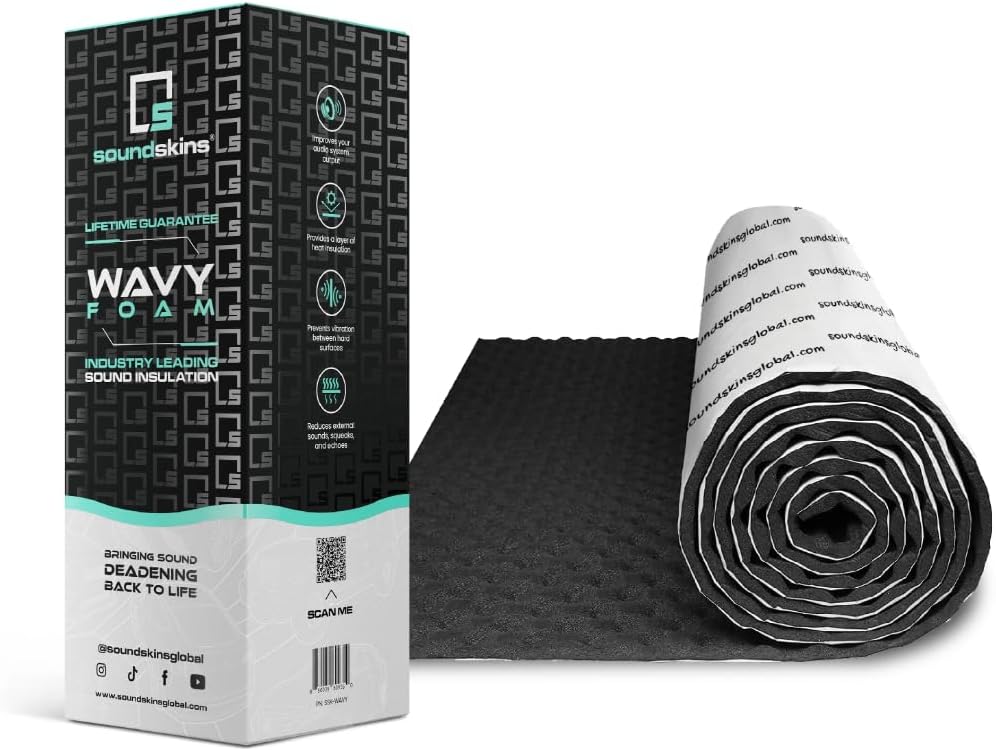
The SoundSkins SSK Wavy 8mm is a rubber-based closed cell foam panel measuring approximately 8mm (315 mil) in thickness. It is supplied in a rolled sheet format measuring 196.9 inches by 23.6 inches, covering 32.3 square feet.
The review describes this foam as engineered to dampen road and engine noise while reducing vibrations transmitted through metal surfaces. In addition to acoustic control, it provides a degree of thermal resistance by reducing heat transfer through the vehicle body.
The material is described as resistant to water ingress, dirt, environmental exposure, and chemicals. It is also noted as fire-resistant. An integrated adhesive backing supports installation across door panels, headliners, trunks, and flooring.
Head-to-Head Comparison: What the Evidence Shows
Material type: Dynamat uses a fiberglass-based fiber core, while SoundSkins uses rubber-based closed cell foam. The construction approach differs significantly, with one emphasizing thick fibrous insulation and the other relying on cellular foam structure.
Thickness: Dynamat provides a full one-inch layer, whereas SoundSkins measures approximately 8mm (315 mil). This creates a clear difference in profile and potential clearance requirements.
Acoustic focus: Dynamat is described as reducing airborne noise and functioning as a sound-absorbing layer. SoundSkins is described as addressing both noise and vibration transmitted through metal surfaces.
Thermal performance: Dynamat is engineered for heat exposure up to 350°F and is positioned for high-heat areas such as engine bays and firewalls. SoundSkins is described as offering thermal resistance by reducing heat transfer, but no maximum temperature rating is stated.
Environmental durability: Dynamat is specified as UV- and moisture-resistant. SoundSkins is described as resistant to water ingress, dirt, environmental factors, chemicals, and is noted as fire-resistant.
At-a-Glance Comparison Table
| Feature | Dynamat DynaCore 1 Inch | SoundSkins SSK Wavy 8mm |
|---|---|---|
| Material | Fiberglass-based fiber core | Rubber-based closed cell foam |
| Thickness | 1 inch | Approximately 8mm (315 mil) |
| Coverage per Package | 12 square feet (32" x 54" sheet) | 32.3 square feet (196.9" x 23.6" roll) |
| Maximum Heat Rating | Up to 350°F | Not specified in the available review details. |
| Moisture / Water Resistance | Moisture-resistant | Resists water ingress |
| Fire Resistance | Not stated in the researched material. | Described as fire-resistant |
| Primary Noise Approach | Sound absorption (airborne noise) | Noise and vibration dampening |
Which One May Be the Better Fit for Different Situations
The Dynamat DynaCore 1 Inch may be more suitable where a thicker insulating layer is feasible and where elevated heat exposure up to 350°F is a design consideration. Its positioning as a sound-absorbing fiber layer aligns with installations targeting airborne noise reduction in areas such as firewalls, roofs, or engine-adjacent panels.
The SoundSkins SSK Wavy 8mm may be more appropriate when space is limited and when both vibration control and noise reduction are part of the objective. Its closed cell foam structure and stated resistance to water, chemicals, and fire may align with broader environmental durability requirements.
Frequently Asked Questions
Is Dynamat DynaCore designed for vibration control?
The review content describes it primarily as a sound-absorbing layer for airborne noise and notes that it can be used alongside vibration control products rather than replacing them.
Does SoundSkins SSK Wavy 8mm provide thermal insulation?
It is described as offering a degree of thermal resistance by reducing heat transfer through interior metal surfaces.
Which product is thicker?
Dynamat DynaCore measures one inch thick, while SoundSkins SSK Wavy measures approximately 8mm (315 mil).
Closing Guidance
Both materials address noise and insulation, but they do so with different constructions and stated performance emphases. The Dynamat DynaCore 1 Inch centers on thick fiberglass-based sound absorption and high heat tolerance, while the SoundSkins SSK Wavy 8mm emphasizes closed cell foam construction with combined noise and vibration dampening and broader environmental resistance characteristics.
For a deeper breakdown of installation details and contextual examples, reviewing each standalone product analysis can help clarify how the specifications align with a specific vehicle or marine project.