
Introduction
Choosing between two similarly specified sound insulation mats often comes down to application focus rather than thickness alone. Both the X AUTOHAUX 394mil 10mm Sound Deadening Mat and the AGGSOUND 394mil 10mm Automotive Sound Deadening Mat are positioned as 10mm insulation solutions for vehicle noise reduction. The differences highlighted in their respective reviews center on construction emphasis, intended installation areas, and how each is framed for automotive or broader applications.
Key Decision Factors Identified From the Review Content
The review content for both products emphasizes material construction, intended installation zones, heat-reflective capability, moisture considerations, and scope of application (localized treatment versus general automotive noise reduction).
X AUTOHAUX 394mil 10mm Sound Deadening Mat for Hood Fender and Boat Engine Cover Overview
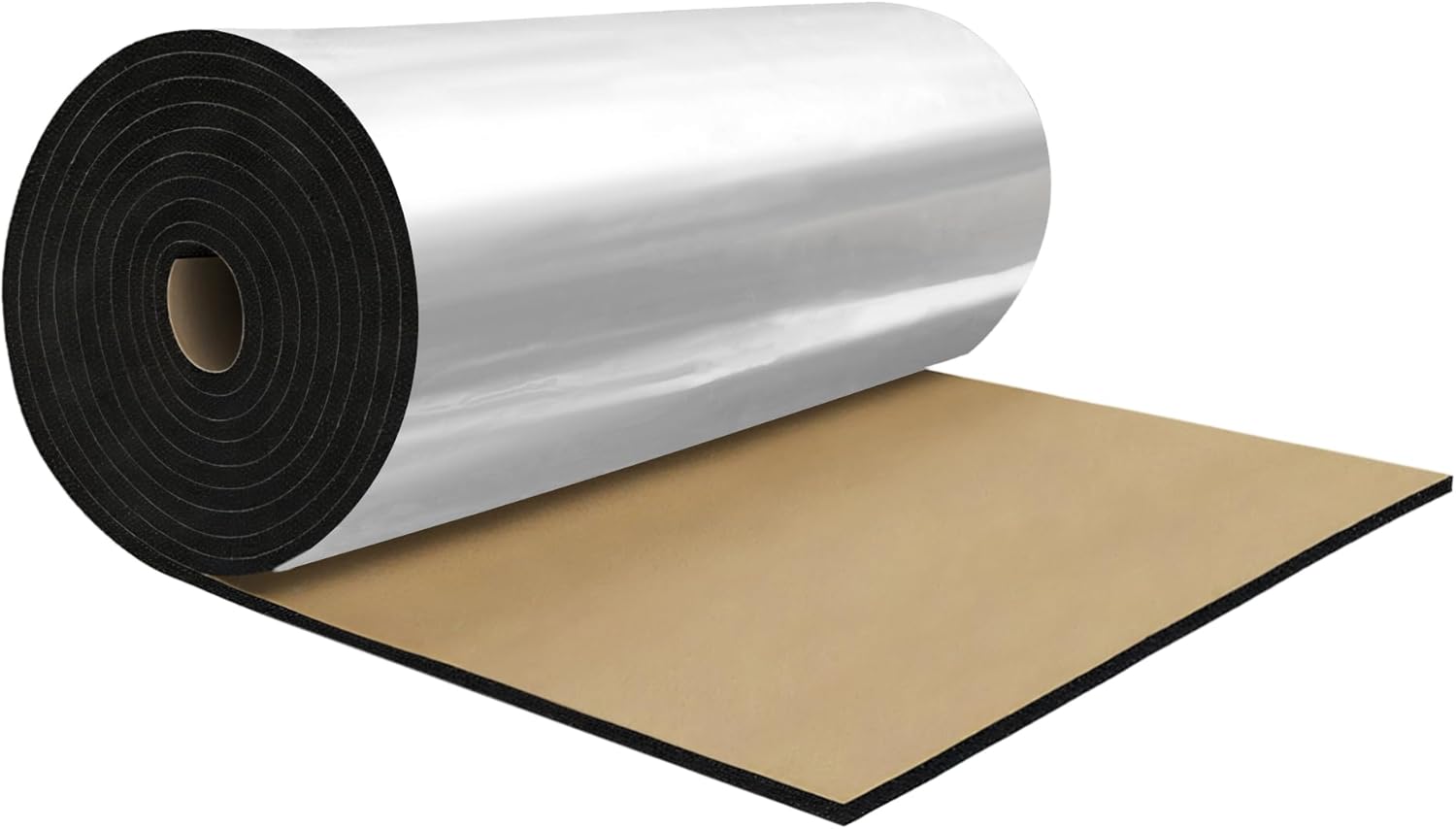
The X AUTOHAUX 394mil 10mm Sound Deadening Mat for Hood Fender and Boat Engine Cover is described as a foil-backed, closed-cell foam insulation pad designed for both acoustic dampening and radiant heat reflection. Its 10mm foam core is paired with an aluminum surface intended to deflect engine and environmental heat while helping reduce mid- to high-frequency noise.
Each sheet measures approximately 19.69 by 15.75 inches and covers 2.16 square feet, positioning it for localized applications rather than full-cabin coverage. The review highlights suitability for hoods, fenders, engine bays, doors, trunks, and boat engine covers. Moisture resistance is specifically noted, making it adaptable for marine compartments where condensation may occur.
The integrated self-adhesive backing supports direct installation onto cleaned surfaces. It is not rated for direct contact with high-temperature components such as exhaust pipes or mufflers. For current pricing and availability, see X AUTOHAUX 394mil 10mm Sound Deadening Mat for Hood Fender and Boat Engine Cover.
AGGSOUND 394mil 10mm Automotive Sound Deadening Mat for Vehicle Noise Reduction Applications Overview
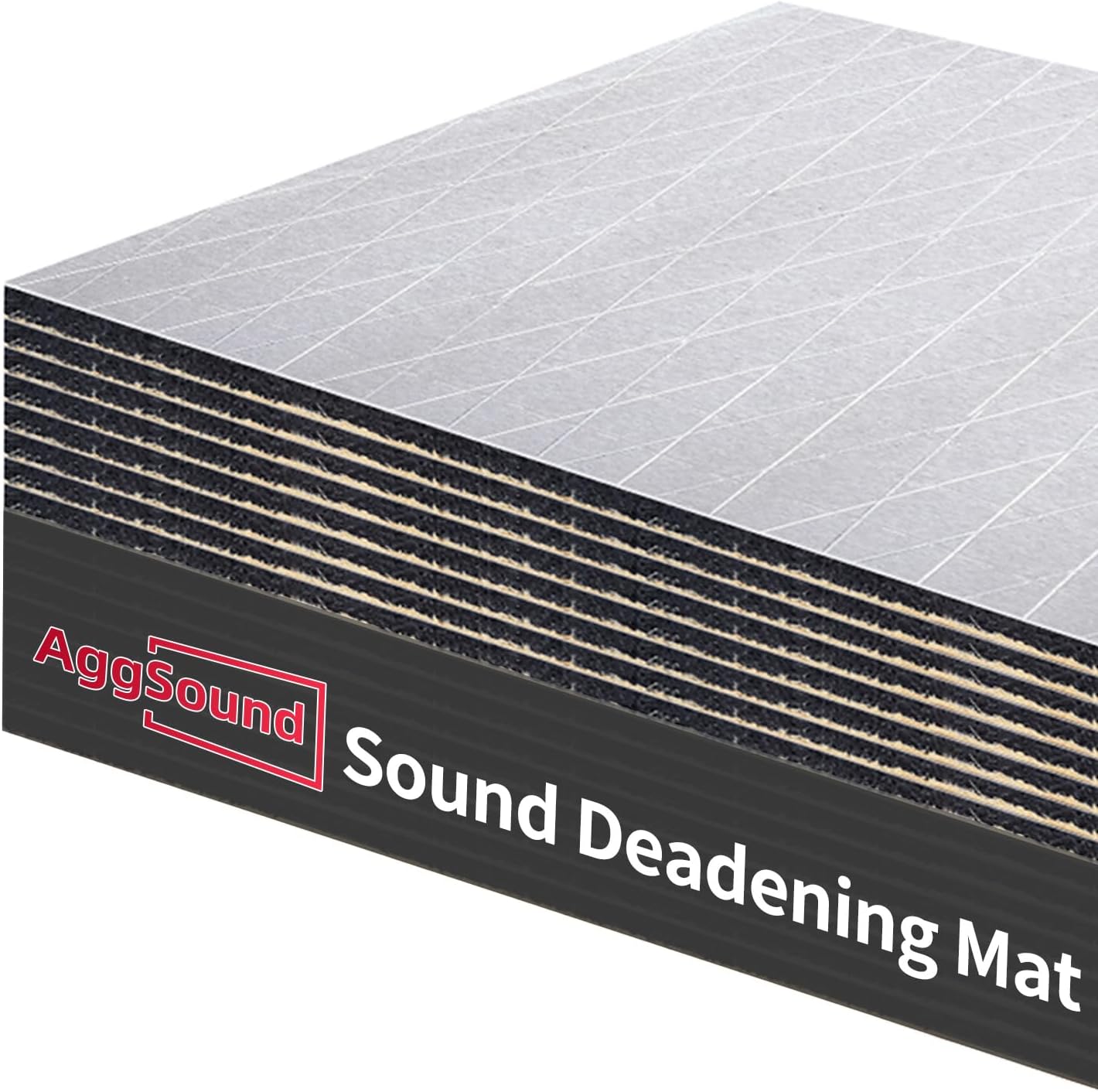
The AGGSOUND 394mil 10mm Automotive Sound Deadening Mat for Vehicle Noise Reduction Applications is positioned as a 10mm automotive insulation material focused on reducing vehicle noise. Its construction and intended use center on automotive environments where vibration and road noise transmission are primary concerns.
The review frames it as an automotive-focused solution rather than highlighting marine use. Installation is oriented toward common vehicle noise zones, aligning with general sound deadening applications inside cars and similar vehicles.
For more detailed specifications and usage context, review AGGSOUND 394mil 10mm Automotive Sound Deadening Mat for Vehicle Noise Reduction Applications.
Head-to-Head Comparison: What the Evidence Shows
Both products share the same stated thickness of 394mil (10mm), placing them in a similar category for foam-based automotive insulation. However, the X AUTOHAUX review explicitly emphasizes dual functionality—radiant heat reflection via an aluminum layer and airborne sound absorption through closed-cell foam. It also specifically references use in marine environments.
The AGGSOUND review, by contrast, frames the product primarily around automotive noise reduction applications. The emphasis is on vehicle-related vibration and sound control rather than expanded marine suitability or detailed heat-reflective positioning.
Sheet size and single-sheet coverage are detailed for X AUTOHAUX, clarifying its role in targeted installations. Comparable dimensional or coverage details for AGGSOUND are Not specified in the available review details.
Both products are presented as suitable for installation in common vehicle noise areas, but the X AUTOHAUX review provides clearer guidance on moisture resistance and placement limitations around high-temperature components.
At-a-Glance Comparison Table
| Feature | X AUTOHAUX 394mil 10mm Sound Deadening Mat | AGGSOUND 394mil 10mm Automotive Sound Deadening Mat |
|---|---|---|
| Foam Thickness | 10mm (394mil) | 10mm (394mil) |
| Heat-Reflective Aluminum Layer | Yes | Not stated in the researched material. |
| Moisture Resistance Mentioned | Yes | Not provided in the product write-up. |
| Single-Sheet Coverage | 2.16 square feet | Not provided in the product write-up. |
| Typical Application Focus | Vehicle hoods, fenders, engine bays, boat engine covers | Automotive noise reduction applications |
| Direct Contact with High-Heat Components | Not suitable | Not provided in the product write-up. |
Which One May Be the Better Fit for Different Situations
If the priority is under-hood insulation with explicit heat-reflective framing and moisture resistance for marine compartments, the X AUTOHAUX 394mil 10mm Sound Deadening Mat for Hood Fender and Boat Engine Cover may align more closely with that use case.
If the goal is general vehicle noise reduction within automotive interiors, the AGGSOUND 394mil 10mm Automotive Sound Deadening Mat for Vehicle Noise Reduction Applications may be more directly positioned around that objective.
In both cases, sheet-based installation suggests they are most practical for targeted areas rather than full-vehicle coverage unless multiple units are used.
Frequently Asked Questions
Do both mats have the same thickness?
Yes. Both are described as 394mil (10mm) thick insulation materials.
Is either product explicitly described as suitable for marine use?
The X AUTOHAUX 394mil 10mm Sound Deadening Mat for Hood Fender and Boat Engine Cover is specifically noted for boat engine cover applications. The AGGSOUND 394mil 10mm Automotive Sound Deadening Mat for Vehicle Noise Reduction Applications is not described with marine positioning in the available review details.
Are full performance ratings provided for either mat?
For X AUTOHAUX, specific decibel reduction values are not detailed. Comparable performance metrics for AGGSOUND are Not provided in the product write-up.
Closing Guidance
Both products sit in the same nominal thickness category, but their review emphasis differs. X AUTOHAUX is framed as a dual-purpose solution for both heat reflection and sound dampening, with clearly stated hood and marine applications. AGGSOUND is positioned more squarely around general automotive noise reduction.
Your decision may come down to whether heat reflection and moisture considerations are central to your project, or whether your focus is strictly interior vehicle noise control. For deeper detail on installation context and positioning, review the dedicated breakdowns of each product before making a final choice.