
Table of Contents
Introduction
When comparing automotive soundproofing materials, it’s essential to understand the intended use, composition, and design limitations of each product. This article presents a source-based evaluation of two such materials: Dynamat Hoodliner and Siless Ultrasoft 190. Each is built for a distinct automotive application environment, and their attributes reflect these design goals.
How This Comparison Was Built
This comparison is based solely on verified, close-to-source product information drawn from manufacturer documentation and source-aligned review content. No performance conclusions or inferred evaluations are made. Each product is assessed on the basis of its own specifications and stated capabilities.
Key Decision Factors Identified From the Source Content
From the source content, three primary factors emerged as critical for differentiation:
- Thermal insulation capacity and operational temperature limits
- Acoustic behavior and frequency response profile
- Installation surface compatibility and scope of application
Dynamat Hoodliner

The Dynamat Hoodliner is designed as a hood-specific sound and heat insulator. According to source materials, it reflects up to 97% of radiant heat and resists temperatures up to 220°F, with claimed resistance even higher in certain conditions. Its primary use case is under-hood installation where heat and engine noise are prevalent. The aluminum-coated surface enhances both thermal reflection and surface protection. Installation is simplified via a peel-and-stick design, and the material is flexible enough for curved contours found in hood interiors.
For a closer look at its features and applications, users can explore the product through this affiliate listing.
Siless Ultrasoft 190 5 mm PU Foam Car Sound Deadening Material
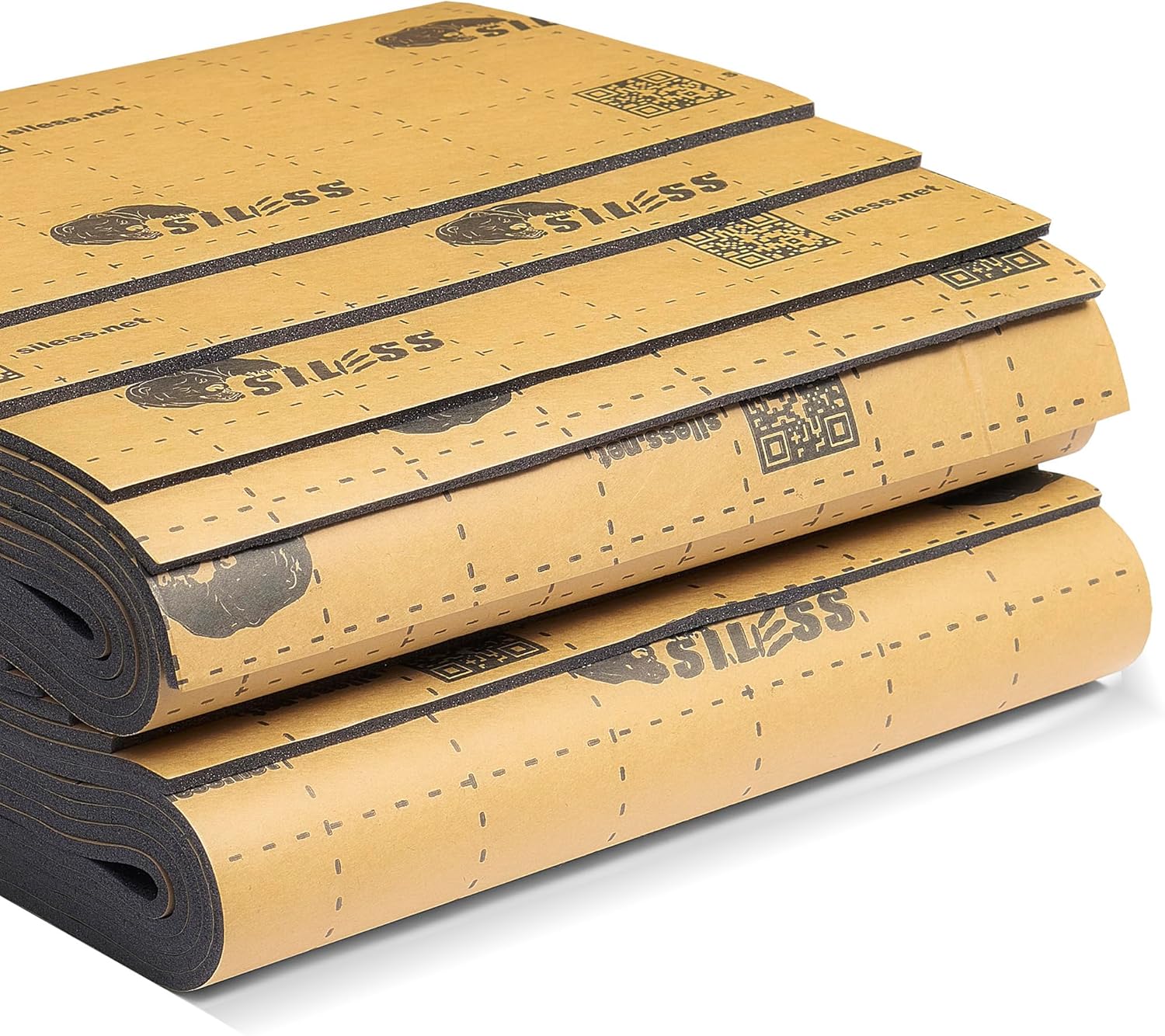
The Siless Ultrasoft 190 is a polyurethane foam product intended for interior automotive noise reduction. It operates effectively up to 215°F, and its compressible, lightweight structure makes it suitable for use behind panels, under carpet, and in other tight areas. Its self-adhesive layer simplifies DIY installation across irregular interior surfaces. The material is focused on high-frequency acoustic dampening and surface decoupling rather than mass-based sound blocking.
Installation-ready packs are available via this affiliate link.
Head-to-Head Comparison: What the Evidence Shows
Based on source-aligned documentation, several clear differences are evident:
- Thermal Use: Dynamat Hoodliner is designed for heat-exposed environments like hoods and engine compartments; Siless Ultrasoft is limited to interior applications and is not fire-retardant.
- Noise Management: Dynamat targets a broader sound spectrum, including low and high frequencies from engine compartments. Siless is optimized for high-frequency noise and resonance dampening only.
- Installation Scope: Dynamat Hoodliner is optimized for exterior-facing surfaces exposed to engine heat. Siless is optimized for interior contours and panel spaces.
At-a-Glance Comparison Table
| Feature | Dynamat Hoodliner | Siless Ultrasoft 190 |
|---|---|---|
| Primary Use | Hood and engine compartment | Interior surfaces (doors, floors, trunk) |
| Heat Resistance | Rated up to 220°F; reflects 97% radiant heat | Up to 215°F; not fire-retardant |
| Acoustic Profile | Low and high-frequency noise | High-frequency decoupling only |
| Material Type | Aluminum-faced acoustic foam | Polyurethane foam |
| Installation Surface | Flat and curved exterior panels | Interior contours and trim spaces |
| Adhesive | Self-adhesive backing | Self-adhesive backing |
Which One May Be the Better Fit for Different Situations
For users seeking thermal and acoustic insulation in high-heat zones such as hoods or engine compartments, Dynamat Hoodliner may be more appropriate based on its stated design scope. For interior-only sound dampening—especially for high-frequency noise and vibrations—Siless Ultrasoft 190 offers a more suitable profile. Each product supports a different application type, and users should align their choice with the installation environment and sound profile they aim to address.
Frequently Asked Questions
Can Dynamat Hoodliner be installed in the engine bay? Yes, it is specifically designed for such environments and is fire-retardant.
Is Siless Ultrasoft safe to use near heat sources? It can tolerate temperatures up to 215°F but is not rated for open engine bay installations.
Do both products use peel-and-stick adhesive? Yes, both products include pre-applied adhesive layers for simplified installation.
Closing Guidance
Choosing between Dynamat Hoodliner and Siless Ultrasoft 190 depends on clearly identifying your installation zone and soundproofing goals. Each product is purpose-built and excels in its respective context. Readers can explore the full details and technical applications through the associated product links: