
If you are comparing FatMat vs Dynamat, the most important thing to understand is that both products are primarily designed to control vibration in vehicle panels. They are not complete soundproofing systems, and choosing between them should not come down to thickness alone.
For most buyers, Dynamat Xtreme is the stronger premium choice when proven vibration damping, product support and a well-established automotive system matter most. FatMat 50 mil is the more value-focused option for DIY installers who want an adhesive damping material without automatically paying for the Dynamat name.
The SPD approach is to diagnose the noise first. If your doors, floor, roof or trunk panels are resonating, buzzing or vibrating, a damping mat can help. If your main problem is airborne road noise, tire roar or heat transfer, you may need additional layers rather than simply adding more damping material.
FatMat vs Dynamat at a Glance
| Feature | FatMat 50 mil | Dynamat Xtreme |
|---|---|---|
| Primary purpose | Vehicle panel vibration and rattle control | Constrained-layer vibration damping |
| Nominal thickness | 50 mil | About 0.067 in overall |
| Construction | Rubberized or butyl-based damping material with aluminum facing depending on product version | Butyl damping layer with aluminum constraining layer |
| Installation | Cut, peel, position and firmly press onto prepared surfaces | Cut, peel, apply to clean bare metal and roll firmly into place |
| Best for | Value-focused DIY damping projects | Buyers prioritizing established CLD performance and system support |
| Thermal insulation | Not a substitute for a dedicated thermal layer | Not a substitute for a dedicated thermal layer such as DynaLiner |
What Sound Deadening Mats Actually Do
A car body contains large areas of relatively thin sheet metal. Doors, roof panels, floors, quarter panels and trunk surfaces can flex and resonate when excited by road vibration, speakers, the drivetrain or other sources.
A damping mat bonded directly to the metal reduces that resonance. This can make panels feel more solid, reduce buzzes and rattles, and help a car audio system sound cleaner because less speaker energy is being lost to vibrating metal.
That is different from absorbing sound inside a cavity or blocking airborne noise from passing through an assembly. A damping mat can contribute to a quieter vehicle, but it should not be treated as a universal solution for every kind of cabin noise.
If road or tire noise remains after the metal has been damped, the next step may involve a decoupling, absorption or barrier layer depending on the noise path. Adding more butyl simply because it is thicker is not always the best use of material or money.
FatMat 50 Mil Overview
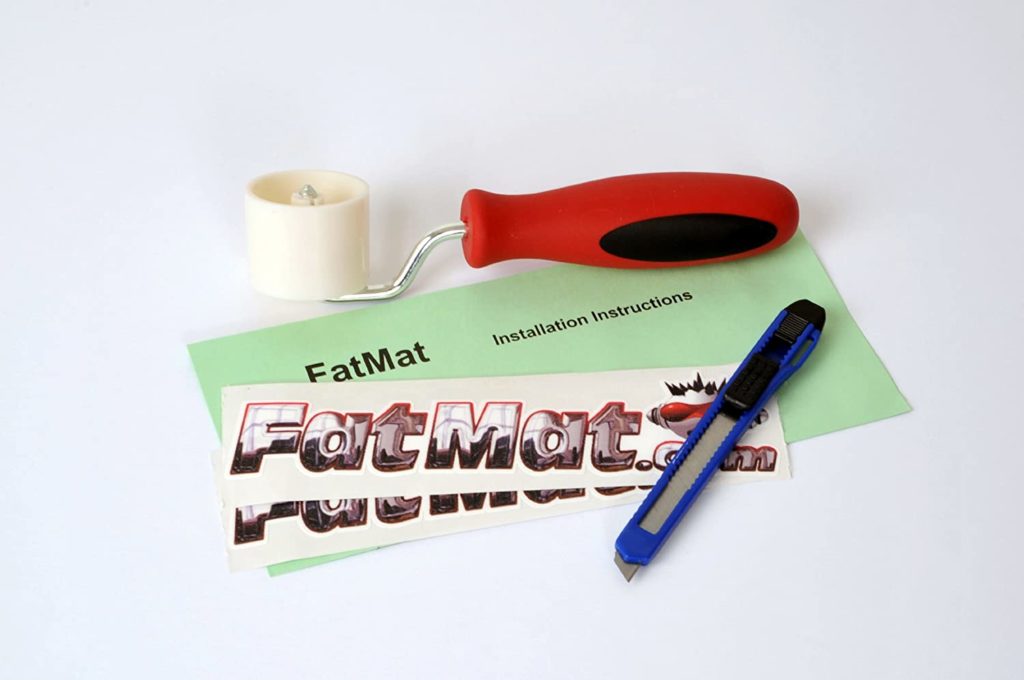
FatMat has been sold for years as a DIY automotive sound-deadening product. The traditional FatMat line is nominally 50 mil thick and uses a self-adhesive format intended for application to vehicle panels.
The company now offers several different damping products, so it is important not to treat every FatMat-branded option as identical. Its current range includes 50 mil FatMat as well as a separate 80 mil RattleTrap line.
That distinction matters when comparing FatMat with Dynamat. A buyer looking at a standard 50 mil FatMat product is not comparing the same construction or thickness as an 80 mil RattleTrap product simply because both come from the same manufacturer.
Check the current FatMat 50 mil option on Amazon.
Where FatMat Makes Sense
- You want a lower-cost entry into automotive vibration damping.
- You have a straightforward DIY door, trunk, floor or panel project.
- You are comfortable cutting and fitting bulk damping material yourself.
- You care more about practical value than buying into a larger branded product system.
Dynamat Xtreme Overview
Dynamat Xtreme is the flagship product most people mean when they compare Dynamat with another automotive damping mat. It is a constrained-layer damping material designed to bond directly to sheet metal and reduce resonance and vibration.
Dynamat describes Xtreme as a butyl-based damping material with an aluminum constraining layer. The material is applied directly to prepared metal, where movement of the panel causes shear within the damping layer and dissipates vibrational energy.
That makes Dynamat Xtreme particularly relevant for doors, floors, roofs, trunks, rear decks and other panels that ring, flex or resonate.
If you want a broader explanation of Xtreme, SuperLite, ProX and the rest of the current range, see our Dynamat guide comparing the main Dynamat products.
Check Dynamat Xtreme availability on Amazon.
Where Dynamat Xtreme Makes Sense
- You want a well-established constrained-layer damping product.
- You are treating panels where vibration control is the primary goal.
- You value access to application guides, kits and related Dynamat products.
- You are comfortable paying more for the brand’s established automotive ecosystem.
FatMat vs Dynamat Thickness
One of the easiest mistakes in this comparison is assuming that the thicker product must automatically perform better.
Standard FatMat is commonly sold as a nominal 50 mil product. Dynamat Xtreme has an overall thickness of roughly 0.067 inch. FatMat also sells RattleTrap at 80 mil, but RattleTrap should be treated as a separate product rather than quietly substituting its specification for FatMat 50 mil.
Thickness is only one variable in a damping system. Adhesive quality, viscoelastic behavior, constraining-layer stiffness, temperature behavior, surface preparation and how well the material is bonded to the panel also affect how effectively vibration is controlled.
So do not choose FatMat or Dynamat simply by looking for the largest mil number.
Which Is Easier to Install?
Both products are intended to be manageable for a competent DIY installer. The basic process is similar: expose the panel, clean the surface, measure and cut the material, remove the release liner and press the damping material firmly onto the metal.
Surface preparation matters. Adhesive-backed damping material performs best when it has clean, solid contact with the substrate rather than being placed over dust, grease, rust or loose material.
A roller is also useful because simply laying a sheet onto the surface is not the same as firmly bonding it across the panel, especially around curves and stamped contours.
For the complete process, see our step-by-step Dynamat and automotive sound-deadening installation guide.
Which Is Better for Road Noise?
This depends on what you mean by road noise.
If the noise you hear is partly caused by body panels vibrating or resonating as the tires and suspension excite the vehicle structure, either damping product may reduce that contribution.
If the dominant problem is airborne tire roar passing through the floor, wheel wells or other parts of the body, a damping mat alone may not be enough. The system may also require an appropriate foam, decoupling layer or high-mass barrier depending on the location and construction.
This is why SPD does not recommend covering every surface with the thickest damping mat available and assuming the car is now soundproof. Match the material to the noise path.
Which Is Better for Car Audio?
Both can be useful in a car-audio installation because door skins and other sheet-metal surfaces can resonate when speakers are playing.
Reducing panel resonance can help the speaker operate against a more stable mounting environment and reduce buzzes or rattles that mask the audio.
Dynamat Xtreme is particularly well established for this type of use, and Dynamat offers dedicated speaker and door kits. FatMat remains a viable DIY alternative when budget matters and you are willing to size and fit the material yourself.
What About Heat Insulation?
Do not choose between FatMat and Dynamat Xtreme primarily as thermal insulation.
A damping layer may influence heat transfer to some degree because it adds material to the panel, but that is not the same as installing a purpose-designed thermal insulation layer.
Dynamat, for example, offers other products specifically intended to add thermo-acoustic insulation above a damping layer. If cabin heat is one of your main problems, design the treatment as a layered system rather than assuming the butyl mat alone will keep the vehicle cool.
FatMat vs Dynamat Cost and Value
FatMat’s biggest attraction is usually value. Dynamat Xtreme generally sits at the more premium end of the market, while FatMat is positioned as a more accessible DIY alternative.
We do not recommend choosing solely on the cheapest price per square foot. Compare the actual pack size you need, current pricing, the area being treated and whether you need additional layers after damping.
A cheaper bulk roll can be excellent value for a large project. On the other hand, paying more for a smaller amount of material can still make sense if you are treating one specific problem panel and prefer a product with extensive installation support.
FatMat vs Dynamat Which Should You Choose?
Choose Dynamat Xtreme if:
- You want an established premium constrained-layer damping product.
- Your priority is reducing panel resonance and vibration.
- You value a large range of application-specific kits and installation information.
- You are willing to pay more for the Dynamat ecosystem.
Choose FatMat 50 mil if:
- You want a more budget-conscious damping option.
- You are doing a straightforward DIY project.
- You need useful coverage without automatically moving into premium pricing.
- You understand that FatMat 50 mil and RattleTrap 80 mil are different products.
Choose neither as a complete solution if:
- Your main issue is airborne tire or road noise rather than vibrating panels.
- You primarily need thermal insulation.
- You are trying to block low-frequency noise through a floor or firewall without considering the rest of the assembly.
Frequently Asked Questions
Is FatMat better than Dynamat?
FatMat can be the better choice when value and DIY coverage are your priorities. Dynamat Xtreme is the stronger premium option when you want an established constrained-layer damping product with extensive automotive applications and support. Neither is automatically better for every noise problem.
Is FatMat thicker than Dynamat?
Standard FatMat is commonly sold at 50 mil. FatMat also sells a separate RattleTrap product at 80 mil. Do not use the RattleTrap specification as though it applies to ordinary FatMat. Dynamat Xtreme is approximately 0.067 inch thick overall.
Does Dynamat block road noise?
Dynamat Xtreme can reduce the part of road noise associated with vibrating and resonating vehicle panels. It should not be treated as a complete airborne-noise barrier by itself. Depending on the noise path, additional absorption, decoupling or barrier materials may be required.
Can I install FatMat or Dynamat myself?
Yes. Both are suitable for DIY installation when the vehicle trim can be safely removed and the metal properly prepared. Clean the surface carefully, cut the material to fit, apply it directly to the panel and use firm pressure or a roller to create good contact.
Do I need 100% coverage?
Not necessarily. The goal of a damping layer is to control resonant panels, not simply to add the maximum possible amount of material. Start with the panels contributing most to the vibration problem and expand the treatment when the application requires it.
Final Verdict
FatMat and Dynamat Xtreme can both be useful automotive damping materials, but they appeal to slightly different buyers.
Dynamat Xtreme gets our overall preference when vibration control is the priority and you want the security of an established premium system. FatMat 50 mil makes more sense when value is the deciding factor and you want a practical DIY damping material for doors, floors, trunks or other resonant panels.
The more important decision, however, is whether a damping mat is actually the material your vehicle needs. Diagnose the noise first. If the panel is vibrating, damp it. If the problem is airborne noise, heat or another transmission path, build the next layer around that problem rather than simply adding more butyl.
Good luck and happy soundproofing!