
Table of Contents
Introduction
When comparing marine-grade pour foams, both Lifeboat Polyurethane Pour Foam and TotalBoat Flotation Foam offer source-supported claims around buoyancy, insulation, and rigid closed-cell structure. This article explores their documented differences and helps clarify where each may align with different use needs.How This Comparison Was Built
This comparison draws solely from verified product documentation and corroborated attributes found in the original manufacturer or distributor-provided PDFs. All performance statements, specifications, and use-case notes reflect only what has been explicitly stated or corroborated through source-bound analysis. For full product details, readers should refer to the individual product reviews: Lifeboat Foam Review and TotalBoat Foam Review.Key Decision Factors Identified From the Source Content
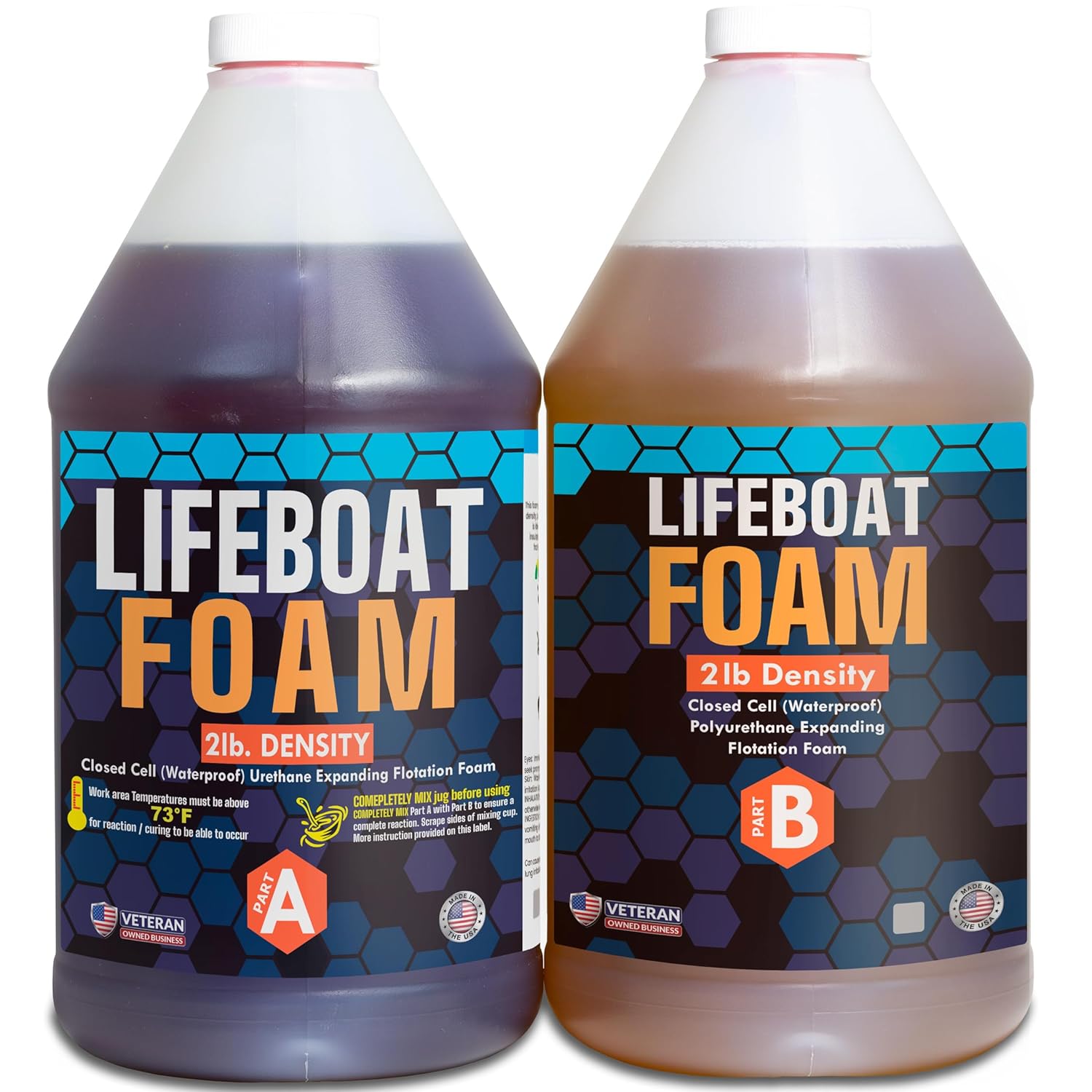
From the source material, several decision-relevant factors emerged: – Closed-cell content percentage and density confirmation – Expansion volume and cure time – Application temperature and environmental limits – UV resistance and coating compatibility – Soundproofing use case acknowledgementLifeboat Polyurethane Pour Foam 2lb 1-Gallon Kit for Flotation, Filling, Soundproofing, and Insulation
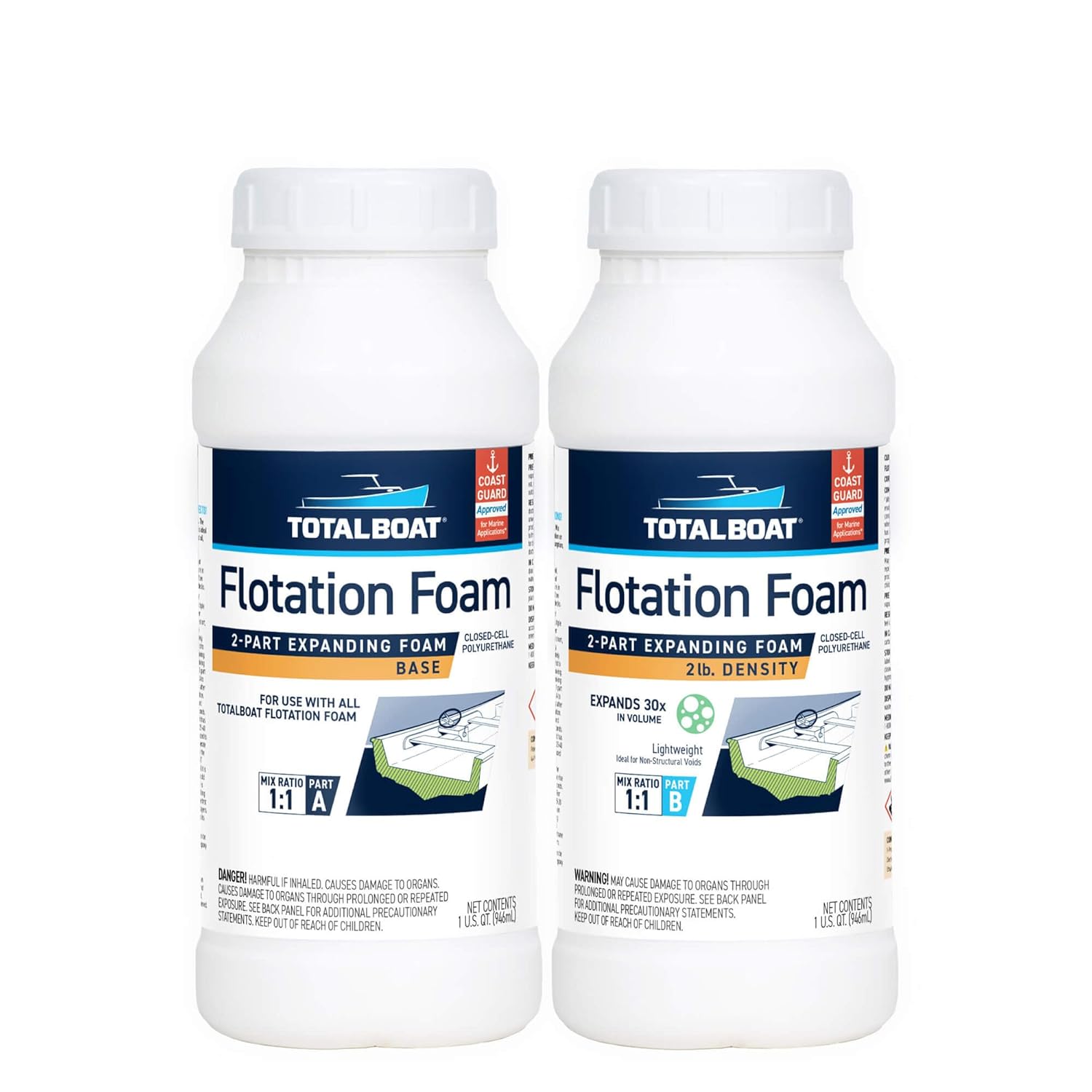
TotalBoat Flotation Foam 2 Part Polyurethane Kit for Marine Floatation and Insulation
Head-to-Head Comparison: What the Evidence Shows
While both foams share a 2lb density and closed-cell construction, source materials highlight key differences: – Lifeboat’s closed-cell content is slightly higher (95–98%) compared to TotalBoat’s 94%. – Lifeboat includes an extended-time formula for deeper pours, whereas TotalBoat expands more rapidly and requires batch layering. – UV protection is described as inherent in Lifeboat; TotalBoat recommends resin overcoating for sunlight exposure. – Soundproofing is explicitly acknowledged by both, but TotalBoat qualifies it as secondary to flotation and insulation.At-a-Glance Comparison Table
| Attribute | Lifeboat Pour Foam | TotalBoat Flotation Foam |
|---|---|---|
| Density | 2 lb/ft³ | 2 lb/ft³ |
| Closed-Cell Content | 95–98% | 94% |
| Expansion Volume (Per Gallon) | 4 cubic feet | ~4 cubic feet (scaled) |
| Working Time | Up to 20 seconds | Begins expanding in 10–20 seconds |
| UV Resistance | Yes (source-stated) | Requires resin overcoat |
| Soundproofing Noted | Yes | Yes (qualified) |
| Application Temperature | 75°F or above | 75–85°F, humidity < 90% |
Which One May Be the Better Fit for Different Situations
Lifeboat’s extended-time formula and high closed-cell percentage may offer utility in projects involving deeper pours or variable working conditions. Its UV resistance may also simplify above-deck or sun-exposed installations. In contrast, TotalBoat’s fast expansion and emphasis on temperature-controlled deployment may better align with controlled shop environments or quick set needs. Those working on staged marine applications with multiple voids may also appreciate TotalBoat’s layer-guided usage guidance.Frequently Asked Questions
Are both foams usable for insulation as well as flotation?
Yes, both products are stated to support insulation and buoyancy. Lifeboat also notes acoustic utility. TotalBoat includes R-value figures but frames soundproofing as a secondary characteristic.
Do I need to apply a coating after installation?
According to the sources, Lifeboat foam is UV-resistant without additional coatings. TotalBoat foam requires an overcoat if exposed to sunlight.
Can these be used in saltwater environments?
Yes, both products are described as chemically resistant and water-repellent, suitable for use in marine conditions including saltwater exposure.