
Table of Contents
Introduction
Both TotalBoat and Fiberglass Supply Depot offer 2 lb density expanding polyurethane foams designed for marine flotation, insulation, and void filling. While they serve overlapping purposes, their source-documented characteristics reveal meaningful differences in use, handling, and kit sizing that could influence selection depending on project requirements. This article compares each product based on verified documentation and corroborated findings only, with no assumptions or extrapolations beyond what the manufacturers have explicitly stated.
How This Comparison Was Built
This comparison draws solely from manufacturer-provided documentation and validated source materials. All information has been verified directly from official product PDFs and cross-checked for consistency. Any differences are based on presence or absence of information within those sources. To explore each product further, see the full reviews: TotalBoat Flotation Foam Review and Fiberglass Supply Depot Pour Foam Review.
Key Decision Factors Identified From the Source Content
Based on available source data, key differentiators between the two foams include:
- Working time and handling characteristics
- Kit volume and yield per mix
- Application environment requirements
- Presence or absence of guidance on specific use cases (e.g., airtight enclosure risks)
TotalBoat Flotation Foam 2 Part Polyurethane Kit for Marine Floatation and Insulation
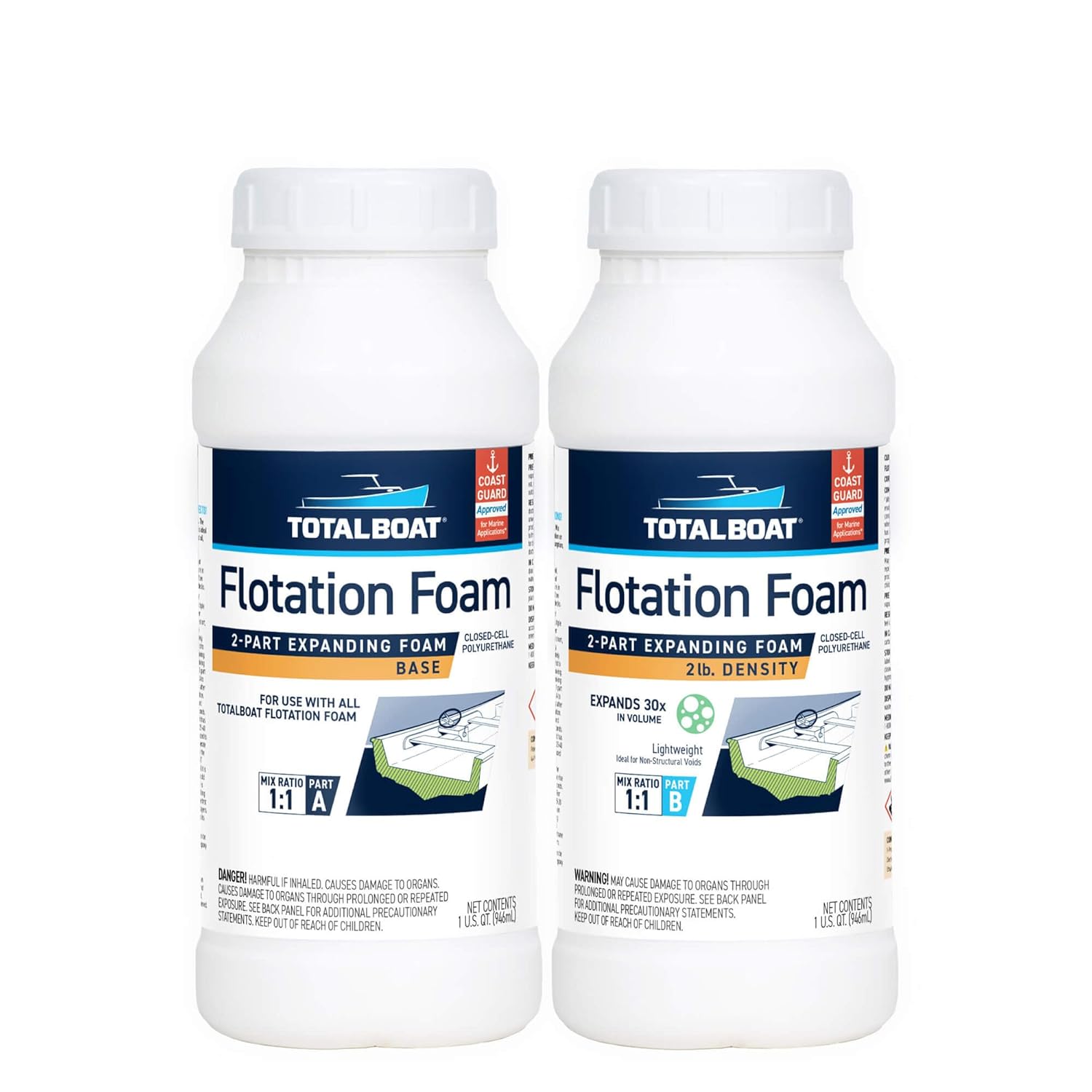
Designed as a marine-grade pourable foam, TotalBoat’s 2-part polyurethane foam is optimized for non-structural flotation, insulation, and void filling. Its rapid expansion time—initiating within 10 to 20 seconds and reaching full volume in about five minutes—makes it suitable for fast-application scenarios. The foam features a 94% closed-cell structure that resists moisture, fuel, and solvent absorption. Installation requires temperature and humidity control for full performance. For more on how it performs in real-world conditions, read the full review.
Fiberglass Supply Depot 2 Lb Density Expanding Pour Foam for Flotation and Insulation Applications
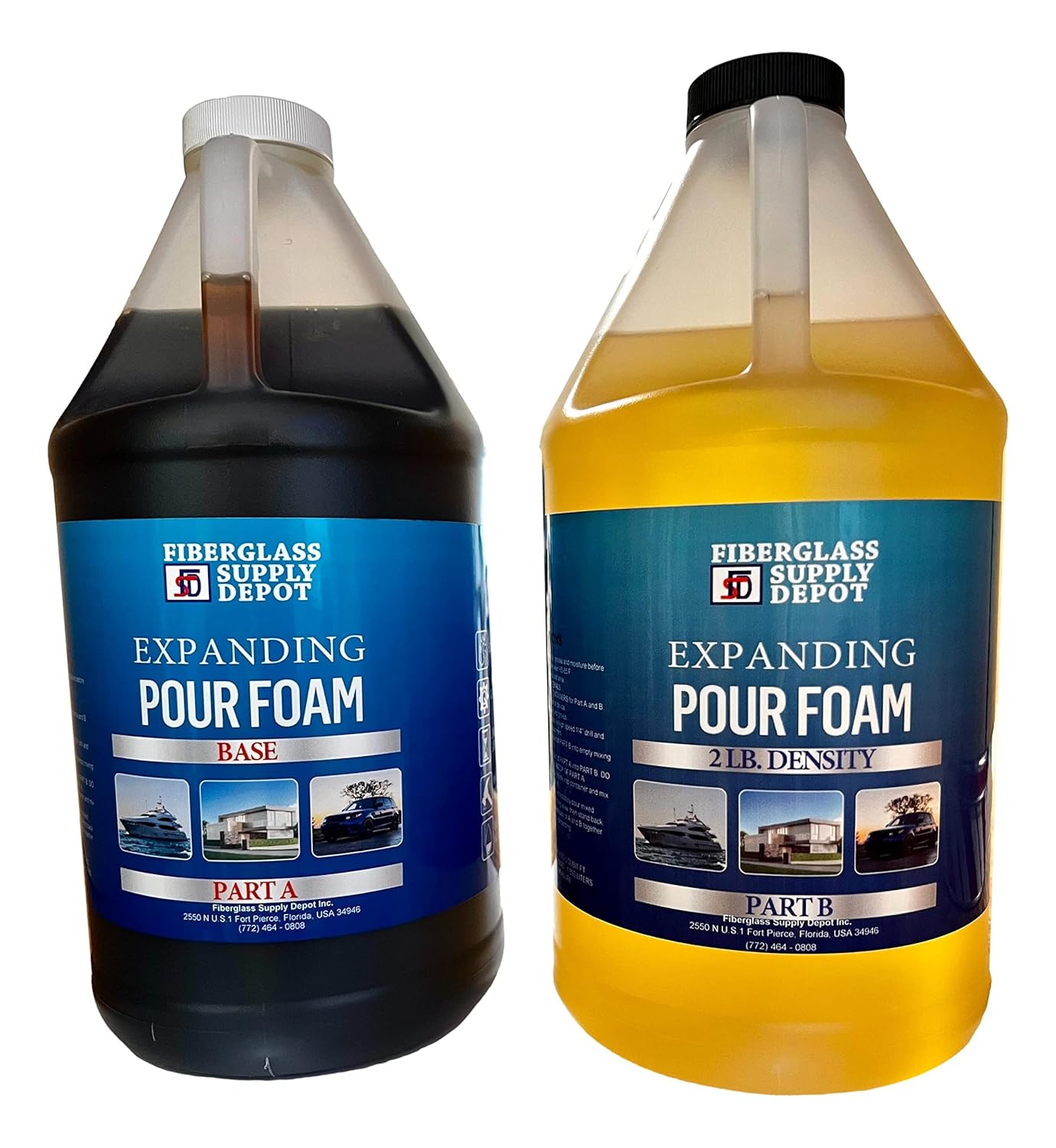
The Fiberglass Supply Depot expanding foam also uses a 2-part closed-cell polyurethane formula. Its working time is approximately 45 seconds, allowing slightly more time for manipulation before full expansion occurs in about five minutes. A one-gallon kit yields approximately 5 cubic feet of cured foam. The product documentation warns against use in airtight spaces due to heat generation during curing and advises measuring by volume rather than weight. These operational guidelines may inform planning in more complex installation scenarios. Explore the product details for additional context.
Head-to-Head Comparison: What the Evidence Shows
When examined side by side, both foams deliver on fundamental characteristics such as closed-cell structure, marine flotation suitability, and compatibility with resin coatings after curing. However, operational distinctions emerge in their handling time and kit yield. TotalBoat expands faster after mixing, while Fiberglass Supply Depot offers a longer working window. Fiberglass Supply Depot also provides cautionary guidance for heat-related risks in enclosed pours, a note not present in the TotalBoat documentation. Additionally, the yield per kit is notably different, which could affect material planning depending on project scale.
At-a-Glance Comparison Table
| Feature | TotalBoat | Fiberglass Supply Depot |
|---|---|---|
| Foam Density | 2 lb/ft³ | 2 lb/ft³ |
| Foam Type | Closed-cell polyurethane | Closed-cell polyurethane |
| Working Time | 10–20 seconds | ~45 seconds |
| Full Expansion | ~5 minutes | ~5 minutes |
| Yield Per Kit | 2 ft³ (2-quart kit) | 5 ft³ (1-gallon kit) |
| Temperature Requirements | 75–85°F | 75–80°F |
| Airtight Enclosure Warning | Not stated | Yes, avoid airtight seals during curing |
| Mixing Method | Manual or drill with helix mixer | Mix by volume only |
Which One May Be the Better Fit for Different Situations
When deciding between the two, consider timing and scale. The TotalBoat foam may be more appropriate for rapid, small-batch pours where quick setup is essential. In contrast, the Fiberglass Supply Depot foam offers more flexibility in mixing time and greater volume per kit, which may suit larger-scale applications. Project environment also matters—those working in tight voids should consider the latter’s warning about airtight spaces.
Frequently Asked Questions
Are both foams suitable for marine flotation?
Yes. Both are closed-cell and retain buoyancy over time, per manufacturer documentation.
Can these foams be used for insulation or soundproofing?
Both products are described as suitable for thermal insulation and limiting sound transmission, though no specific acoustic ratings are provided.
Do either of the products support structural reinforcement?
No. Both are intended for non-structural applications only.
Closing Guidance
Each foam provides a viable solution for marine and insulation needs within its operational scope. Consider the verified distinctions in expansion timing, application precautions, and volume yield when making a selection. For further product-specific information, visit the TotalBoat review or the Fiberglass Supply Depot review.