Introduction
Choosing between marine-grade polyurethane foams often comes down to subtle but important distinctions in formulation, expansion behavior, and cross-application performance. The
TotalBoat Flotation Foam and
Lifeboat Polyurethane Pour Foam are both 2 lb density, two-part kits intended for flotation, insulation, and soundproofing. But depending on your project priorities—like pour time control or moisture resistance—each offers different advantages worth unpacking.
Key Decision Factors Identified From the Review Content
Application timing, expansion yield, closed-cell structure, and resin compatibility emerged as central themes. Each product also differentiates slightly in temperature sensitivity and acoustic performance framing.
TotalBoat Flotation Foam 2 Part Polyurethane Kit for Marine Floatation and Insulation Overview
The
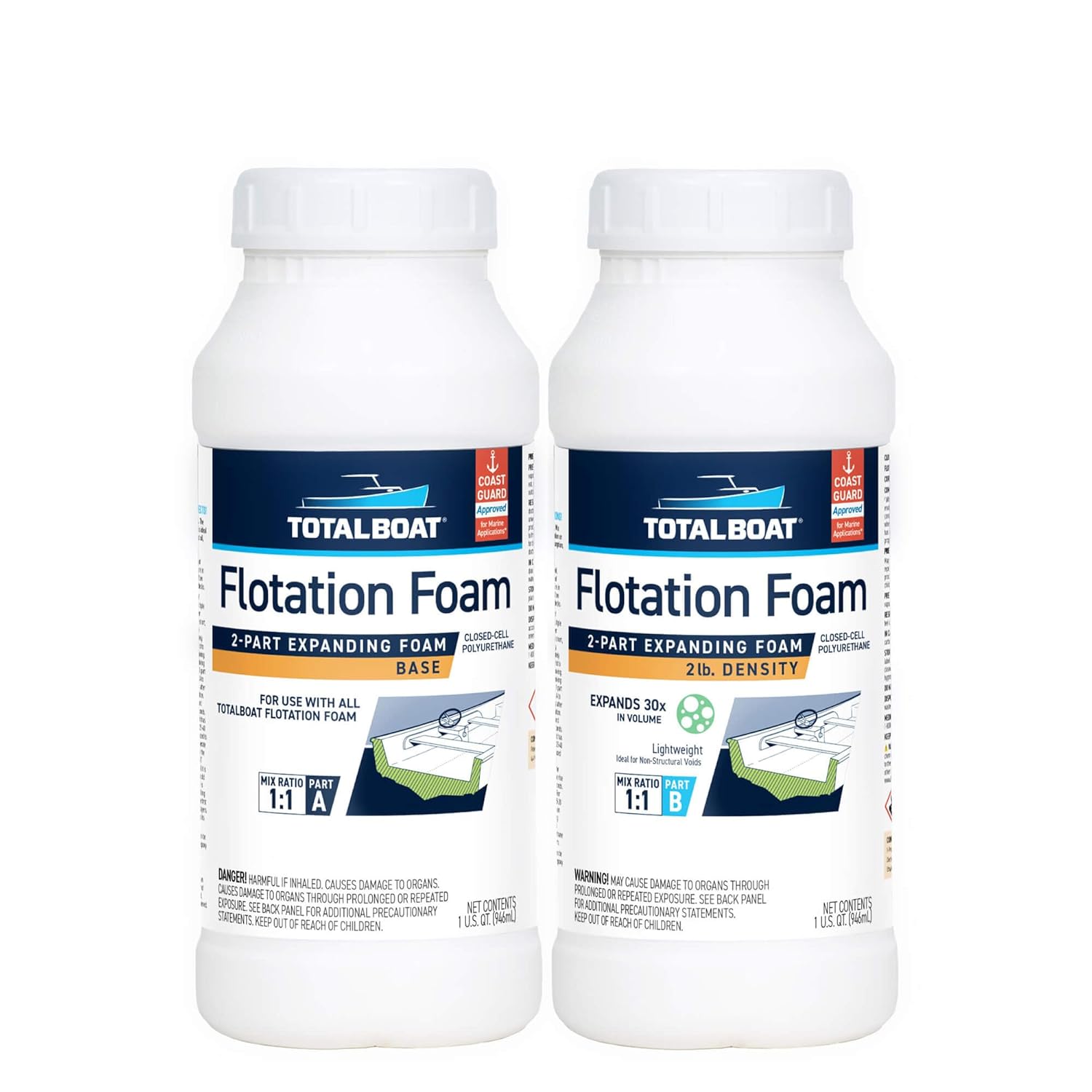
TotalBoat Flotation Foam is a fast-acting marine-grade solution designed for void filling, flotation, and insulation. It uses a simple 1:1 mix ratio and expands within 5 minutes. With a 94% closed-cell composition, it resists moisture and solvent intrusion and offers moderate soundproofing properties through its rigid, mass-dense cured form. It yields approximately 2 cubic feet per 2-quart kit and is best applied in layered pours under temperature-controlled conditions (75–85°F). The cured foam is compatible with resin coatings and can be sanded or shaped post-cure. Those seeking a ready-to-buy option can find the
TotalBoat Flotation Foam directly online.
Lifeboat Polyurethane Pour Foam 2lb 1-Gallon Kit for Flotation, Filling, Soundproofing, and Insulation Overview
The
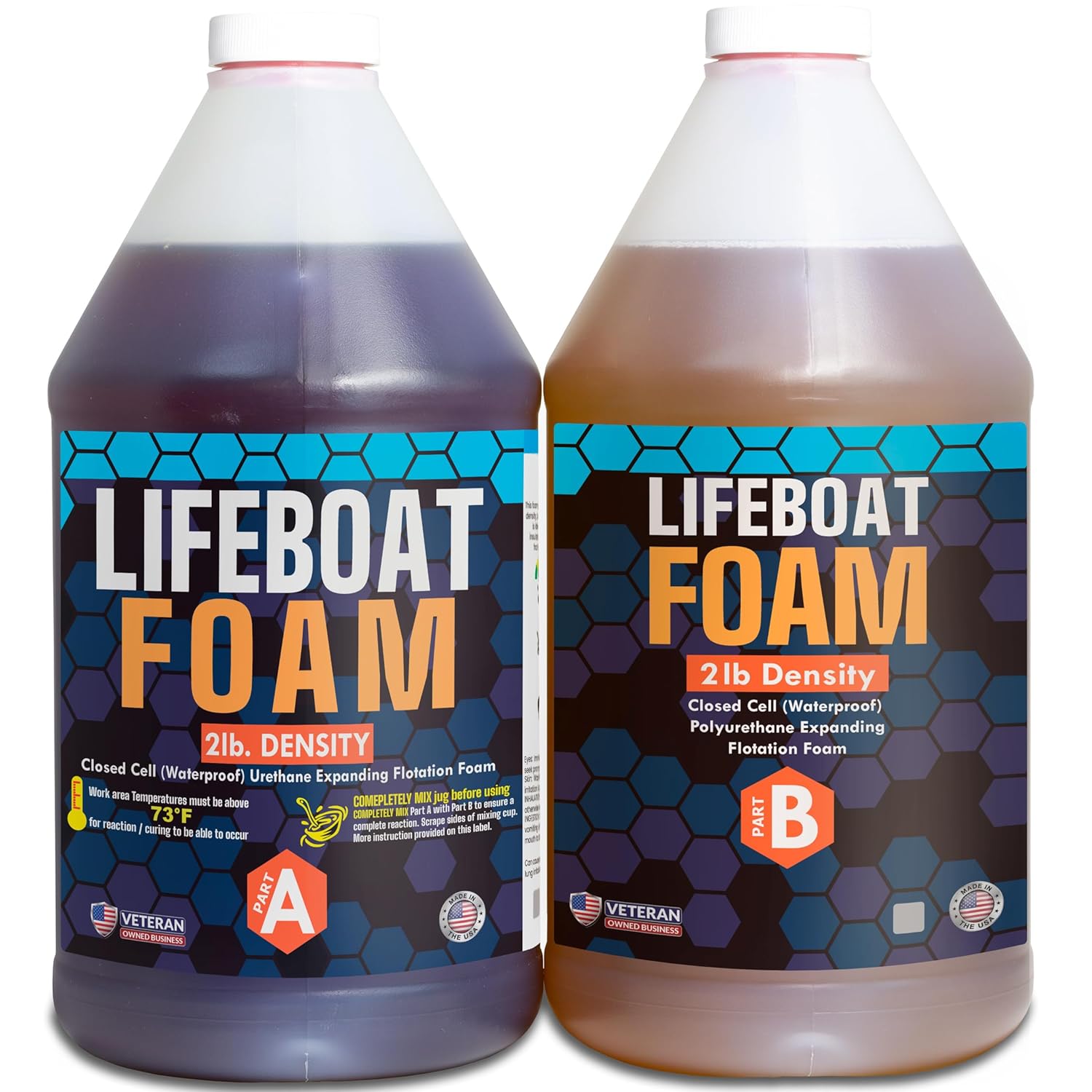
Lifeboat Polyurethane Pour Foam provides a slower-curing alternative designed for deeper or more complex pours. It features an extended time formula that allows up to 20 seconds of mix-and-pour flexibility, with post-cure compatibility for carving, sanding, or resin coating. Each 1-gallon kit expands to fill up to four cubic feet and achieves a 95–98% closed-cell rate, helping it resist water, oil, and fuel infiltration. Like TotalBoat, it functions in soundproofing and insulation contexts, with performance shaped by its dense cured structure. Optimal curing requires ambient temperatures above 75°F. Those ready to purchase can explore the
Lifeboat Polyurethane Pour Foam through its official listing.
Head-to-Head Comparison: What the Evidence Shows
The most practical divergence is pour timing. TotalBoat expands faster, which may benefit small, rapid-fill projects but demands more prep. Lifeboat offers a longer working window, favoring users who need extra time for deeper or more detailed pours. In terms of volume yield, Lifeboat produces more cured foam per kit. Both products support post-cure modifications and resin compatibility, but Lifeboat slightly edges ahead in closed-cell percentage. Soundproofing is addressed by both, with neither claiming specialized acoustic design but both leveraging their mass and rigidity for basic noise reduction.
At-a-Glance Comparison Table
| Feature |
TotalBoat Flotation Foam |
Lifeboat Polyurethane Pour Foam |
| Foam Density |
2 lb per cubic foot |
2 lb per cubic foot |
| Closed-Cell Content |
94% |
95–98% |
| Expansion Yield |
2 cu. ft. per 2-quart kit |
4 cu. ft. per 1-gallon kit |
| Mixing Time |
Expands in 5 minutes |
Up to 20 seconds working time |
| Soundproofing Use |
Yes, via rigid mass structure |
Yes, via rigid mass structure |
| Insulation R-Value |
6.5 to 6.6 per inch |
Not specified in the available review details. |
| Temperature Requirements |
75–85°F optimal |
75°F or above recommended |
| Post-Cure Modifications |
Cuttable, sandable, resin-coatable |
Cuttable, sandable, resin-coatable |
| Deep Pour Suitability |
Not stated in the researched material. |
Noted for deeper applications |
Which One May Be the Better Fit for Different Situations
TotalBoat may be better suited for users needing rapid foam expansion in controlled environments, especially for smaller or layered fills. Its predictable timing and straightforward mix ratio make it a reliable option when speed matters. Lifeboat may offer more flexibility for larger voids or deeper applications, where the extended mixing window and higher expansion yield provide more room to work before the foam sets. The slightly higher closed-cell content could also appeal to users prioritizing moisture resistance.
Frequently Asked Questions
Can either foam be used for soundproofing?
Both are described as effective at reducing airborne sound and vibration due to their rigid, dense cured form, but neither is classified as a dedicated acoustic material.
Do these foams require protective coatings?
Yes. Both are compatible with polyester, epoxy, or vinyl ester resins for protective topcoating in UV-exposed or marine environments.
Is one better for insulation?
TotalBoat specifies an R-value of 6.5–6.6 per inch. Lifeboat supports insulation use, but no specific R-value was provided in the product write-up.
Closing Guidance
Both of these 2 lb density marine pour foams are purpose-built for flotation, filling, and light acoustic or thermal use, with distinctions in yield, working time, and closed-cell ratio guiding the decision. For deeper evaluation of each product’s pros, limitations, and application tips, see the full review for
TotalBoat Flotation Foam and
Lifeboat Polyurethane Pour Foam.