
Affiliate disclosure: This article contains affiliate links. We may earn a commission if you purchase through them, at no additional cost to you.
Quick verdict: Benory’s listed silicone T-profile is the more relevant format to investigate when a flexible lip can cover a narrow door or window joint. UpinFun’s listed gray brush/felt-style strip is a different approach for contact surfaces that can accept a compressible adhesive-backed lining; its precise backing material must be verified for the chosen item. Neither product has a verified, product-specific sound transmission loss result in the evidence reviewed here. Choose by the geometry of the gap, not the phrase “soundproofing” on a listing.
Review basis: This is a comparison of the product descriptions and existing Soundproofing Dude reviews, not a hands-on installation or acoustic laboratory test. The listed dimensions, fit and availability should be confirmed on the exact product variant before purchase. Both Amazon product links use affiliate tracking and may earn the site a commission from a qualifying purchase, at no additional cost to the reader.
Why a door seal may help with noise
Air leaks around a door or window create paths for airborne sound as well as drafts. A properly fitted perimeter seal can reduce leakage through a joint, but the improvement depends on the gap, continuous contact and the rest of the door or window assembly. A thin weatherstrip does not add meaningful mass to a hollow door and cannot eliminate vibration passing through walls, frames or floors.
Before selecting a strip, close the door normally and inspect the meeting surfaces. A visible slit at the latch side calls for a different fit consideration from a wide bottom gap, a sliding-panel track or a door that rubs against its jamb. These products are not automatic substitutes for a purpose-made door sweep, adjustable threshold or replacement damaged gasket.
Benory vs UpinFun: comparison at a glance
| Decision point | Benory | UpinFun |
|---|---|---|
| Format described | Clear, T-shaped silicone weather strip | Gray brush/felt-style adhesive weatherstrip; syndicated descriptions disagree on backing material |
| Listed roll length | 20 ft | 33 ft |
| Adhesive description | Double-sided adhesive arrangement | Integrated self-adhesive backing |
| Best first fit question | Can the flexible T-profile span the joint without catching as the door moves? | Is there a contact surface and clearance suitable for felt compression? |
| Important uncertainty | Actual installed compression, adhesion and sound improvement are unverified here | Claimed fit range and acoustic result have not been independently measured here |
The 20 ft and 33 ft figures come from the product descriptions previously associated with these reviews. They describe roll length, not the length of gap each pack will reliably seal after trimming, corners and installation waste. Measure the entire perimeter and allow extra material for mistakes.
When Benory’s silicone profile could be suitable
Benory variant check: The syndicated Benory product record identifies ASIN B0CQ5D9L5F, model T-35MM, as a clear silicone 20-foot roll with a nominal 1.37-inch-wide T-profile and two adhesive faces. This is a retailer product specification, not a certified acoustic result or statement that a door gap up to 1.37 inches can be sealed.
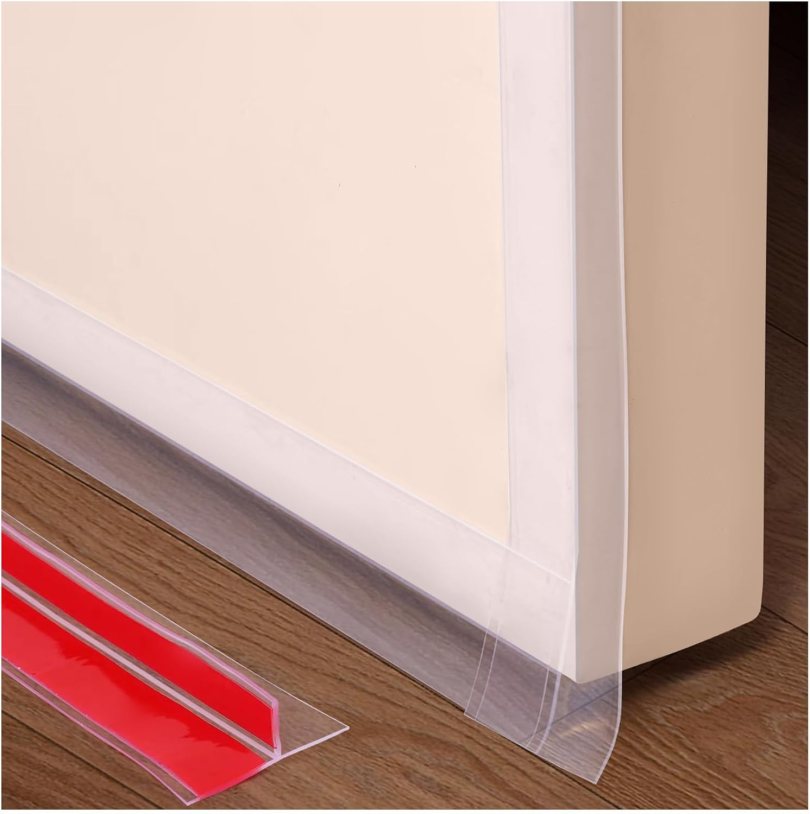
Benory is described as a flexible, clear T-shaped silicone strip with peel-and-stick installation. That profile is worth considering when a thin lip can bridge a seam and remain in place during repeated opening and closing. It is not enough to know that the strip is silicone: the critical details are the joint width, attachment surface and how far the lip must bend.
A strip that is too stiff or positioned too close to a hinge can peel away or interfere with closure. Likewise, a strip that barely touches one edge may leave an acoustic and draft leak. The existing product review noted mixed reports of adhesive reliability, so trial-fit a short section before committing to the full perimeter.
Read the Benory silicone weatherstripping review or check the current Benory listing for the precise variant and mounting requirements.
When UpinFun’s brush-style strip could be suitable
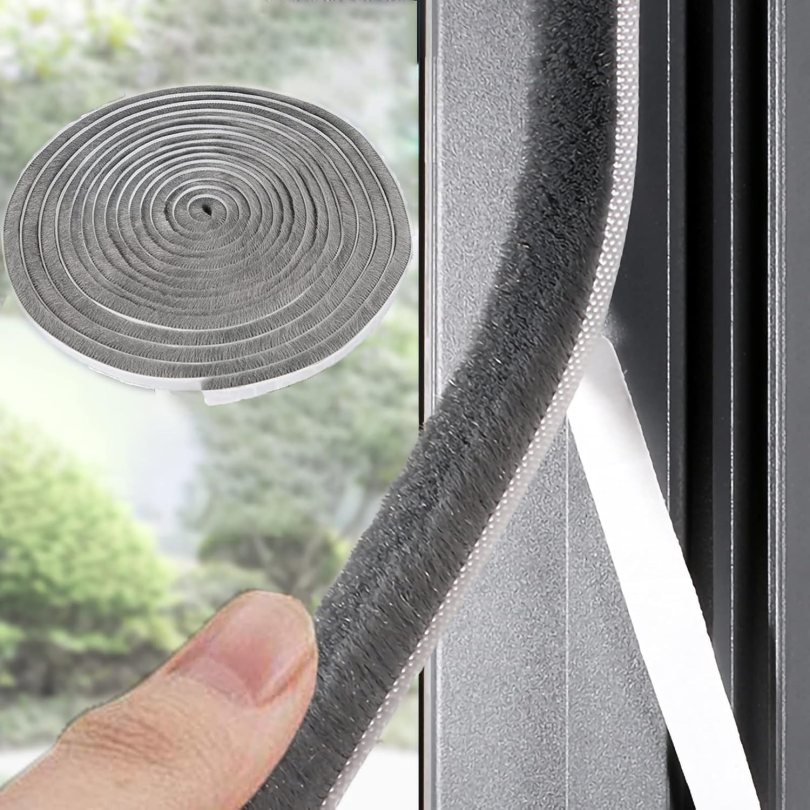
Variant source check: Syndicated UpinFun listing information associates ASIN B0BP1R9S8H with model MT6623 and a 33-foot roll, approximately 0.35 inches wide and 0.20 inches thick. Another listing for the same ASIN describes polyurethane foam, whereas others specify felt or brush pile. The exact construction and usable closing-gap range have not been independently established for the item delivered. These listed dimensions describe the material’s profile, not proof that it will fit a particular door.
UpinFun is described as a gray, felt-based self-adhesive strip supplied in a longer roll. Felt may be relevant for some rubbing or closing contact surfaces where a soft lining fits the available clearance. However, felt is not the same seal geometry as a silicone lip, and its effectiveness depends on how well it fills the actual joint when the panel is closed.
The listing commonly describes a 0.20-inch nominal thickness and 0.35-inch strip width. Those are not a tested 0.20–0.35-inch compatible door-gap range; verify the needed compression and clearance before purchase. If the installed strip prevents the latch from engaging, leaves visible openings or peels from the frame, its nominal thickness is not helping. For gaps too large for a light felt strip, a different weatherseal profile may be necessary.
See the published UpinFun vs TAROSE comparison or check the UpinFun listing for material, sizing and installation information.
A practical fit and installation check
The US Department of Energy’s weatherization guidance treats door and window weatherstripping as part of air sealing, not as a laboratory certificate of sound isolation. Our acoustic door-seal guide explains when a different perimeter gasket, sweep or threshold may be more appropriate. Whatever material is chosen, do not compromise door closing, locking or emergency egress.
- Locate the leak: Inspect the top, latch side, hinge side and threshold separately. Do not assume one roll solves every joint.
- Measure clearances: Check the gap with the door shut and confirm it still latches smoothly after a short trial section.
- Prepare the surface: Follow the product’s surface and temperature instructions. Clean away dust, grease and loose paint; allow the frame to dry.
- Test adhesive placement: Apply a small length, close and reopen the door several times, and check for lifting, dragging or bunching.
- Seal continuously: Pay attention to corners and transitions. A missed opening can undermine the benefit of sealing adjacent edges.
- Retest the actual problem: Compare drafts or the same noise source under similar conditions. A phone app is not a calibrated transmission-loss test.
What weatherstripping will not fix
- Door-leaf weakness: If speech passes mainly through a light hollow-core door, sealing the perimeter cannot make it behave like a heavier, well-fitted assembly.
- Bottom gaps: A sweep or threshold system may be a better fit than a thin perimeter strip.
- Impact and vibration: Footsteps, machinery vibration and structural flanking paths are not solved by adhesive felt or silicone at the door edge.
- Unverified decibel claims: No reliable before/after dB reduction, STC or full-frequency transmission-loss data for these exact installed products has been established in this comparison.
Which one should you choose?
Start with Benory if your joint geometry seems suited to a flexible silicone T-shaped lip and the proposed attachment surface allows reliable adhesion. Investigate UpinFun if a compressible felt lining matches the contact surface and available clearance, or if the longer listed roll is useful. The material alone cannot determine the winner.
Bottom line: A successful, continuous fit matters more than marketing language. If the goal is meaningful room-to-room sound isolation rather than sealing a drafty joint, first identify whether the dominant path is around the door, through the door leaf or through another part of the structure. Neither product should be sold as a complete soundproofing solution.
Good luck and happy soundproofing.