
Affiliate disclosure: This article contains affiliate links. We may earn a commission if you purchase through them, at no additional cost to you.
KILMAT vs HushMat: two different jobs inside a vehicle
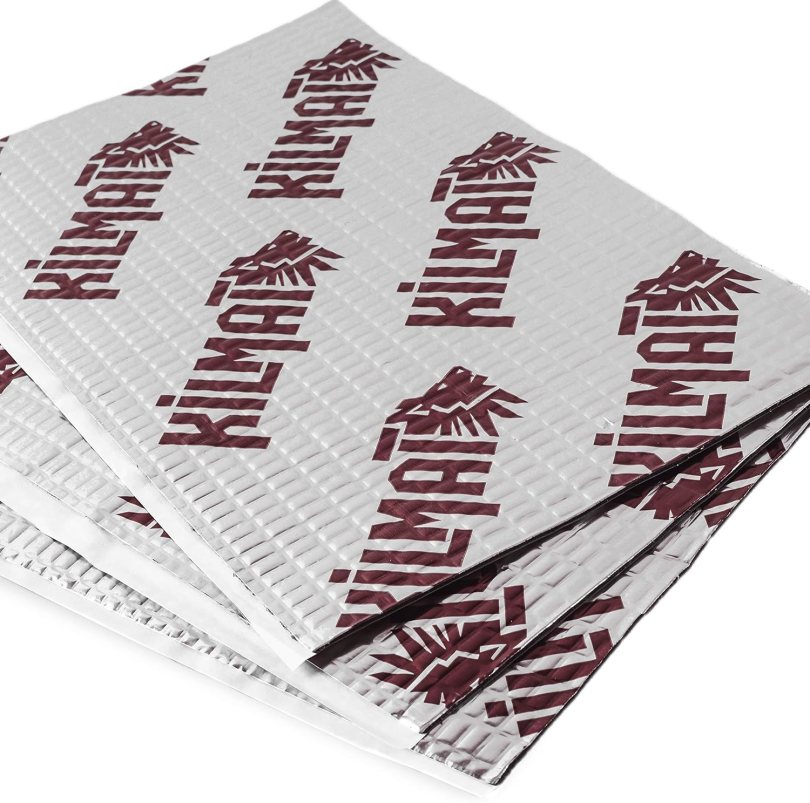
If you are choosing between KILMAT 80 mil and the HushMat Silencer 1/4-inch shop roll, start with the surface you need to treat. These products are not interchangeable layers. KILMAT is a butyl-and-foil damping mat for sheet metal; HushMat Silencer is a compressible liner marketed for the backs of door panels, trim, and headliners. A door that rings when tapped calls for a different treatment from trim that buzzes or a headliner space that needs a flexible liner.
For more detail on each item, see our separate KILMAT 80 mil review and HushMat Silencer review.
The quick decision
- Choose KILMAT if the problem is vibration and resonance in a metal door skin, trunk, floor pan, or similar panel.
- Consider HushMat Silencer if you need a flexible, 1/4-inch liner behind a door card, headliner, or trim panel, where clearance permits.
- Consider both for a layered project if the metal needs damping and the trim cavity also needs a separate lining treatment. Neither layer alone guarantees a quiet cabin.
Specifications that matter
| Decision point | KILMAT 80 mil, 36 sq ft | HushMat Silencer Shop Roll, 1/4 in |
|---|---|---|
| Material and primary role | Self-adhesive butyl with aluminum foil, intended to damp vibration in vehicle sheet metal | Compressible closed-cell EPT liner, marketed for acoustic and thermal treatment behind interior panels |
| Thickness | 80 mil / 2 mm nominal | 0.25 in / roughly 6.35 mm |
| Amount supplied | 36 sq ft across 34 sheets, each nominally 15.7 × 9.8 in | 20 sq ft, 24 in wide × 120 in long roll |
| Likely placement | Clean interior metal areas: doors, trunk, floor panels | Back of door panels, headliners and trim where its bulk fits |
| Installation method | Cut sheets, peel backing, apply to prepared metal, then firmly roll down the embossed foil | Manufacturer describes cut-to-fit peel-and-stick placement; verify the exact roll’s backing before purchase |
| What the listed coverage does not tell you | How much panel area needs treatment to reduce a particular rattle | Whether the liner can fit beneath your clips, fasteners, fabric and trim |
Source check: These dimensions and intended uses come from the brands’ product listings for KILMAT part KLM8036 and HushMat part 22410. They are specifications, not independently measured cabin-noise reduction results.

What each material can—and cannot—solve
Metal resonance: start with KILMAT
Thin automotive steel can flex and ring. A bonded viscoelastic damping layer changes how that panel vibrates; that is the function KILMAT is designed to perform. It is a sensible first candidate when a door skin, trunk lid, or floor panel is the source of a hollow ring or vibration. It is not a substitute for fixing a loose fastener, a worn seal, or a mechanical fault.
The 36-square-foot pack is substantial, but do not assume every square inch of the vehicle needs coverage. Measure the actual accessible metal, keep drainage holes and service access free, and follow the car manufacturer’s precautions around wiring, airbags and moving mechanisms.
Behind trim or headliner: consider HushMat
HushMat markets the Silencer Megabond 1/4-inch foam for the backs of door panels, trim and headliners. Its flexible, compressible form may help where a liner can reduce incidental contact and where the manufacturer intends it to contribute to sound and thermal management. It occupies about three times the thickness of 2 mm KILMAT, though thickness alone does not establish greater noise reduction.
A closed-cell lining material should not be confused with a tested mass barrier for blocking road or tire noise. HushMat’s marketing describes wind-noise and radiant-heat benefits, but results will depend on how the vehicle is constructed and installed. We found no comparable independent in-vehicle noise test for these two exact products that would justify declaring either the overall winner.
Fit and installation: the overlooked differences
- Diagnose first. Tap the exposed metal to identify ringing; gently press suspect trim when a buzz occurs. Check seals, clips, wiring and mechanical sources before covering anything.
- Check clearance. HushMat’s quarter-inch foam may prevent a tight door card or headliner from seating. Test-fit a small piece and protect fastener locations and drainage paths.
- Prepare the surface. KILMAT calls for a clean, degreased surface. Press and roll its embossed foil until flat; KILMAT says its roller is not included. Protect hands from cut foil edges.
- Confirm the Silencer backing. HushMat’s product description calls the roll peel-and-stick, but the same current product specification table says “Adhesive: No.” Ask the seller or manufacturer which version is supplied before relying on self-adhesion.
- Reassemble and assess. Check windows, locks, airbags, seat belts, drainage and trim fit. A short before/after listening comparison in the same driving conditions is more informative than a universal improvement claim.
Cost and coverage: compare the finished job
KILMAT lists 36 sq ft versus 20 sq ft for this HushMat roll. That means the KILMAT package contains 16 more square feet of nominal material, but the two products serve different jobs and cannot be ranked by area alone. Calculate the square footage actually needed, allow for cutting waste, and compare current delivered prices and any rollers or other supplies before buying. Prices and availability change, so we do not present an unverified fixed price-per-square-foot winner.
Common questions
Can I install HushMat over KILMAT?
Potentially, in separate layers where the vehicle’s clearances and product instructions permit it. First use a panel damper on suitable metal. A separate liner behind trim may then address a different aspect of the installation. Verify material compatibility and avoid obstructing door mechanisms, sensors, drainage or safety equipment.
Is HushMat better because it is thicker?
No. Its 1/4-inch foam is thicker than KILMAT’s 2 mm mat, but thickness does not compare their effectiveness at two different acoustic tasks. Choose by the noise mechanism and installation position.
Will either block engine or road noise completely?
No reliable manufacturer-specific evidence supports that promise. Damping a resonant panel, lining trim and blocking airborne transmission are different tasks. Cabin noise may also require sealing leaks or using an appropriately tested barrier assembly.
Which makes more sense for a door?
For a ringing outer door skin, start by evaluating KILMAT on accessible metal. For rattling interior trim or a lining location, evaluate HushMat’s clearance and specified use. Some doors benefit from more than one treatment, but never cover moisture drains or moving parts.
Verdict
KILMAT is the clearer choice for bare-metal vibration damping. HushMat Silencer is the more relevant option for a flexible liner behind trim and headliners. Neither is a universal substitute for the other, and neither has a proven head-to-head cabin-noise advantage on the information available. Plan around your vehicle’s actual noise source, usable space and installation requirements.
Check the currently offered versions and specifications for KILMAT 80 mil, 36 sq ft on Amazon and the HushMat-linked Amazon offer. HushMat identifies the 1/4-inch, 20-square-foot Silencer shop roll as part 22410. A secondary retailer listing associates Amazon ASIN B00IJG22A8 with model HMT22410, but we have not independently verified the current Amazon offer or its selected variant. Confirm the seller’s model, dimensions and adhesive backing before purchase; HushMat’s own product page describes peel-and-stick application while its specification table also says “Adhesive: No.”
Manufacturer references: KILMAT 80 mil product specifications and HushMat 1/4-inch Silencer shop roll product specifications. Product-page descriptions are manufacturer claims, not independent acoustic testing.