
Introduction
When selecting interior acoustic treatments, understanding how materials differ in design intent, acoustic function, and installation context is essential. This comparison examines Quieture Soundboard Acoustic Panels and BUBOS Fabric Acoustic Panels, both developed for noise management in indoor environments but constructed with different priorities and features. Quieture claims below are aligned with current MP Global documentation, while BUBOS specifications that originate from product-listing information are identified as listing-stated rather than independently verified laboratory results.
How This Comparison Was Built
This comparison uses current MP Global technical documentation for Quieture and product-listing information for BUBOS, alongside the previously reviewed source pages linked below. Quieture assembly and fire-performance statements are attributed to MP Global documentation. BUBOS NRC 0.8, 150 Hz to 20,000 Hz absorption-range, and Class B1 figures are presented as listing-stated specifications and are not treated here as independently verified laboratory measurements. Readers interested in the individual product evidence can refer to the original reviews for Quieture Soundboard Acoustic Panels and the BUBOS Fabric Acoustic Panels.
Key Decision Factors Identified From the Source Content
From the available sources, several structural differences emerge as decision points:
- Material type and acoustic intent (thermal + acoustic vs. acoustic-only)
- Installation method and compatibility with different mounting surfaces
- Presence of fire resistance ratings and moisture durability
- Acoustic performance ratings (e.g., STC, NRC) and stated function
Quieture Soundboard Acoustic Panels Overview
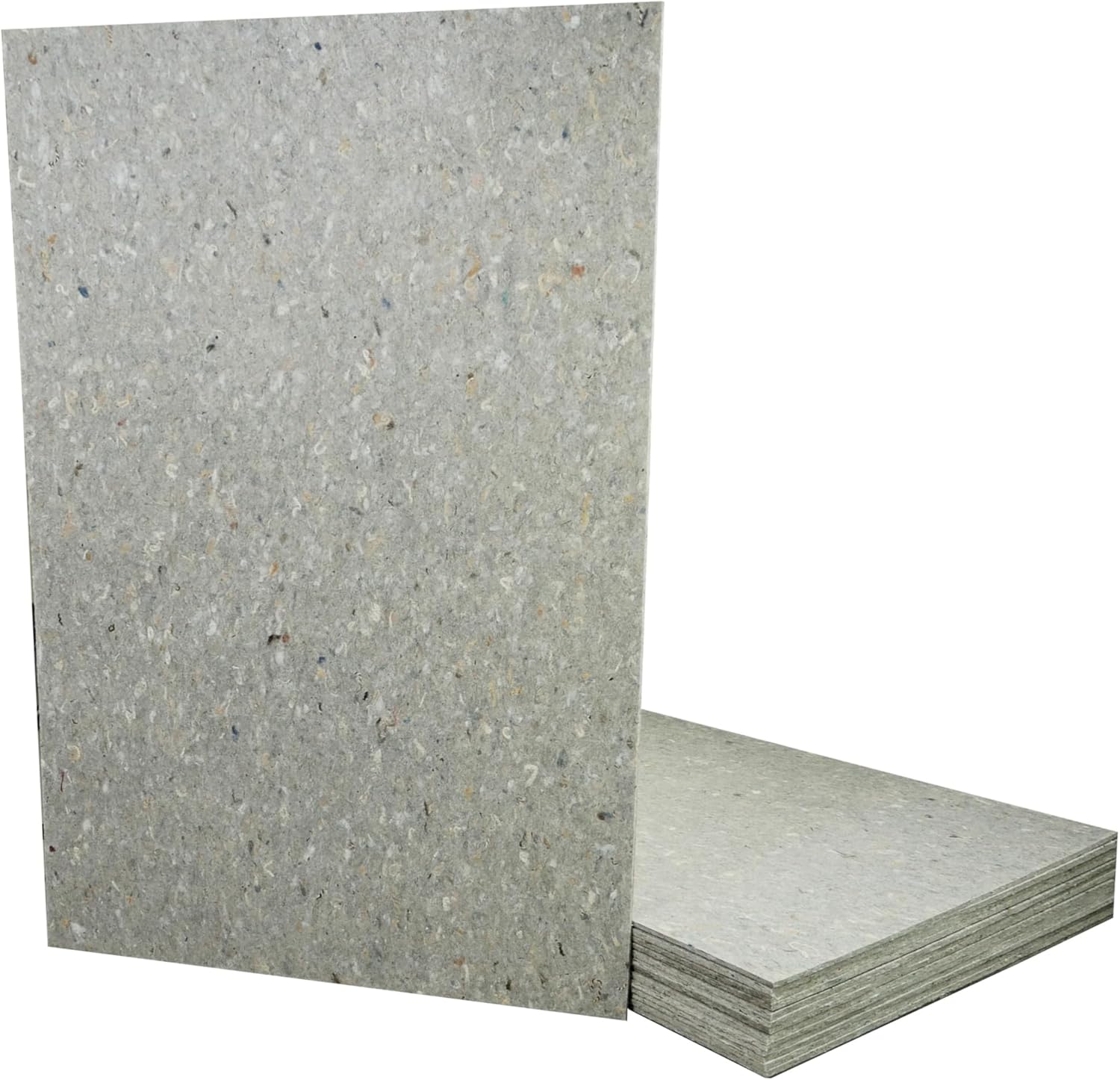
Quieture Soundboard Acoustic Panels are manufactured from 100% recycled synthetic fiber and are positioned for use on walls, ceilings, and subfloors. MP Global presents Quieture as an acoustic and thermal insulation product. Its technical documentation shows STC 43, STC 48, and STC 50 for specific complete wall assemblies with defined construction details; these are assembly ratings rather than a standalone STC rating for the board. MP Global also markets Quieture as reducing noise by up to 60 decibels, but that is a manufacturer claim rather than a universal result for every installation. The system supports various fastening methods including adhesive, staples, and mechanical hardware. For a deeper breakdown, read the full review or see the Quieture Soundboard listing.
BUBOS Fabric Acoustic Panels Overview
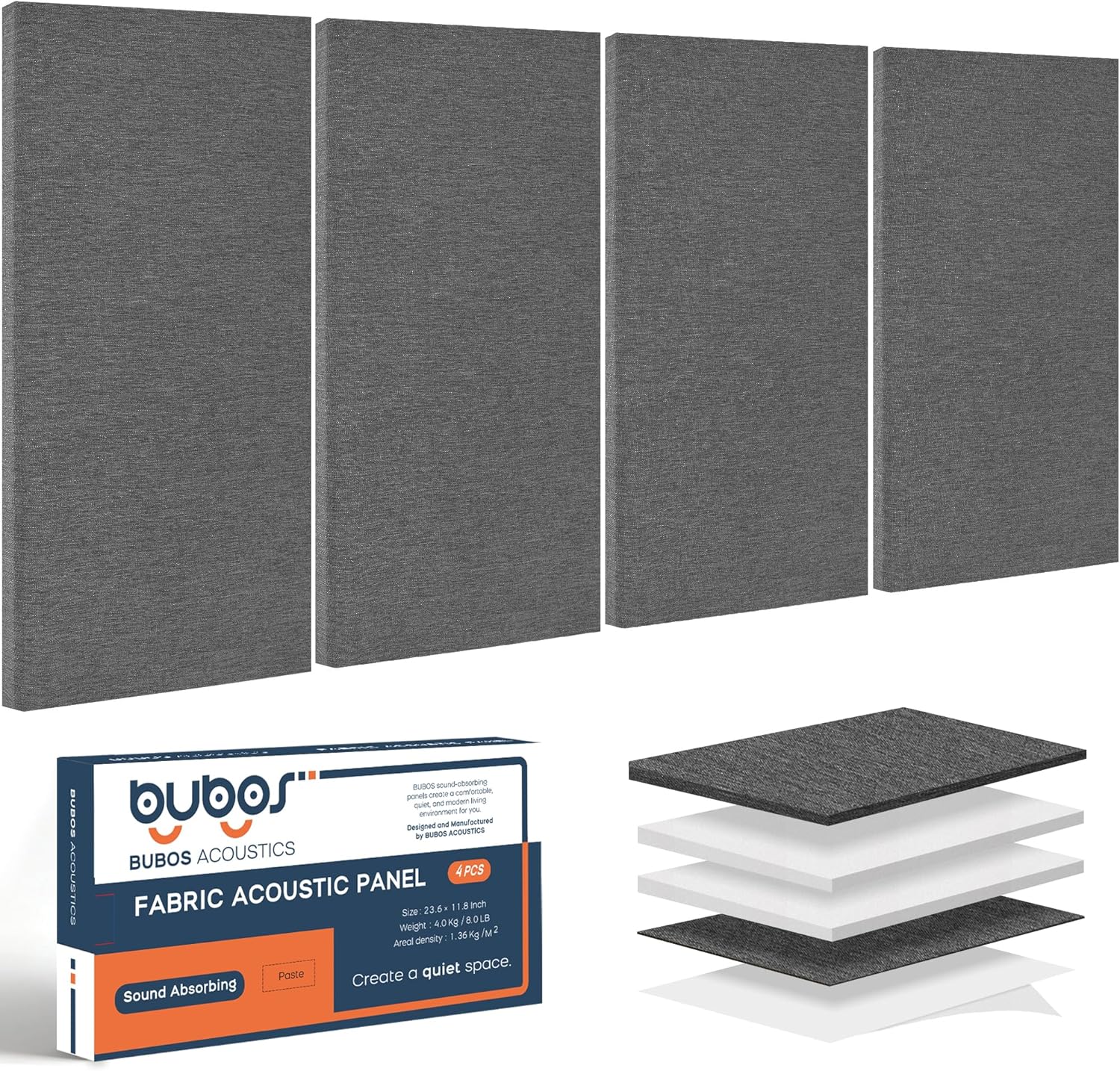
BUBOS Fabric Acoustic Panels are described in the product listing as using a high-density polyester core with a fabric-wrapped exterior for echo and reverberation control. The listing states an absorption range of 150 Hz to 20,000 Hz and shows an NRC value of 0.8 in its product information; these figures are listing-stated specifications and are not treated here as independently verified laboratory measurements. The listing also describes an approximately one-inch profile and integrated self-adhesive backing for direct wall installation. For full product information, see the BUBOS product overview or visit the BUBOS listing.
Head-to-Head Comparison: What the Evidence Shows
These products diverge significantly in application focus. Quieture is positioned as acoustic and thermal insulation for walls, ceilings, and floor applications, while its published STC 43, STC 48, and STC 50 values apply to specific complete wall assemblies rather than the board alone. BUBOS is presented as a surface treatment for echo and reverberation control, with self-adhesive installation described for flat wall surfaces. Current MP Global documentation lists a Class C fire rating for the optional Quieture facer and separately lists Federal Flammability Standard 1-70 (Pill Test) and ASTM F1482; it also lists moisture-related performance and antimicrobial-treated fibers. The BUBOS product information references a Class B1 rating, which is retained here as a listing-stated claim rather than an independently verified fire-test result.
At-a-Glance Comparison Table
| Attribute | Quieture Soundboard | BUBOS Fabric Panels |
|---|---|---|
| Material | Recycled synthetic fiberboard | 100% polyester core with fabric wrap |
| Function | Sound and thermal insulation | Echo and reverberation control |
| Installation | Adhesive, fasteners, staples | Self-adhesive backing |
| Fire Rating | Optional facer: Class C; MP Global also lists Federal Flammability Standard 1-70 (Pill Test) and ASTM F1482 | Class B1 stated in product-listing information; independent test documentation not established here |
| Sound Performance | STC 43 / 48 / 50 for specific complete wall assemblies; up to 60 dB is an MP Global manufacturer claim | Listing-stated NRC 0.8 and 150–20,000 Hz absorption range; not independently verified here |
| Mounting Surfaces | Walls, ceilings, subfloors | Flat wall surfaces only |
Which One May Be the Better Fit for Different Situations
For users comparing the stated application profiles, Quieture is positioned for acoustic and thermal use in walls, ceilings, and floor applications, while its published STC figures describe specific complete wall assemblies. BUBOS is positioned as a self-adhesive surface treatment for echo and reverberation control. The two products therefore address different parts of an acoustic project, and the listed performance figures should be interpreted according to their respective evidence scope rather than as directly equivalent standalone ratings.
Frequently Asked Questions
Can Quieture panels be installed behind drywall? Yes, the manufacturer specifies use in framed wall cavities and allows mechanical or adhesive installation methods.
Are BUBOS panels suitable for ceilings? The product documentation emphasizes flat wall use only and does not specify ceiling compatibility.
Do either of these panels block low-frequency noise? The available evidence does not establish a standalone low-frequency blocking rating for either panel. Quieture has documented STC values for specific complete wall assemblies, while the BUBOS listing describes an absorption range and echo-control use rather than a tested standalone transmission-loss rating.
Closing Guidance
Quieture Soundboard and BUBOS Fabric Panels reflect fundamentally different acoustic strategies — structural insulation versus surface-level treatment. When choosing between them, the decision hinges on whether the goal is to manage sound transmission across spaces or to refine acoustic clarity within a room. To explore these products in more detail, refer to the Quieture Soundboard review or visit the Quieture product page, and see the BUBOS feature overview or browse the BUBOS listing.