
Introduction
Choosing between the BXI Double Noise Blocker and the PINWELIFE Wall Art Panels comes down to how you plan to manage sound. One is positioned as a dual-layer foam and rubber solution for mechanical and structural noise control. The other combines printed artwork with general echo reduction for interior walls.
This comparison focuses strictly on what the review content documents: materials, stated acoustic metrics, installation approach, and positioning within home or mechanical environments.
Key Decision Factors Identified From the Review Content
The review details highlight several clear contrasts in construction, technical transparency, and intended placement.
- Dual-layer foam and rubber construction versus canvas-wrapped acoustic core
- Published NRC and transmission loss data versus no quantified acoustic ratings
- Pre-applied adhesive and included zip ties versus unspecified mounting details
- Mechanical and HVAC-oriented positioning versus wall-mounted decorative use
BXI Double Noise Blocker Acoustic Foam Rubber Panels for HVAC, Pipes, and Walls Overview
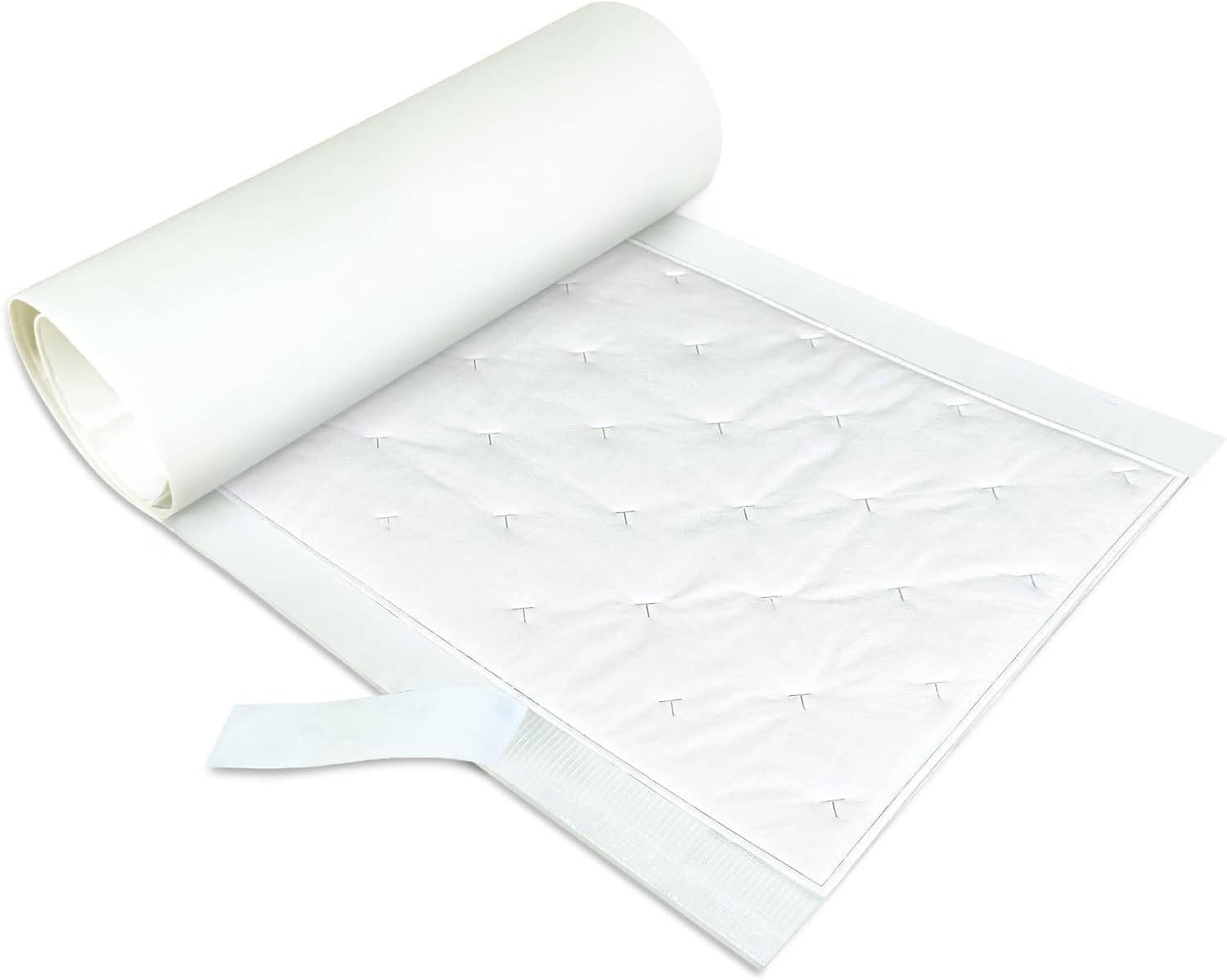
The BXI Double Noise Blocker Acoustic Foam Rubber Panels for HVAC, Pipes, and Walls use a composite structure that integrates a space cotton absorption layer with a dense rubber soundproofing layer. The review cites an average transmission loss of 24dB and an NRC rating of 0.75. NRC describes sound absorption rather than transmission blocking. The 24dB transmission-loss figure also requires its test specimen, test configuration, frequency range, and test method to interpret and should not be treated by itself as installed-system performance.
The construction includes pre-applied 3M double-sided adhesive strips and five zip ties. The foam side is intended to face the noise source, while the product description positions the rubber layer as contributing to vibration dissipation. That positioning does not establish structural isolation or quantify vibration reduction in an installed system. The material is described as closed-cell, tear-resistant, non-toxic, moisture-resistant, and heat-resistant.
Applications in the review include HVAC ducts, compressors, engine compartments, pipes, and interior walls. If you want to explore specifications and use positioning in more detail, the full breakdown of BXI Double Noise Blocker Acoustic Foam Rubber Panels for HVAC, Pipes, and Walls expands on installation orientation and structural details.
PINWELIFE Wall Art Acoustic Panels for Home and Office Sound Absorption Overview

The PINWELIFE Wall Art Acoustic Panels for Home and Office Sound Absorption combine a printed canvas surface with an internal sound-absorbing core. The featured design in the review is a “Boats and Sunset” image, intended to integrate visually into home offices, studios, and living rooms.
The panels are described as constructed with sound-absorbing materials aimed at reducing indoor echo and ambient noise. No specific decibel reduction figures or NRC ratings are provided. The listed dimensions are 48 inches by 32 inches per panel.
Installation details and mounting hardware specifications are not clearly documented in the review. For a closer look at aesthetic positioning and room placement context, you can review the detailed discussion of PINWELIFE Wall Art Acoustic Panels for Home and Office Sound Absorption.
Head-to-Head Comparison: What the Evidence Shows
The most defined difference is technical disclosure. The BXI Double Noise Blocker Acoustic Foam Rubber Panels for HVAC, Pipes, and Walls include stated acoustic metrics: 24dB average transmission loss and an NRC of 0.75. Those figures describe different acoustic properties and, without equivalent test context, do not establish that BXI will provide greater overall sound control in a finished room or assembly. The PINWELIFE Wall Art Acoustic Panels for Home and Office Sound Absorption do not publish quantified acoustic ratings in the review.
Construction also differs. BXI uses a foam and rubber composite with a closed-cell structure and integrated adhesive system. PINWELIFE uses a canvas-wrapped design with an internal acoustic core but does not specify material composition.
Installation guidance is more explicit for BXI, including adhesive strips and zip ties, along with recommended orientation of the foam layer. For PINWELIFE, mounting hardware and methods are not specified in the available review details.
Positioning in the review content reflects this split: BXI is framed around HVAC systems, pipes, and mechanical equipment, while PINWELIFE is positioned as decorative wall-mounted acoustic treatment for interior rooms.
At-a-Glance Comparison Table
| Feature | BXI Double Noise Blocker Acoustic Foam Rubber Panels for HVAC, Pipes, and Walls | PINWELIFE Wall Art Acoustic Panels for Home and Office Sound Absorption |
|---|---|---|
| Construction | Foam and rubber composite with space cotton layer | Canvas surface over internal sound-absorbing core |
| NRC Rating | 0.75 | Not specified in the available review details. |
| Transmission Loss | 24dB average | Not stated in the researched material. |
| Dimensions | Not provided in the product write-up. | 8 × 12-by-16-inch panels; 48-by-32-inch overall arrangement |
| Adhesive Included | Pre-applied 3M double-sided adhesive strips | Not provided in the product write-up. |
| Additional Fasteners | Five zip ties included | Not provided in the product write-up. |
| Primary Positioning | HVAC, pipes, machines, walls | Home offices, studios, living rooms |
Which One May Be the Better Fit for Different Situations
If your focus is wrapping pipes and ducts or using a product positioned for mechanical-noise and vibration-dampening applications, the review content places the BXI Double Noise Blocker Acoustic Foam Rubber Panels for HVAC, Pipes, and Walls in those environments. It includes stated acoustic metrics and integrated fastening features, but those metrics and product-positioning claims should not be treated as proof of structural isolation or installed-system performance.
If visual integration is central to your decision, the PINWELIFE Wall Art Acoustic Panels for Home and Office Sound Absorption emphasize artwork presentation combined with general echo reduction. The large-format canvas design is positioned as decorative as well as functional.
In short, one review centers on technical construction and structural installation, while the other centers on aesthetic wall treatment with basic sound absorption.
Frequently Asked Questions
Does either product publish an NRC rating?
The BXI Double Noise Blocker Acoustic Foam Rubber Panels for HVAC, Pipes, and Walls list an NRC rating of 0.75. NRC is an absorption metric rather than a transmission-blocking rating. The PINWELIFE Wall Art Acoustic Panels for Home and Office Sound Absorption do not provide a stated NRC value in the review.
Are mounting accessories included?
BXI includes pre-applied 3M adhesive strips and five zip ties. Mounting hardware for PINWELIFE panels is not provided in the product write-up.
Which one is designed for decorative wall use?
The PINWELIFE Wall Art Acoustic Panels for Home and Office Sound Absorption are presented as printed wall art with an acoustic core. BXI is described primarily for mechanical and structural applications.
Closing Guidance
The decision largely depends on whether your priority is a product positioned for mechanical-system treatment or decorative echo reduction on visible walls. The BXI Double Noise Blocker Acoustic Foam Rubber Panels for HVAC, Pipes, and Walls provide stated acoustic metrics and installation features tailored to pipes and equipment, while the PINWELIFE Wall Art Acoustic Panels for Home and Office Sound Absorption emphasize room aesthetics with general sound absorption characteristics. Because the products address different acoustic functions and the review does not provide equivalent test data, the reported BXI figures do not establish overall acoustic superiority.
For a deeper dive into installation orientation, material details, and usage context, review the full standalone analyses linked above before making a final choice.