Introduction: Which Material Solves the Actual Noise?
Method and affiliate disclosure: This is an editorial comparison using manufacturer, retailer and existing Soundproofing Dude product sources, not a hands-on or laboratory acoustic test. DGSL (Amazon ASIN B08RB1ZKLT) is a cut-to-fit adhesive foam sheet. Siless (ASIN B0CQDDX5CD, model T2) is a two-pack of narrow self-adhesive anti-creak tape. Sponsored purchase links may earn an affiliate commission at no additional cost to the reader. Confirm the exact selected product and seller-supplied specifications at checkout.
If you’re deciding between DGSL Neoprene foam sheets and Siless Anticreak tape, the key difference is format and intended placement: DGSL is an adhesive-backed neoprene foam sheet in a roll, while Siless is a narrow adhesive tape sold as a two-pack for targeting contact points that produce squeaks, rattles, and creaks.
Key Decision Factors: Contact Point or Custom Sheet?
The review content emphasizes differences in material format (foam sheet vs tape), stated dimensions, disclosed material composition, and how each product is positioned for sealing/insulation/sound control versus addressing interior creaks and rattles at contact points.
DGSL Adhesive Neoprene Sheet: Broad Cut-to-Fit Material
Independent retailer specifications for the linked DGSL ASIN give model mg, a 12 × 59-inch nominal white roll and a 1/16-inch (about 1.6 mm) sheet thickness, with neoprene foam and adhesive backing. Its nominal flat face is approximately 4.92 square feet (12 × 59 ÷ 144). That is material coverage before trimming, not a tested gasket compression range or verified soundproofing value.
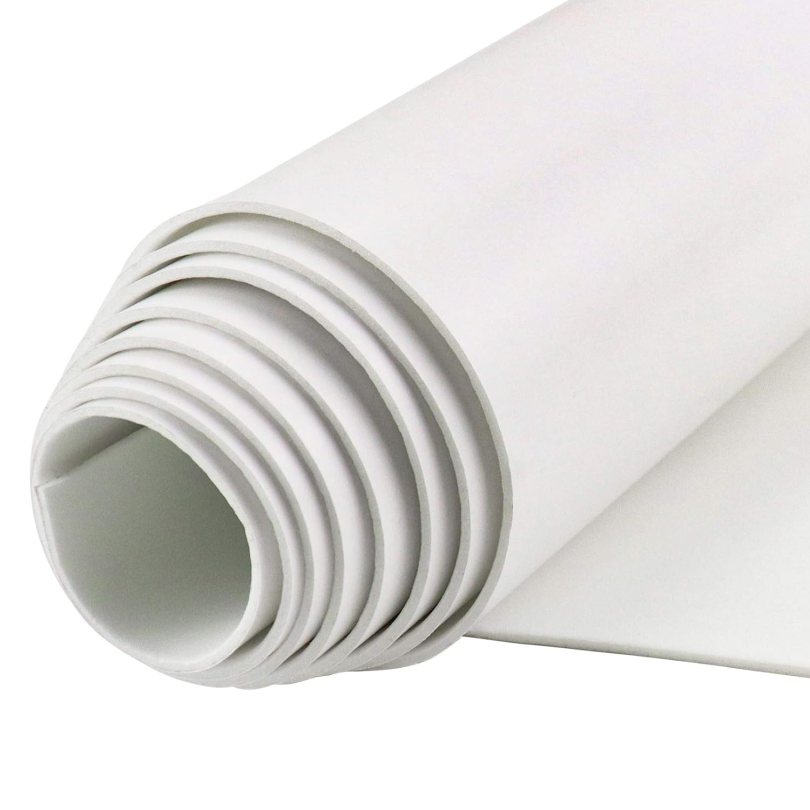
DGSL’s product is described as a closed-cell neoprene sponge rubber sheet with an adhesive backing and release paper. The roll is listed as 12 inches wide, 59 inches long, and 1/16 inch thick. The write-up positions it for multi-purpose DIY work where sealing, insulation, or sound control may be needed, with examples spanning home, automotive, and light industrial-style contexts.
For product details and availability, you can view DGSL directly. The review also notes surface-prep themes (clean, flat surfaces) and mentions the foam can be trimmed with common tools, while also referencing that thinner variants may be prone to tearing under stress.
Siless Anticreak Tape: Narrow Self-Adhesive Contact Strip
The Siless manufacturer’s two-pack listing links directly to ASIN B0CQDDX5CD. Retailer records identify model T2, UPC 659821381951 and a nominal 1-inch-wide × 20-foot roll, with two rolls per pack—40 linear feet in total, not one 40-foot roll. Descriptions for the same ASIN conflict over whether its material is polyethylene or “foam, rubber.” The exact polymer formulation and any temperature-tolerance test were not independently verified. Fit, friction contact and pressure sensitivity matter more than broad acoustic-marketing labels.

Siless is presented as a two-pack anticreak tape designed for automotive, marine, and home environments. Each roll is described as 1 inch wide and 20 feet long, with a black finish and a peel-and-stick application approach. The write-up frames it around targeting interior noises such as rattles, squeaks, and creaks, with stated application areas including dashboards, doors, seatbelts, interior trim, and wiring harnesses.
To see the product listing, check Siless. The review also states that technical data on temperature tolerance and material composition is not disclosed, and it mentions handling-related points such as potential fraying if handled roughly.
Head-to-Head: What the Evidence Actually Establishes
Search and competitor intent: Searches for neoprene adhesive foam sheets usually concern custom gaskets, liners, isolation spacers or insulation. Searches for anticreak tape concern narrow car-trim interfaces where two parts rub. Neither item is a substitute for a tested constrained-layer vibration damper or a fully specified airborne sound-isolation assembly. The products compete for where to place a compliant material, not for a proven standalone decibel-reduction winner. For a different automotive-material comparison, see our SmartSHIELD versus SoundSkins Wavy PLUS guide.
- Format and coverage style: DGSL is described as an adhesive-backed neoprene foam sheet in a 12-inch-wide roll, while Siless is described as a 1-inch-wide anticreak tape meant for placing between parts and at contact points.
- Stated dimensions: DGSL lists width, length, and thickness (12 in x 59 in x 1/16 in). Siless lists width and length per roll (1 in x 20 ft) and is described as a two-pack.
- Material disclosure: DGSL’s retail variant identifies closed-cell neoprene foam. Siless two-pack listings for the same ASIN give conflicting material labels—polyethylene versus foam/rubber—so exact composition is not independently confirmed.
- Positioning in the write-ups: DGSL is described for sealing, insulation, or sound control DIY uses; Siless is described for addressing rattles, squeaks, and creaks in areas like dashboards, doors, trim, and wiring.
- Installation framing: Both are described as self-adhesive; Siless is explicitly framed as peel-and-stick, and DGSL’s adhesive backing is described with a release paper for handling.
If you want the longer product-specific context, you can explore DGSL and Siless where their listings are shown.
At-a-Glance Comparison
| Attribute | DGSL neoprene foam roll | Siless T2 anticreak tape (two-pack) |
|---|---|---|
| Product format | Adhesive foam sheet in a roll | Anticreak tape |
| Stated size per unit | 12 in wide x 59 in long x 1/16 in thick | 1 in wide x 20 ft long (per roll) |
| Pack quantity | One 12 × 59-inch roll for listed ASIN | Two 1-inch × 20-foot rolls for listed ASIN |
| Material composition | Retailer-listed neoprene sponge foam | Conflicting seller labels: polyethylene or foam/rubber; exact formulation unverified |
| Thickness | 1/16 in | Not stated in the researched material. |
| Adhesive / application style | Adhesive backing with release paper | Peel-and-stick; self-adhesive |
| Stated color | Not provided in the product write-up. | Black |
| Temperature tolerance disclosure | Not provided in the product write-up. | Not disclosed |
Which Product Fits Different Contact Problems?
- If you want an adhesive-backed foam sheet in a roll with stated width, length, and thickness—and a stated neoprene material—DGSL may align more closely with that preference.
- If you want a narrow peel-and-stick tape sold as a two-pack and described for placing at interior contact points (dash, doors, trim, wiring), Siless may be the closer match.
- If exact chemical composition or temperature tolerance is critical, obtain current Siless documentation for model T2; retailer material labels for its linked ASIN conflict. DGSL’s neoprene designation is also a seller-listed specification, not a third-party material certificate.
For quick reference to product listings while you compare, you can revisit DGSL and Siless.
Frequently Asked Questions
Is DGSL a foam sheet or a tape?
DGSL is described as an adhesive-backed neoprene foam sheet in a roll.
Is Siless sold as a single roll or a multi-pack?
Siless is described as a two-pack, with each roll listed as 1 inch wide and 20 feet long.
Do both products have adhesive backing?
Yes. DGSL is described with an adhesive backing and release paper, and Siless is described as peel-and-stick and self-adhesive.
Is the Siless material or temperature tolerance confirmed?
Not conclusively. Siless listings for model T2 disagree on the polymer material (polyethylene versus foam/rubber); a product-specific temperature rating was not independently verified. Check the exact material against the manufacturer’s current technical documentation before critical installations.
Closing Guidance
Choose DGSL if the job requires a sheet trimmed for a broad lining or custom gasket. Choose Siless T2 if the nuisance is a narrow, accessible creaking trim joint. Clean and dry the application surface, check clearances and avoid areas where adhesive material could interfere with locks, latches, controls or safety-critical automotive components. Neither listing provides a product-specific STC, NRC or comparable controlled noise-reduction test for this choice. The source reviews and retailer variants should be checked again before ordering.
Good luck and happy soundproofing.