Soundproofing homes, offices, and personal vehicles have become the latest lifestyle change across the world. With more companies manufacturing durable and sound absorbent products, the rise in their consumption has increased. When it comes to soundproofing, MLV or mass-loaded vinyl is the go-to option for soundproof interiors. The best thing about MLV is the considerable amount of mass contained in the minimum thickness. Essentially mass-loaded vinyl is a viscoelastic material that uses the property of hysteresis to diminish the noise inside the space.
Mass-loaded vinyl is a flexible mass barrier used primarily to help reduce airborne sound transmission as part of a complete construction. Its acoustic role should not be confused with porous sound absorption or dedicated vibration-damping treatments. Performance depends on the complete wall, ceiling, floor, pipe or enclosure assembly, including its mass, framing, isolation, sealing and installation details.
Second Skin Luxury Liner is a product family with different variants, including 1 lb./sq. ft. nominal 1/8-inch material and 2 lb./sq. ft. nominal 1/4-inch material. Do not apply the 1/4-inch specification to the whole range. Second Skin’s current sheet page lists sound-transmission results of STC 26 for its 1 lb. sheet and STC 32 for its 2 lb. sheet; its roll page lists STC 27 for the 1 lb. roll. These are not automatically interchangeable ratings: check the exact format and associated test documentation before comparing them, and do not treat a product figure as the rating of a finished wall, floor, ceiling or vehicle installation.
Soundsulate’s current manufacturer website describes its 1 lb./sq. ft. MLV as non-toxic and advertises an STC figure of 27. Treat both as manufacturer-stated claims, not an independent environmental assessment or a guarantee for a finished assembly. Before using STC 27 in a specification or formal project comparison, request the current test report, test standard and tested specimen details, then compare like-for-like constructions.
Working of MLV
MLV works primarily by adding flexible mass to a construction. That added mass can contribute to reducing airborne sound transmission, but the result depends on the complete assembly. This is different from porous absorbers, which dissipate acoustic energy within their fibrous or open structure, and from dedicated damping treatments used to control resonance in vibrating panels.
When MLV is added to a wall or other construction, its primary acoustic role is to add flexible mass to the assembly. Increasing mass can help reduce airborne sound transmission, but the result depends on the complete construction, including framing, isolation, cavity treatment, seams and perimeter sealing. MLV should not be described as working through a special “ball-cloth” effect or by freely moving between studs.
Advantages of using MLV
MLV can provide a flexible way to add mass where a rigid layer would be inconvenient. Products vary in mass, thickness, dimensions and handling characteristics, so installation requirements and physical specifications should be compared for the exact material and construction rather than assuming MLV is always thinner, lighter or easier to install than other sound-control materials.
STC, or Sound Transmission Class, describes the airborne sound-isolation performance of a tested construction; it should not be treated as a universal product-only score. MLV can be useful where a flexible mass layer fits the design, including some wall, ceiling, pipe and enclosure applications, but its contribution depends on the surrounding construction and installation. Compare products using like-for-like test information, physical specifications, installation requirements and the acoustic role needed for the project rather than assuming MLV is inherently superior to other sound-control approaches.
Second Skin and Soundsulate are two mass-loaded vinyl options considered in this comparison. The useful comparison is their current product documentation, tested performance, configuration and suitability for the intended installation.
Mass Loaded Vinyl (MLV) applications
Added mass can help reduce airborne sound transmission as part of a complete barrier assembly. Mass Loaded Vinyl (MLV) is a flexible material used to add mass in walls, ceilings, floors, enclosures, and some sound-control curtain or blanket systems.
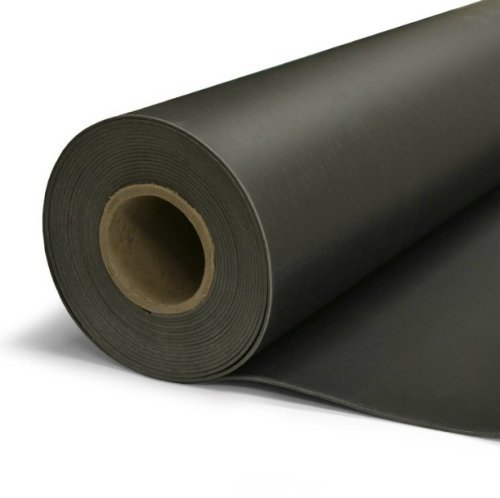
MLV products vary by weight, thickness, construction and tested configuration. Check the manufacturer’s current technical data for the exact product, and do not treat a material-level STC figure as the rating of a complete installed wall, floor or ceiling assembly.
Effortless Installation and Broad Applications
Both products are flexible mass-loaded vinyl materials intended for sound-barrier applications. Installation method and suitability depend on the specific construction and manufacturer instructions. Current Soundsulate manufacturer information describes the material as non-toxic; other physical or installation claims should be checked against the current documentation for the exact product.
Mass-loaded vinyl can be used as part of sound-control assemblies in different settings, but suitability depends on the product, construction and installation. Compare current manufacturer documentation for each product rather than assuming historical temperature, tear-strength or durability claims apply to the version being considered.
table { width: 100%; border-collapse: collapse; } th, td { border: 1px solid #dddddd; text-align: left; padding: 8px; } th { background-color: #007bff; color: white; } .pros { background-color: #ccffcc; } .cons { background-color: #ffcccc; }| Feature Description | Soundsulate | Second Skin |
|---|---|---|
| STC Information | Current manufacturer information publishes STC 27; interpret in its documented test context | Official sheet page lists STC 26 (1 lb.) and 32 (2 lb.); roll page lists STC 27 for 1 lb. Verify the exact format and test basis |
| Thickness & Weight | 1 lb./sq. ft. (current manufacturer information) | Luxury Liner has 1 lb./sq. ft. (1/8-inch) and 2 lb./sq. ft. (1/4-inch) variants; compare the same variant |
| Temperature Rating | Not verified from current source | Not verified from current source |
| Fire / Safety Information | Not verified from current source | Not verified from current source |
| Tensile Strength | Not verified from current source | Not verified from current source |
| Material / Safety Information | Manufacturer describes product as non-toxic; treat as a vendor claim and request supporting documentation when needed | Not verified from current source |
| Application Flexibility | Residential, commercial | Automotive, residential, studios |
Second Skin Audios
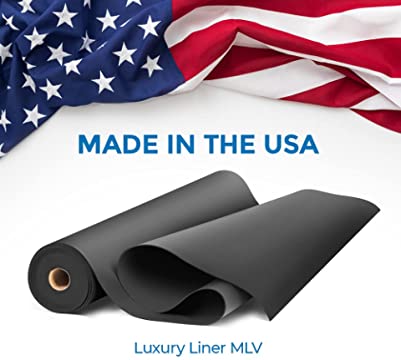
Second Skin offers sound-control materials for automotive and building applications. Product performance and suitability should be assessed from current specifications, test documentation and installation requirements rather than broad promotional claims.
Second Skin markets sound-control products for applications that include vehicles and buildings. The appropriate material and installation depend on the noise problem and construction, so use current product documentation when assessing a specific application.
Pros
- Second Skin offers mass-loaded vinyl sound-barrier products. Check the current manufacturer documentation for material, handling and installation characteristics of the exact product.
- Temperature limits and any thermal-insulation claims should be checked against current documentation for the exact product and installation rather than inferred from historical specifications.
- These MLV sheets are easy to install and can be attached with glue or double-sided sellotape.
Cons
- Product thickness and configuration can vary by material and product version, so compare the current specifications for the exact item being considered.
- For Second Skin, check the current manufacturer specification for the exact Luxury Liner product and configuration rather than relying on historical weight figures.
Soundsulate:
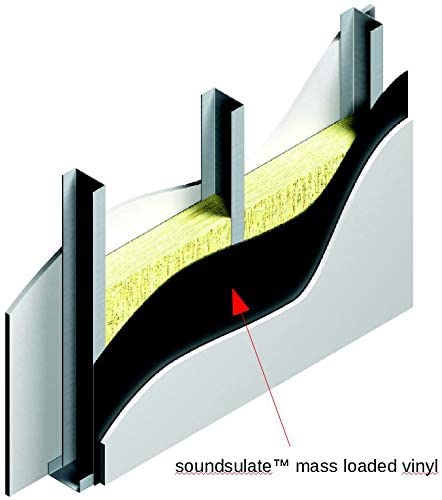
Soundsulate is another MLV option intended for sound-control applications. Soundsulate can be incorporated into walls, ceilings and floors as a flexible mass layer. A source-published STC figure of 27 should be interpreted with its associated test method, specimen or construction; it does not establish that every installation will reduce perceived sound to a fixed fraction or produce a particular listening result.
Soundsulate is a mass-loaded vinyl option that may be used in appropriate sound-control assemblies. Pricing changes over time, so compare the current product price, coverage and specifications when evaluating cost.
Pros
- These sheets can be used in different interior spaces and locations. They are suitable for basements, garages, home theatres, and even for automobiles and vehicles.
- For durability, environmental exposure and acoustic performance, use the current specifications and installation guidance for the exact product.
- Soundsulate is described by its current manufacturer information as a 1 lb./sq. ft. mass-loaded vinyl product. Check the current product listing for dimensions and configuration before purchase.
Cons
- Published STC figures associated with Second Skin and Soundsulate should not be used as a simple product ranking unless they come from directly comparable test specimens and methods. Finished performance depends on the complete construction.
Soundsulate 1 lb MLV
Soundsulate is a 1 lb./sq. ft. mass-loaded vinyl product intended for sound-control applications. Current manufacturer information publishes an STC figure of 27. That figure should be interpreted in the context of its associated test specimen or construction and should not be converted into a fixed speech-intelligibility or perceived-loudness result for a finished installation.
Typical applications include applying over studs, joists, or suspended ceilings. It can also be used as an acoustic wrap for machinery, equipment, and ductwork.
The Soundsulate listing provides a purchase route for the product. Price, availability, manufacturing details and other commercial information can change, so verify those details from current product or manufacturer information when making a purchase decision.
Deciphering the Differences: Second Skin vs. Soundsulate
When comparing Second Skin and Soundsulate, start with current physical specifications, installation requirements and directly comparable acoustic test evidence for the exact products being considered. Do not rank the products from historical STC figures alone: an STC result depends on its tested specimen or construction and does not by itself establish the performance of a finished installation. Temperature or fire-test requirements should likewise be checked against current documentation where they matter to the intended application.
Conversely, current Soundsulate manufacturer information identifies the material as a 1 lb./sq. ft. non-toxic MLV product and publishes an STC figure of 27. Product specifications and test figures should be compared in their documented test context rather than used as a standalone measure of installed performance or broader environmental impact.
Choosing the Right MLV: Match the material to the project rather than selecting from STC figures alone. Compare mass per unit area, thickness, temperature or fire-test requirements where relevant, dimensions, installation constraints and directly comparable acoustic test evidence. The finished construction—including framing, other layers, isolation, seams, penetrations and perimeter sealing—ultimately determines the installed result.
Soundproofing your home
Ready to transform your living space into a sanctuary of peace and quiet? Dive into our essential guide to soundproofing your home! From selecting the right materials to easy DIY installation tips, we’ve got everything you need to block out unwanted noise and create the tranquil environment you’ve always dreamed of.
Find out more about soundproofing your home’s windows, doors, ceilings, and floors. Don’t let the buzz of the outside world disrupt your peace. Start your soundproofing journey today and enjoy the serene, noise-free home you deserve. Click here to unlock the secrets to a quieter home!
Product Safety and Material Specifications
Second Skin Luxury Liner is marketed for sound-barrier applications. Suitability for a particular automotive or building application should be determined from current manufacturer documentation and any fire, temperature or installation requirements that apply to that project.
Soundsulate MLV4 is described with physical and safety-related specifications including odor, material, self-extinguishing and temperature characteristics. Treat each of those as a specific product claim that should be checked against current manufacturer documentation; they do not by themselves establish broader environmental impact or ecological superiority.
Conclusion
Mass-loaded vinyl can be a useful flexible-mass component in an airborne sound-isolation assembly, but it is not automatically the best treatment for every noise problem. The appropriate approach depends on the sound path and the complete construction. Added mass, decoupling, cavity absorption, damping, resilient treatment and careful sealing perform different roles, so the assembly should be designed around the specific source and transmission path.
Good luck and happy soundproofing!