TotalMass and TroyStudio are both legitimate mass-loaded-vinyl barriers, but they suit different project sizes. TotalMass makes more sense for larger walls, ceilings, floors and construction projects, while TroyStudio’s compact 1-by-8-foot sheet is easier to handle for smaller barriers, pipes, equipment and localized work.
Their headline STC figures are close enough that we would not choose between them based on one number. Coverage, total weight, installation access and the complete soundproofing assembly are more useful decision factors.
Quick Verdict: TotalMass or TroyStudio?
| Choose TotalMass when… | Choose TroyStudio when… |
|---|---|
| You need 40 or 100 square feet of coverage | You need only 8 square feet |
| You want a choice of 1/2 lb, 1 lb or 2 lb MLV | You want a compact 1 lb-per-square-foot sheet |
| You are planning a wall, ceiling, floor or larger barrier | You are treating a smaller surface, pipe, enclosure or equipment area |
| You can manage a roll weighing approximately 42 or 102 pounds | You want a sheet weighing approximately 8 pounds |
SPD’s overall choice: TotalMass is the more versatile construction option, while TroyStudio is the more approachable format for small projects. Neither is automatically the better acoustic material in every completed assembly.
TotalMass vs TroyStudio Specifications
For a fair comparison, the table below uses the 1 lb version of TotalMass because TroyStudio’s current sheet is also listed at approximately 1 pound per square foot.
| Specification | TotalMass 1 lb MLV | TroyStudio MLV |
|---|---|---|
| Area weight | 1 lb per sq ft | 1 lb per sq ft |
| Current format | 4 ft × 25 ft or 4 ft × 10 ft | 1 ft × 8 ft |
| Coverage | 100 sq ft or 40 sq ft | 8 sq ft |
| Thickness | Approximately 1/8 in (2.6 mm) | Approximately 0.13 in |
| Approximate material weight | 102 lb or 42 lb | Approximately 8 lb based on 1 lb/sq ft × 8 sq ft |
| Published material STC | 27 | 28 claimed by the marketplace listing |
| Other weights available | 1/2 lb and 2 lb versions | Not part of this specific listing |
| Best practical distinction | Large-area coverage and weight choice | Compact handling and localized coverage |
The one-point difference between the listed STC figures is not enough to establish a meaningful real-world winner. Test conditions and reporting methods must be understood before treating two headline numbers as directly equivalent.
TotalMass MLV Overview
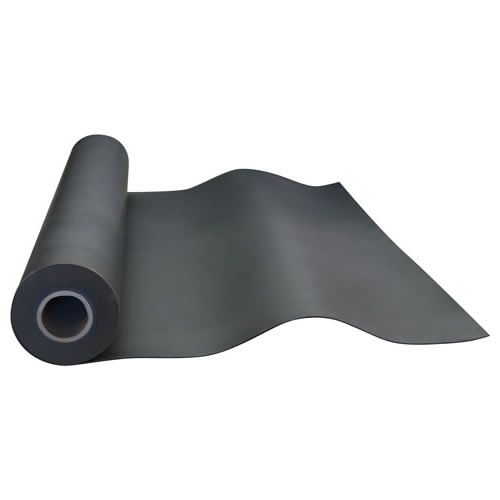
TotalMass is a flexible MLV barrier currently offered in 1/2 lb, 1 lb and 2 lb versions. This range gives buyers more control over the mass, thickness and handling requirements of the material.
The 1 lb version is the closest match to TroyStudio. It is approximately 1/8 inch thick and is currently available in 40- and 100-square-foot rolls. The larger roll weighs about 102 pounds, so it requires planning and usually more than one person for wall or overhead installation.
TotalMass’s principal advantage is therefore not a dramatic difference in its headline STC number. Its advantage is the ability to cover a much larger area and select a different weight when the assembly genuinely requires it.
The current TotalMass range is examined in detail in our TotalMass MLV review, including the limitations of using MLV in already-decoupled walls and for impact noise.
If the 1 lb, 4-by-25-foot version suits your project, you can check the current TotalMass MLV listing on Amazon. Verify the size, seller and availability before ordering.
TroyStudio MLV Overview
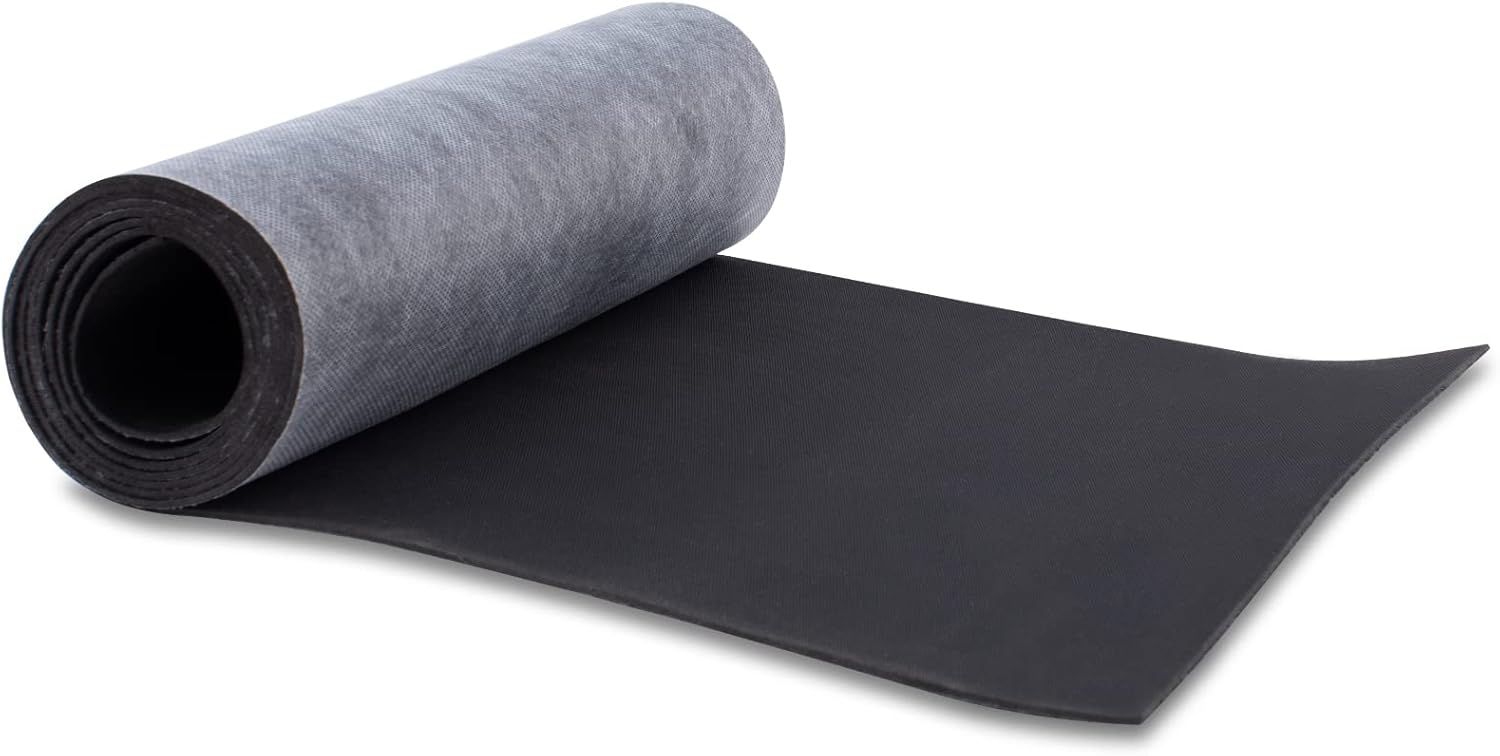
TroyStudio’s current MLV listing is a 1-foot-by-8-foot sheet providing eight square feet of coverage. It is listed at approximately 1 pound per square foot and 0.13 inches thick.
The listing describes a rubber-based barrier with a fabric-backed surface. Unlike a large construction roll, the complete sheet should weigh approximately eight pounds based on its stated area weight and coverage:
1 lb per sq ft × 8 sq ft = approximately 8 lb.
That makes TroyStudio considerably easier to move, cut and position. The trade-off is coverage: treating a large wall would require multiple sheets, additional seams and more individual attachment points.
Our TroyStudio MLV overview covers the individual product in more detail.
For the exact compact sheet discussed here, check the current TroyStudio MLV listing on Amazon. Marketplace specifications and availability can change, so confirm the selected variant before purchasing.
Understanding the STC 27 vs STC 28 Claims
TotalMass lists a standalone STC of 27 for its 1 lb material, while the TroyStudio marketplace listing presents an STC figure of 28.
That does not establish that TroyStudio will make a completed wall one STC point better than TotalMass.
An STC rating shown beside an MLV product can refer to material-level testing or to a particular test configuration. A completed wall, ceiling or floor has its own framing, drywall, insulation, fasteners, seams, penetrations and structural connections.
Even when two materials have similar area weight and thickness, their headline numbers should only be compared when the testing methods and conditions are genuinely equivalent.
SPD would therefore treat both products as approximately 1 lb-per-square-foot barrier materials and choose between them primarily according to format, coverage, handling and the requirements of the complete assembly.
Which Product Is Easier to Install?
TroyStudio is easier to handle as a single sheet. An approximately eight-pound section is far less awkward than a flexible TotalMass roll weighing 42 or 102 pounds.
That does not automatically make TroyStudio easier for a large project. Covering 100 square feet would require multiple sheets, creating more seams and more opportunities for gaps.
TotalMass is physically demanding to position, but one large roll can provide much more continuous coverage. This can be advantageous when the assembly requires a continuous barrier across a broad wall or floor area.
Neither product should be treated as self-supporting. Follow the installation requirements for the material, substrate and orientation. Large sheets may require suitable fasteners and wide washers or comparable support to prevent tearing around attachment points.
Which Is Better for Walls?
TotalMass is usually the more practical choice for a conventional full wall because its four-foot width and larger coverage reduce the number of separate pieces required.
TroyStudio can still work for a small wall section, enclosure or localized weak area. It becomes less attractive when many narrow sheets are required to cover the surface.
Whichever product is used, electrical boxes, vents, doors, perimeter gaps and flanking paths can undermine the result. MLV cannot compensate for major untreated openings elsewhere in the room.
Which Is Better for Ceilings?
TroyStudio’s smaller format is easier to lift overhead, but a ceiling assembled from multiple narrow sheets requires careful seam treatment and reliable attachment.
TotalMass provides broader coverage but becomes substantially harder to hold and secure overhead. A 102-pound flexible roll should not be approached as a casual one-person installation.
For a large or finished ceiling, installation safety and assembly design matter more than choosing the product with the slightly higher advertised STC figure.
Which Is Better for Pipes, Ducts and Equipment?
TroyStudio’s compact format can be convenient for smaller pipe wraps, equipment housings and localized mechanical barriers. Less material needs to be lifted, cut and stored.
TotalMass may be preferable when the project covers long duct runs, larger enclosures or several mechanical surfaces. Its lighter 1/2 lb version may also be worth considering where flexibility and reduced handling weight are more important than maximum added mass.
Do not block required ventilation, access panels or heat-dissipation paths when applying any barrier around equipment.
TotalMass vs TroyStudio for Floors
Both materials can add mass to some floor assemblies, but neither should automatically be treated as an impact-noise underlayment.
Voices, music and television passing through a floor-ceiling assembly involve airborne transmission. Footsteps and dropped objects excite the structure directly and often require resilient layers or structural isolation.
If footfall is the main complaint, choosing between these two MLV sheets may not solve the actual problem.
Coverage and Cost Comparison
Do not compare only the purchase price shown on each listing. The two products cover very different areas.
- TotalMass 4 ft × 25 ft: 100 square feet
- TotalMass 4 ft × 10 ft: 40 square feet
- TroyStudio 1 ft × 8 ft: 8 square feet
Calculate the current cost per usable square foot, then include shipping, fasteners, seam treatment, adhesives where approved, waste and installation help.
A compact TroyStudio sheet may be economical for an eight-square-foot project but inefficient for a complete room. A TotalMass roll may offer better large-area coverage but create unnecessary expense and handling difficulty when only a small piece is needed.
What Neither Product Will Fix
TotalMass and TroyStudio are barrier materials. Neither should be purchased as a universal solution for every noise complaint.
They are not the right first choice when:
- echo and reverberation inside the room are the main problems;
- footfall or impact noise requires resilient isolation;
- most sound enters through an untreated door, window or vent;
- the assembly already uses effective isolation clips and decoupling;
- large gaps or flanking paths bypass the surface being treated;
- another layer of drywall can provide the required mass more economically.
Identify the transmission path first. Added MLV only helps when flexible barrier mass is relevant to the actual weakness.
Frequently Asked Questions
Is TroyStudio better because it claims STC 28?
No. TotalMass lists STC 27 for its 1 lb material, but a one-point headline difference does not prove that TroyStudio will outperform it in a completed wall. Test conditions and the full assembly matter.
Does TotalMass offer more coverage?
Yes. Its current 1 lb options cover approximately 40 or 100 square feet. The TroyStudio sheet covers eight square feet.
Which product is easier for one person to handle?
TroyStudio. Its eight-square-foot format should weigh approximately eight pounds based on the listed area weight. TotalMass’s comparable rolls weigh approximately 42 or 102 pounds.
Can either product reduce echo?
These products are intended primarily to resist sound transmission through a barrier. Echo inside a room is better addressed with absorptive acoustic treatment.
Can I use these products for footstep noise?
They should not be treated as dedicated impact-noise underlayments. Footsteps generally require resilient flooring layers or structural isolation strategies.
Does either product have adhesive backing?
Neither exact product is presented here as a peel-and-stick MLV sheet. Use only installation methods approved for the product, substrate and orientation.
Should I use several TroyStudio sheets instead of one TotalMass roll?
That can make sense for small or awkward areas. For large continuous surfaces, multiple narrow sheets create more seams and may be less efficient than a wider construction roll.
SPD’s Final Verdict
Choose TotalMass for larger construction coverage and TroyStudio for compact, easier-to-handle projects.
TotalMass is the stronger overall option when you need a substantial wall, ceiling, floor or enclosure barrier and can safely manage the roll. TroyStudio is more practical when the treated area is small and buying or lifting a full construction roll would be unnecessary.
We would not choose TroyStudio merely because its listing shows STC 28 instead of TotalMass’s STC 27. The difference is too small and too dependent on test context to outweigh coverage, seams, handling and assembly design.
That is SPD’s approach: identify the noise path, choose the required acoustic function and then select the format that fits the project.
Good luck and happy soundproofing!