
Table of Contents
Understanding Sound Attenuation Floor Underlayment
Sound attenuation floor underlayment is installed beneath finished flooring to help reduce noise transmission through a floor assembly. It is particularly useful for controlling impact noise such as footsteps, dropped objects, and furniture movement.
Different underlayment materials are available for laminate, hardwood, vinyl, carpet, and other flooring types. The best option depends on the finished floor, the type of noise you are trying to reduce, moisture requirements, and the construction of the floor itself.
Underlayment can be one part of a broader floor soundproofing system. Readers interested in other developments in noise control can also explore our guide to soundproofing innovations.
Whether you’re renovating an apartment, upgrading a home office, or installing a new floor, choosing an underlayment that is compatible with both the flooring and the subfloor can make a noticeable difference to impact-noise control.
How Floor Underlayment Helps Reduce Noise
Sound can travel through floors in several ways. Impact noise is produced when something physically strikes or moves across the floor, while airborne noise includes voices, music, television, and other sounds that travel through the air before entering the building structure.
Acoustic underlayment introduces a resilient layer between the finished flooring and the structure beneath it. Depending on the material and floor assembly, this layer can help absorb vibration and reduce the amount of impact energy transferred into the structure.
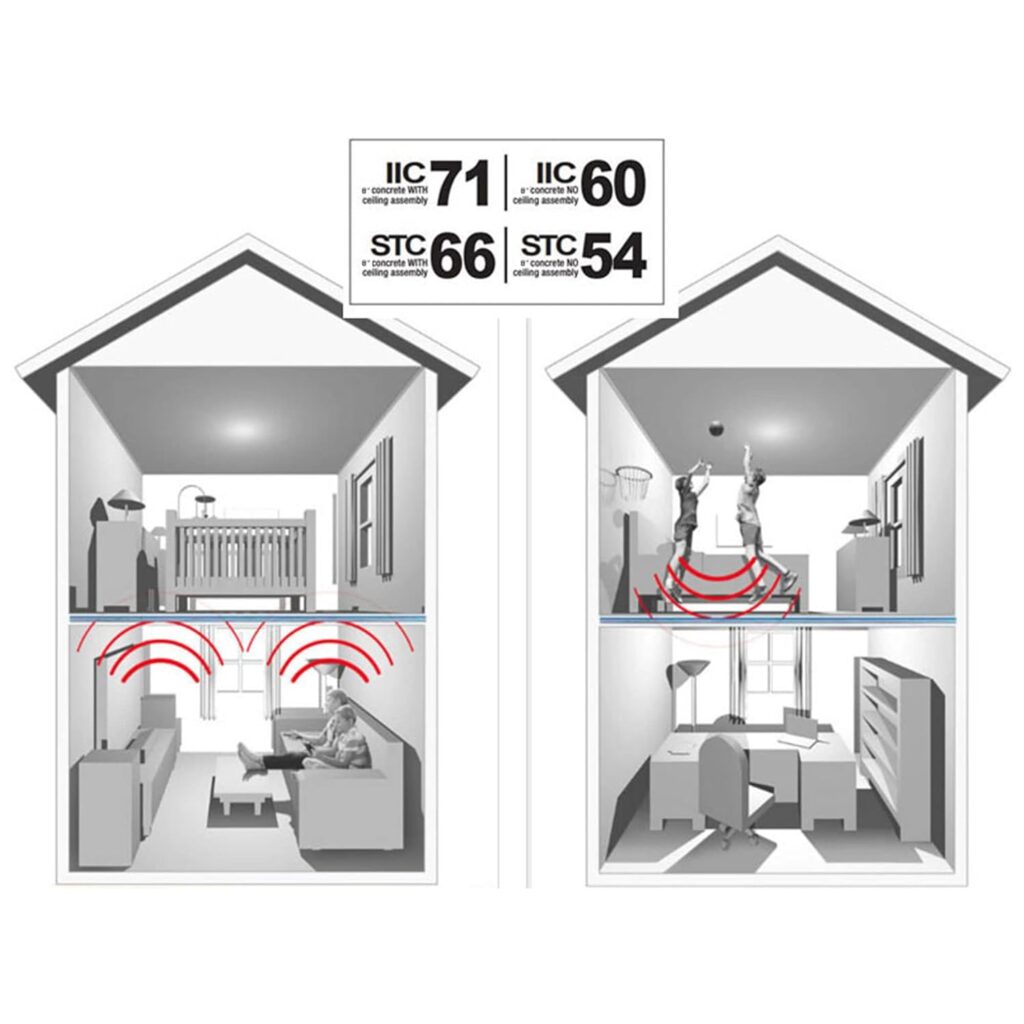
It is important to distinguish between reducing impact noise and completely soundproofing a floor. Underlayment alone will not normally eliminate every type of noise. Airborne sound problems may require additional measures such as added mass, insulation, decoupling, or ceiling treatments in the room below.
For this reason, the best results usually come from choosing the underlayment as part of the overall floor construction rather than relying on it as a stand-alone soundproofing solution.
Sound Attenuation Underlayment Options
There are several types of floor underlayment designed with acoustic performance in mind. Products vary considerably in thickness, density, moisture resistance, flooring compatibility, and installation requirements.
- Rubber underlayment: Dense rubber and recycled-rubber products are commonly used where reducing impact vibration is a priority. Compatibility with the flooring system should always be checked before installation.
- Fiber underlayment: Dense fiber products can provide cushioning and impact-noise reduction beneath compatible floating floors.
- Foam underlayment: Foam is commonly used beneath laminate, engineered wood, and some vinyl flooring. Acoustic performance varies substantially by density and construction.
- Panel underlayment: Rigid or semi-rigid acoustic panels can provide additional separation between the finished flooring and subfloor while also helping with floor height or thermal performance in some applications.
Examples that have been marketed for acoustic flooring applications include products such as Duracoustic S.T.O.P.™, Levelrock® SAM-N12™, QuietBoard, and QuietWalk. Specifications and flooring compatibility can change, so check the current manufacturer’s documentation before selecting one for a particular installation.
Working on a DIY Project?
If you’re planning a home improvement or DIY project, you can enter for a chance to win a $500 Home Depot Gift Card to put toward tools, materials, or your next project.
Enter for a chance to win a $500 Home Depot Gift Card
US residents only. Sweepstakes terms and eligibility requirements apply.
If you are comparing sound-blocking materials more broadly, our AcoustiBlok MLV review looks at another type of material used in sound-control projects.
Comparing Underlayment Types
| Underlayment Type | Main Benefit | Common Applications | Points to Check |
|---|---|---|---|
| Rubber | Dense resilient layer for impact-noise control | Various hard-floor systems | Thickness, flooring compatibility, installation method |
| Fiber | Cushioning and vibration absorption | Laminate and floating floors | Moisture requirements and compression resistance |
| Foam | Lightweight cushioning | Laminate, engineered wood, and compatible vinyl floors | Density and acoustic performance |
| Acoustic Panels | Additional separation and support | Multi-layer flooring systems | Finished floor height and installation requirements |
When comparing products, avoid judging performance from the material name alone. Two foam or rubber underlayments can perform very differently depending on their density, thickness, and the floor assembly in which they are tested.
Where manufacturers provide acoustic test data, look at the complete tested floor and ceiling assembly rather than treating an advertised rating as a guaranteed result for every installation.
Choosing Underlayment for Different Flooring Types
Laminate and Floating Wood Floors
Floating floors commonly use an underlayment layer beneath the finished flooring. Acoustic fiber, foam, and other resilient products can help reduce the sharp sound of footsteps while also providing the support required by the flooring manufacturer.
Some products also include an attached vapor barrier. This can be useful where moisture protection is required, but the correct installation depends on the subfloor and flooring system.
Hardwood Floors
Underlayment options for hardwood depend heavily on whether the floor is floating, nailed, or glued. A product suitable beneath floating engineered wood may not be suitable beneath a nailed solid-hardwood floor.
Check both the flooring manufacturer’s instructions and the underlayment manufacturer’s compatibility requirements before installation.
Vinyl Flooring
Many modern vinyl floors have specific underlayment requirements. Adding an underlayment that is too soft or too thick can sometimes interfere with locking systems or warranties, so only use products approved for the particular vinyl flooring being installed.
Carpet
Carpet and carpet padding naturally help soften footsteps. A dense acoustic carpet pad can add further cushioning and help reduce impact noise.
For more options, see our guide to soundproof rug pads.
Eco-Friendly Underlayment Options
Some acoustic underlayments use recycled materials, including recycled rubber and fibers. These can be useful for homeowners who want to consider environmental impact alongside acoustic performance.
Recycled content alone does not determine whether an underlayment is suitable for a particular floor, however. Acoustic performance, durability, moisture resistance, emissions, and compatibility with the finished flooring should all be considered.
For more information on sustainable materials used in noise-control projects, see our guide to eco-friendly soundproofing materials.
Installing Sound Attenuation Floor Underlayment
Installation requirements vary by product, so the manufacturer’s instructions should always take priority. However, the general process for many rolled or panel underlayments follows similar principles.
- Prepare the subfloor: Make sure the surface is clean, dry, stable, and sufficiently level for the flooring system.
- Check moisture requirements: Determine whether the installation requires a separate vapor barrier or an underlayment with one attached.
- Measure and cut: Measure the floor and cut the underlayment to fit while following the manufacturer’s instructions around walls and transitions.
- Lay the underlayment: Position the material in the direction specified for the particular product.
- Treat seams correctly: Some products require seams to be tightly butted together and taped, while others use overlapping flaps. Do not assume the same method applies to every underlayment.
- Work around obstacles: Cut carefully around vents, pipes, doorways, and other penetrations so that large gaps are not left in the acoustic layer.
- Install the finished flooring: Once the underlayment is correctly positioned, install the flooring according to the flooring manufacturer’s requirements.
If seams require tape, our guide to sound-deadening tapes for soundproofing covers several options.
Professional Home Improvement Advice
If you’re unsure how to approach a soundproofing or home improvement project, you can ask a home improvement expert for advice. This can be useful if you need guidance on materials, installation methods, troubleshooting, or the best way to approach a particular project.
If you would prefer some expert guidance before taking on the work yourself, you can consult with a home improvement expert online. They can help you think through the project and answer questions before you decide how to proceed.
Correct installation matters. Gaps, incorrect seam treatment, unsuitable materials, or an underlayment that is incompatible with the flooring can reduce performance or create problems with the finished floor.
Understanding IIC Ratings
When researching acoustic flooring products, you will often see an IIC (Impact Insulation Class) rating. IIC is used to describe how effectively a tested floor-ceiling assembly reduces impact sound transmission.
Higher test results generally indicate better impact-noise isolation within that particular tested assembly. However, an IIC figure should not be treated as a rating for the underlayment by itself.
The result can be affected by the subfloor, ceiling construction, flooring material, underlayment, installation method, and other components. This is why two installations using the same underlayment can produce different results.
If an apartment building, condominium association, or local building requirement specifies a minimum acoustic rating, check the required assembly and supporting test documentation before purchasing materials.
Additional Ways to Reduce Floor Noise
Underlayment is only one way to improve floor acoustics. Depending on the type and severity of the noise, several other measures can help.
- Rugs and rug pads: Adding soft surface materials can reduce footsteps and furniture noise, particularly on hard floors.
- Seal gaps: Openings around floor penetrations and perimeter gaps can contribute to sound transmission. Appropriate acoustic sealing can form part of a more complete system.
- Treat the ceiling below: Severe noise transfer between floors may require work to the ceiling assembly below, including insulation, added mass, or decoupling.
- Choose the finished floor carefully: Carpet generally produces less impact noise than hard flooring. The finished surface itself therefore has a significant effect on how footsteps are perceived.
- Use compatible materials: More layers are not automatically better. Adding multiple underlayments without manufacturer approval can create excessive movement or interfere with the finished flooring.
For rooms where rugs are practical, our guide to soundproof rug pads covers another useful approach to reducing impact noise.
Choosing the Right Sound Attenuation Floor Underlayment
The best sound attenuation floor underlayment depends on the floor rather than on one product being universally better than another.
Before choosing an underlayment, consider the type of finished flooring, whether the installation is floating, glued, or nailed, the type of subfloor, moisture conditions, available floor height, and the kind of noise you are trying to reduce.
For apartments and multi-story homes, impact noise is often the main concern. In those situations, a resilient underlayment beneath a compatible flooring system can be an effective part of the solution.
Where airborne noise is also a problem, underlayment may need to be combined with additional soundproofing measures elsewhere in the floor or ceiling assembly.
Most importantly, check current manufacturer specifications and installation requirements before buying. Acoustic test results are most useful when the tested construction closely resembles the floor assembly you intend to build.
Soundproofing your home
Ready to transform your living space into a sanctuary of peace and quiet? Dive into our essential guide to soundproofing your home! From selecting the right materials to easy DIY installation tips, we’ve got everything you need to block out unwanted noise and create the tranquil environment you’ve always dreamed of.
Find out more about soundproofing your home’s windows, doors, ceilings, and floors. Don’t let the buzz of the outside world disrupt your peace. Start your soundproofing journey today and enjoy the serene, noise-free home you deserve. Click here to unlock the secrets to a quieter home!
Good luck and happy soundproofing!
4 comments
Comments are closed.